
 Lesson 5.3
Lesson 5.3 · Designing With the Constraint
Three Real Plans, Reconciled
One Vastu rule-set, three Indian climates, three honest plans — the whole course working at once.
The same rule, three different answers
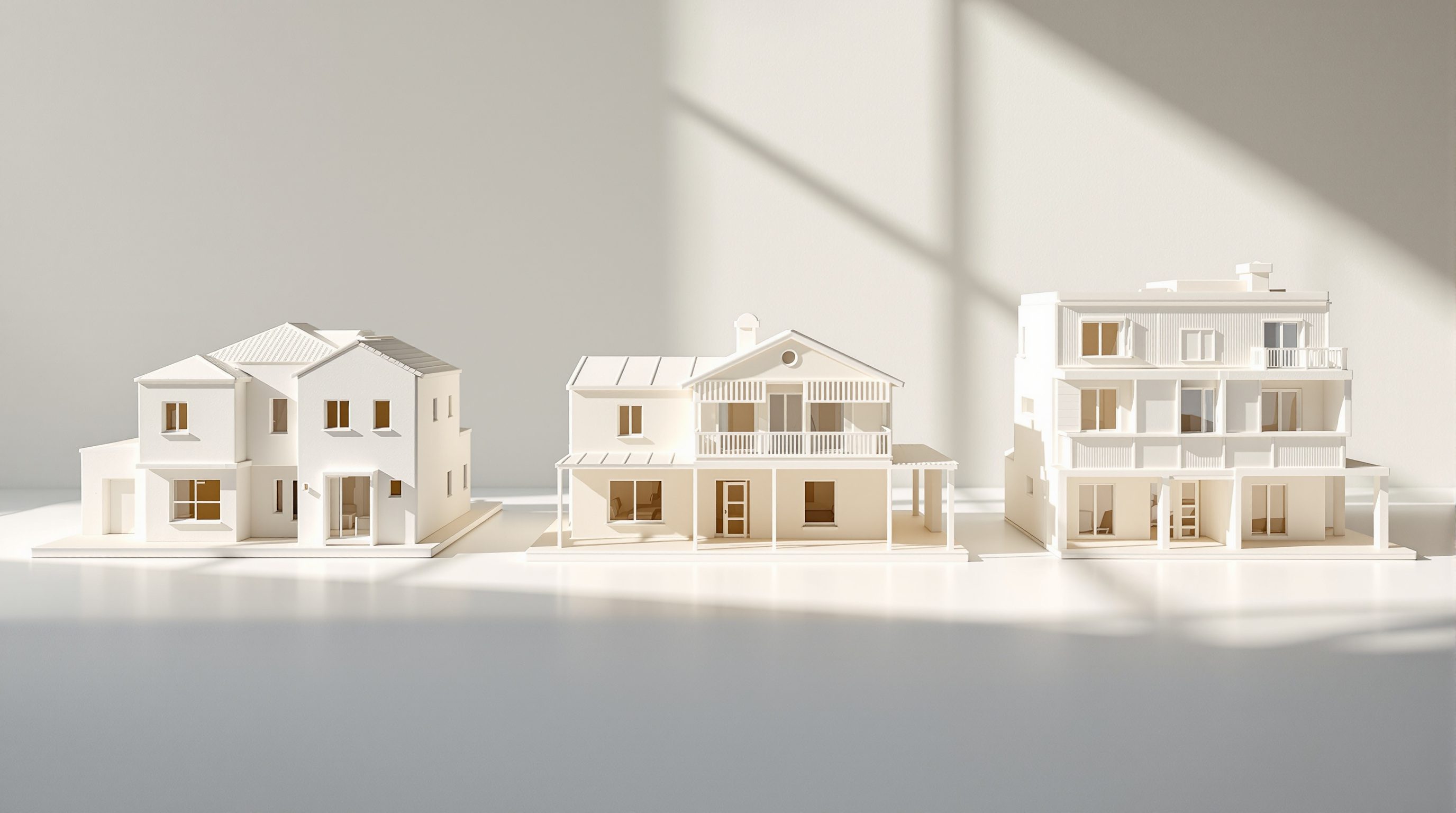
Take one Vastu pattern — open north-east, heavy south-west, a courtyard at the heart, kitchen to the south-east — and drop it onto three real Indian sites. On a desert plot it is a gift; on a humid coast it would slowly cook the family; in a fixed-orientation flat half of it cannot physically happen. Same rule, three honest plans. This is the whole course, applied.
One rule-set, three sites
Everything you have learned converges here. The audit from 5.2 gave you a worksheet: list each Vastu directive, sort it 🟢 climate logic, 🟡 plausible-but-contingent, or 🔴 convention, then decide. The conversation skills from 5.1 told you how to say yes, how to negotiate, and how to honour a belief cheaply without lying about engineering. Now watch all of it run end-to-end on three projects.
We will follow the same four classic directives through each case — open/low north-east, heavy south-west mass with the master bedroom, a central courtyard, and the kitchen in the south-east — and watch them migrate between buckets as the climate changes. The lesson is not which plan is "correct". The lesson is that context decides the colour, and a good designer reads the context before reaching for the rule.
The rule-book is the same on every site. The climate is the editor.
Case 1 — Jaisalmer, Rajasthan: when climate and Vastu agree
A family is building a single home on a generous desert plot. Hot-dry: brutal sun, scorching days, cool nights, big diurnal swing, almost no humidity. You run the worksheet and something lovely happens — almost every Vastu directive turns green.
The open, low north-east invites the gentlest morning sun and lets the compound breathe before the heat builds — 🟢, honour for free. The heavy south-west mass with the master bedroom is a genuine thermal buffer: a thick stone or earth wall on the hottest, lowest-sun quadrant soaks up the afternoon load and releases it harmlessly into the cold night. That is not superstition, it is the physics of high thermal mass in a high-swing climate — 🟢. The central courtyard is the oldest desert trick there is: shaded, it pools cool night air and drives daytime stack ventilation — 🟢. Only the south-east kitchen earns a 🟡: it adds a little afternoon heat, but with a good extract hood and morning cooking habits the penalty is modest.
So the reconciliation is almost embarrassingly easy. You honour the pattern warmly, the client is delighted that "Vastu" and "comfort" are the same word here, and you spend your design energy on detail — wall thickness, courtyard shading, openable clerestories. When tradition and thermal logic point the same way, say yes generously and take the win.
The desert house barely needs translating — here Vastu is just good building science wearing older clothes.
Case 2 — coastal Kerala: when the same rule must bend
Now the identical directives, a few hundred kilometres south, on a humid coastal plot. Warm-humid: less diurnal swing, sticky air, the comfort strategy is move air across skin, not store and release heat. Re-run the worksheet and the buckets shift under your feet.
The open north-east stays 🟢 — gentle light and a clear inlet for sea breeze are pure gain. But the heavy south-west mass now backfires: with little night cooling, a massive wall simply stores daytime heat and re-radiates it into the bedroom all night — no flush to discharge it. This is a 🟡 you must translate. The client's real intent is "protect us from the harsh western sun and give us a calm, private master suite." Deliver that intent with deep shading, verandahs, louvres and a lightweight, well-ventilated wall — not mass. You keep the Vastu placement of the master bedroom in the south-west; you refuse only the thermal mass that the coast punishes. The south-east kitchen matters more here — heat plus humidity is miserable — so the extract hood and cross-ventilation are non-negotiable. The courtyard survives but is tuned: wider, breezier, more open verandah than enclosed well, so it moves air rather than trapping muggy stillness.
This is the heart of the course in one paragraph. The rule is honoured at the level of intent, not literal form. The believing client still gets the south-west master bedroom and the courtyard they wanted; you simply build them in the language the coast understands. Nobody is told their faith is wrong, and nobody sleeps in an oven.
Same compass, opposite material. Mass is medicine in the desert and poison on the coast — the directive didn't change, the climate did.
Case 3 — a Bengaluru flat: honour what you can, be honest about the rest
The third client owns a fixed apartment. You cannot choose the compass; the entrance and the structural grid are given. The notional north-east faces a blank party wall, an open courtyard is impossible, and the client follows Vastu closely — right down to a birth-star and a numerology consultant who has opinions about the main door.
Here the worksheet becomes a triage. Honour the principle wherever the slab allows: you can't put a courtyard in, but you can run a light shaft or simply place the calm, low-occupancy rooms (puja, study, master rest) toward the real cool, soft light and push services and heat-generating functions to the harsh exposure — that is the spirit of the NE/SW logic surviving a layout you didn't draw. Mild Bengaluru climate is forgiving, so the thermal stakes are low and you spend your judgement on daylight, privacy and air paths instead. Satisfy the red rules cheaply: the numerology and birth-star requests cost nothing structurally, so you honour them as belief — a chosen door colour, a thaali at the threshold, a name plate placed as asked. These are 🔴 conventions; you respect them warmly as meaning, never dress them up as engineering. And be honest where a rule simply cannot apply: when the NE genuinely faces a wall, you say so kindly, explain that the aim (calm, light, openness at the entry) is being delivered another way, and you don't fake a compliance you can't build.
The client is happy because every belief they brought was heard and most were honoured; the flat is good because the few decisions that affect comfort were made on physics. On a fixed plot you trade reorientation for honesty — and honesty, delivered warmly, is its own kind of compliance.
How each rule sorts
The reconciliation lesson, in three moves — one per site.
In a high-swing dry climate, heavy SW mass buffers heat, a shaded courtyard drives night cooling, and an open NE invites gentle light — tradition and thermal logic point the same way, so compliance costs nothing.
Humid air needs cross-ventilation, not stored heat; the SW master bedroom stays where Vastu wants it but is delivered with shading and lightweight ventilated walls instead of thermal mass — the comfort goal is met and the belief is still honoured.
When you cannot choose the compass, the NE/SW principle survives as internal layout (calm rooms to cool light), red-bucket numerology gets cheap symbolic respect, and an impossible directive is named honestly rather than faked.
What the three plans teach in one breath
- The bucket isn't a property of the rule — it's a property of the rule meeting the site; the same SW-mass directive is green in Jaisalmer and yellow in Kerala.
- Green rules are free wins (honour them and move on), yellow rules are where your design judgement earns its fee, and red rules get cheap, sincere respect.
- Translate to intent, not form: the believing client keeps their south-west master bedroom even when you refuse the south-west thermal mass.
- When a rule physically can't apply, honesty delivered warmly is the professional move — fake compliance helps no one and erodes trust.
Now it's your turn. In 5.4 you take a real (or realistic) site of your own, run the full audit-and-reconcile method end-to-end, and produce the one plan that honours belief, climate and budget together — your capstone project.
The author
Amogh N P
Architect, interior designer, and creative polymath. Studio Matrx began in his notebooks — his vision of design made honest, useful, and open to everyone. Its Academy is written and taught in his memory, and free, forever.
More about Amogh →