
A date answers one question. A reason answers twenty.
Ask someone preparing for this exam about Fallingwater and you will get: _Frank Lloyd Wright, 1935, Pennsylvania_. All correct, and nearly useless. Ask what it changed and the good answer is one sentence — _it cantilevers out over the waterfall, so the building reaches instead of sitting_ — and that sentence recognises the building in an unlabelled photograph, explains what it demanded of the concrete, contrasts it with anything that sits heavily on its site, and lets you reason about a building you have never heard of doing the same thing. Same building. One fact went twenty times further.
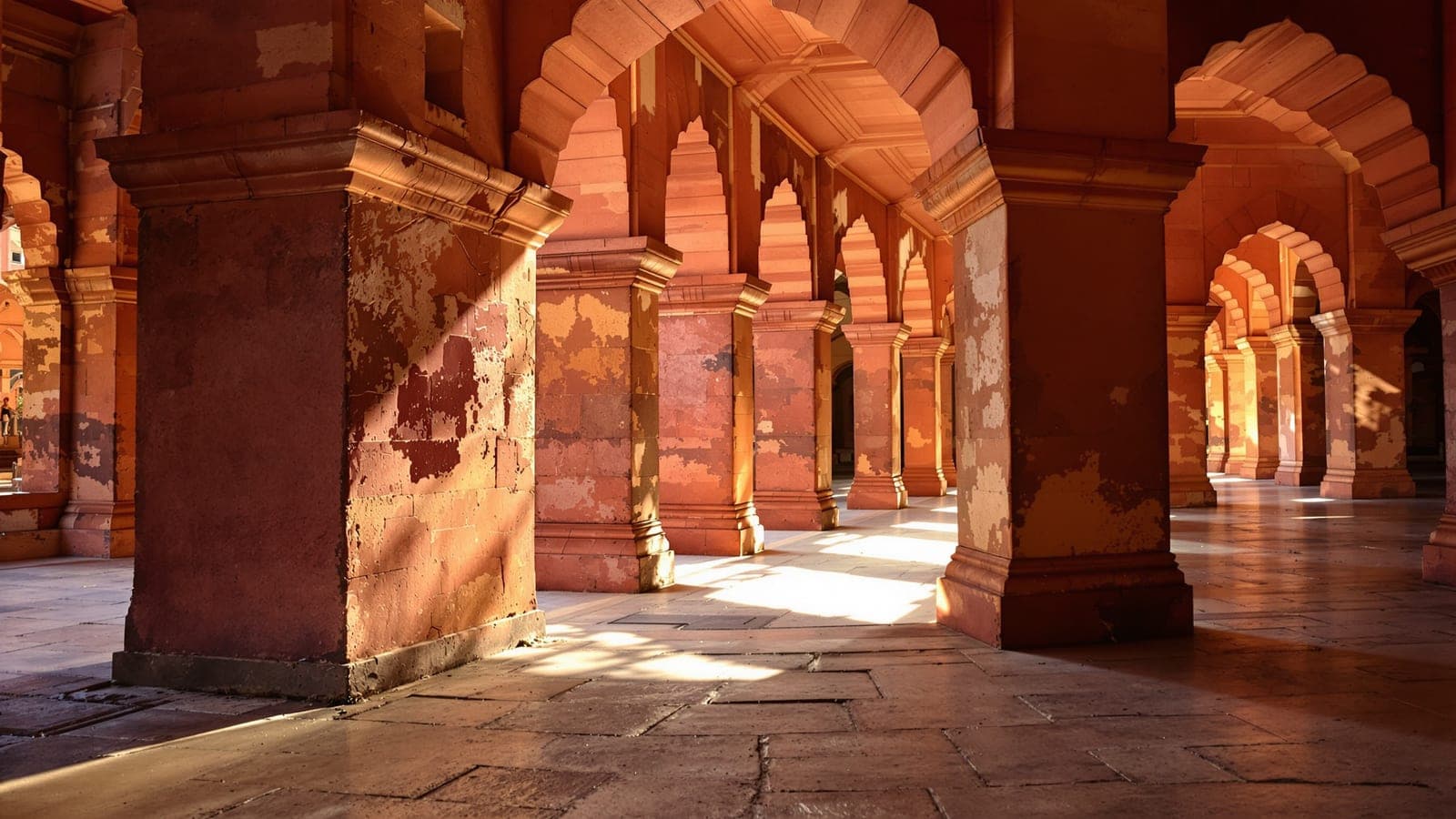
The only question worth asking about a building
What became possible, or normal, that was not before?
That is it. That is the whole method, and it works because it is the actual reason the building is in the canon. Nothing is famous for having a date. Things are famous for having moved the argument — and once you know which argument a building moved, everything else about it hangs off that hook instead of floating free in your memory waiting for one specific question to come and collect it.
Run it on a few and the pattern is obvious. The Pantheon: a dome you can stand under with a hole open to the sky, which says the roof no longer needs the wall to be solid. Hagia Sophia: a dome resting on a square, which is a geometry problem before it is a building. A Gothic cathedral: the buttress catches the thrust outside, so the wall stops carrying and becomes glass — the entire point of Gothic is that the wall left. Crystal Palace: prefabricated iron and glass, assembled in months, which makes the building a product rather than a craft. Villa Savoye: the load moved to columns, so the plan, the facade and the window were all free at once.
Notice none of those sentences is a date, and every one of them is a tool.
The Indian canon is the one most lists get wrong
This is an Indian exam, set by the Council of Architecture, and the international canon is over-served by every list on the internet while the Indian one is thin. That asymmetry is worth exploiting.
The old spine. Sanchi — architecture as solid mass you walk around, not space you enter. Khajuraho and the temple tradition — trabeated and corbelled, the tower as a mountain; mass, not void. Qutb complex — where the true arch arrives in India, and the seam is visible. Fatehpur Sikri — an entire city composed as one act, then abandoned, which is why it survives unmuddled. Taj Mahal — the dome as an object placed in a garden, and symmetry taken to its limit. Jantar Mantar — buildings that are instruments; architecture that measures the sky.
The modern spine, which is where the marks hide. Chandigarh — Corbusier, and the modernist city arriving in India whole. IIM Ahmedabad — Kahn, brick and geometry, an institution made monumental with openings cut for light. Kanchanjunga Apartments — Correa, interlocking sections and deep verandahs turned against Mumbai's sun and rain. Jawahar Kala Kendra — Correa again, a plan built on the nine-square mandala. Sangath — Doshi's own studio, vaults half-buried in the ground. Aranya, Indore — Doshi designing the infrastructure and letting residents build the rest, which is a genuinely radical idea about what an architect is for. Laurie Baker's Kerala work — cost treated as a design problem rather than a constraint to apologise for. Lotus Temple — Sahba, concrete shells as symbol. Asian Games Village — Rewal, traditional urban fabric rebuilt at scale.
One date genuinely worth carrying: B.V. Doshi won the Pritzker Prize in 2018, the first Indian to do so. That one is a fact about recognition rather than architecture, and it is exactly the kind of thing an exam asks.
Say it in a sentence or you have not learnt it
A test you can apply to yourself, and it is unforgiving.
Take any building on your list and finish this sentence out loud: It matters because __. If what comes out is a date, a country or an architect's name, you have a label, not knowledge. If what comes out is a change — the wall stopped carrying load, the services went on the outside, the residents built the rest — you have something that will still be working for you in the exam hall on a question you did not predict.
Most candidates fail this test on eight of any ten buildings they would say they know. That is not a memory problem. It is a collecting problem: names are easy to collect and feel like progress, which is the same trap the last lesson described, wearing a different hat.
And the fix is cheap. You do not need more buildings. You need the ones you already have to actually work — which usually takes one sentence each, and about an afternoon for the lot.
What this list is, and is not
Said plainly, because everyone else refuses to.
COA publishes no list of important buildings. Not in the brochure, not on nata.in, not anywhere. The syllabus says important buildings and stops. So the canon above is assembled by us from what recurs in architectural education — it is a defensible bet about where the centre of gravity sits, and it is a bet.
The honest expectation to hold: you will meet buildings in the exam that are not on it. That is guaranteed by the fact that the set is unbounded, and it is not a sign the bet was bad. A bet on the centre of a distribution is not a promise about its tail.
What rescues this is the method rather than the list. If you have practised asking what did it change, you can often reason usefully about a building you have never met — from its material, its structure, what it is obviously trying to do. That is a skill, it transfers, and it is the only thing in this area that does.
The rules behind this
Sourced to the official brochure rather than restated here, so there is one place to correct when the Council revises it.
Part B examines six named areas: Visual Reasoning, Logical Derivation, General Knowledge/Architecture and Design, Language Interpretation, Design Sensitivity and Thinking, and Numerical Ability.
Visual Reasoning — understanding and reconstructing 2D and 3D composition. Logical Derivation — decoding a situation or context and drawing conclusions. General Knowledge, Architecture and Design — current issues, important buildings, historical progression, innovation in materials and construction. Language Interpretation — meaning of words and sentences, English grammar. Design Sensitivity and Thinking — observing and analysing people, space, product, environment; semantics, metaphor, problem identification. Numerical Ability — basic mathematics and its association with creative thinking; unfolding space using geometry.
Source · verified 2026-07-16
No weighting is published for any of the six areas.
You cannot know how many of the 50 questions fall to each area. Any source giving you a percentage split is inventing it.
Source · verified 2026-07-16
What almost everyone believes
“I should memorise a list of important buildings with their architects, dates and locations.”
Dates, architects and locations answer one question each. What a building changed answers a family of them, including questions about buildings you have never met.
'Fallingwater, Wright, 1935' is three facts that unlock exactly three questions, and only if those questions are asked. 'Fallingwater cantilevers over the waterfall, so the building reaches rather than sits' is one fact that recognises it unlabelled, explains what it demanded of the material, contrasts it against anything sitting heavily on its site, and transfers to unfamiliar buildings doing the same thing. The list format is seductive because it is tickable and countable, but it stores architecture in the least useful shape available. Worse, it is brittle: a candidate who knows only labels is helpless the moment a question comes at a building from an angle they did not rehearse — which, given the set is unbounded, is most of the time.
Depending on how long you have
Foundation
Understand the skill. Months out, or starting from zero.
Go and see buildings. Actually go — the ones in your own city, whatever they are, including the ones nobody photographs. A building you have stood inside is stored differently from a building you have read about, and the difference shows up years later. Ask the same question of each: what is it trying to do, and what did it change?
Drill
The practice protocol. What to repeat, how often, how to score it.
Take your existing list and rewrite it as sentences: 'X matters because Y'. Delete any entry where Y turns out to be a date or a country — not because it is wrong but because it is not doing any work. You will end up with a shorter list that outperforms the long one, which is the whole lesson in one exercise.
Exam-Day
What to actually do under the constraint — 108 seconds, no instruments, one pass.
If a building is unfamiliar, do not stall — reason from what you can see. Material, structure, what it is obviously trying to achieve. You will often get closer than you expect, because canonical buildings are canonical for legible reasons. And if you cannot, answer and move: it was drawn from an unbounded set and it costs one question.
Try it
Fifteen minutes. It will be uncomfortable, and that is the point.
- 01Pick five buildings you are confident you know well.
- 02For each, say out loud: 'It matters because ______.' No notes, no looking up.
- 03Score yourself honestly. A date, a country or an architect's name scores zero — those are labels.
- 04For every zero, spend five minutes finding the actual change, and write it as one sentence.
- 05Tomorrow, try the five again. The ones with sentences will still be there; that is the difference between knowing a building and having its name.
The short version
Ask one question of every building: what became possible or normal that was not before? A date answers one question, a reason answers twenty — it recognises the building unlabelled, explains its material, contrasts it with others and transfers to buildings you have never met. The Indian canon is under-served by internet lists and this is an Indian exam, so Chandigarh, IIM Ahmedabad, Kanchanjunga, Sangath, Aranya and Baker's Kerala work repay attention more than another Western landmark. COA publishes no list; the canon here is our bet on the centre of the distribution, named as a bet, and you will still meet buildings in the exam that are not on it.
Next: why the sequence those buildings sit in is causal rather than chronological — and how that lets you place one you have never seen.
Questions people actually ask
- Which buildings should I study for NATA General Knowledge?
- There is no official list — COA publishes none. A defensible bet is the Indian canon most internet lists under-serve: Sanchi, Khajuraho, the Qutb complex, Fatehpur Sikri, the Taj, Jantar Mantar, then Chandigarh, IIM Ahmedabad, Kanchanjunga Apartments, Jawahar Kala Kendra, Sangath, Aranya, Laurie Baker's Kerala work, the Lotus Temple and the Asian Games Village. Learn what each changed, not when it was built.
- Do I need to know dates and architects for NATA?
- Less than you think. A date answers exactly one question; what a building changed answers many, including ones about buildings you never studied. Learn the reason first — if a date attaches itself afterwards, fine. One date genuinely worth carrying: B.V. Doshi won the Pritzker Prize in 2018, the first Indian to do so.
- Is Indian architecture more important than international for NATA GK?
- No weighting is published, so nobody knows. But it is an Indian exam set by the Council of Architecture, and the Indian canon is thinly covered by the lists in circulation while the international one is over-covered. That asymmetry makes Indian architecture the better use of limited hours, regardless of how the split actually falls.