
Introduction to Model Making & Media
Why we build models — and the media we draw them with.
Architecture is invisible until it is represented — and this course is the craft of that representation, in two forms: the physical model you can hold, and the rendered drawing you can give light. This first lesson sets up both — why we build models, the kinds we build, and the freehand media we draw with.
Learning objectives
By the end of this lesson you will be able to — mapped to the course outcomes for Model Making & Architectural Delineation:
Explain why architects make models, and the value a model adds over a drawing.
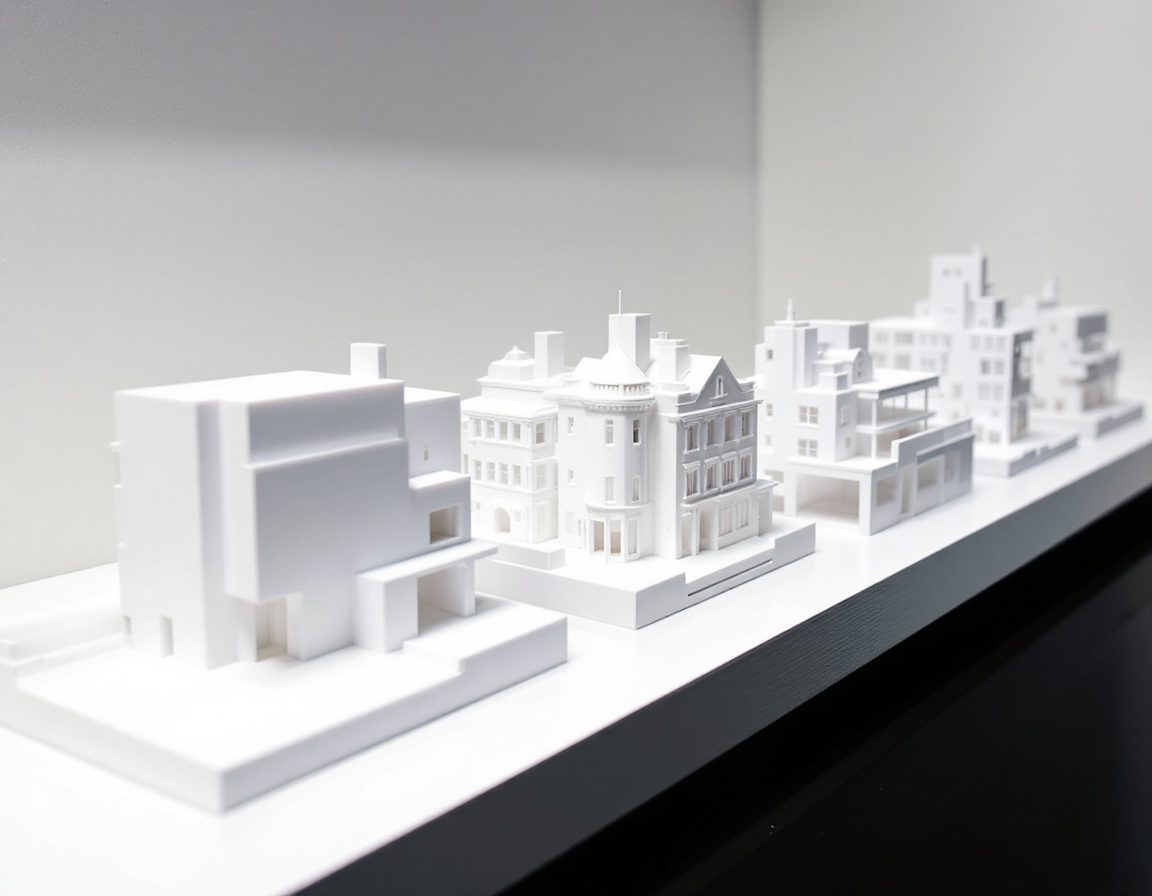
Identify the main types of architectural model and their purposes.
Recognise the freehand media of delineation and what each is good for.
Choose a medium to suit the idea you want to communicate.
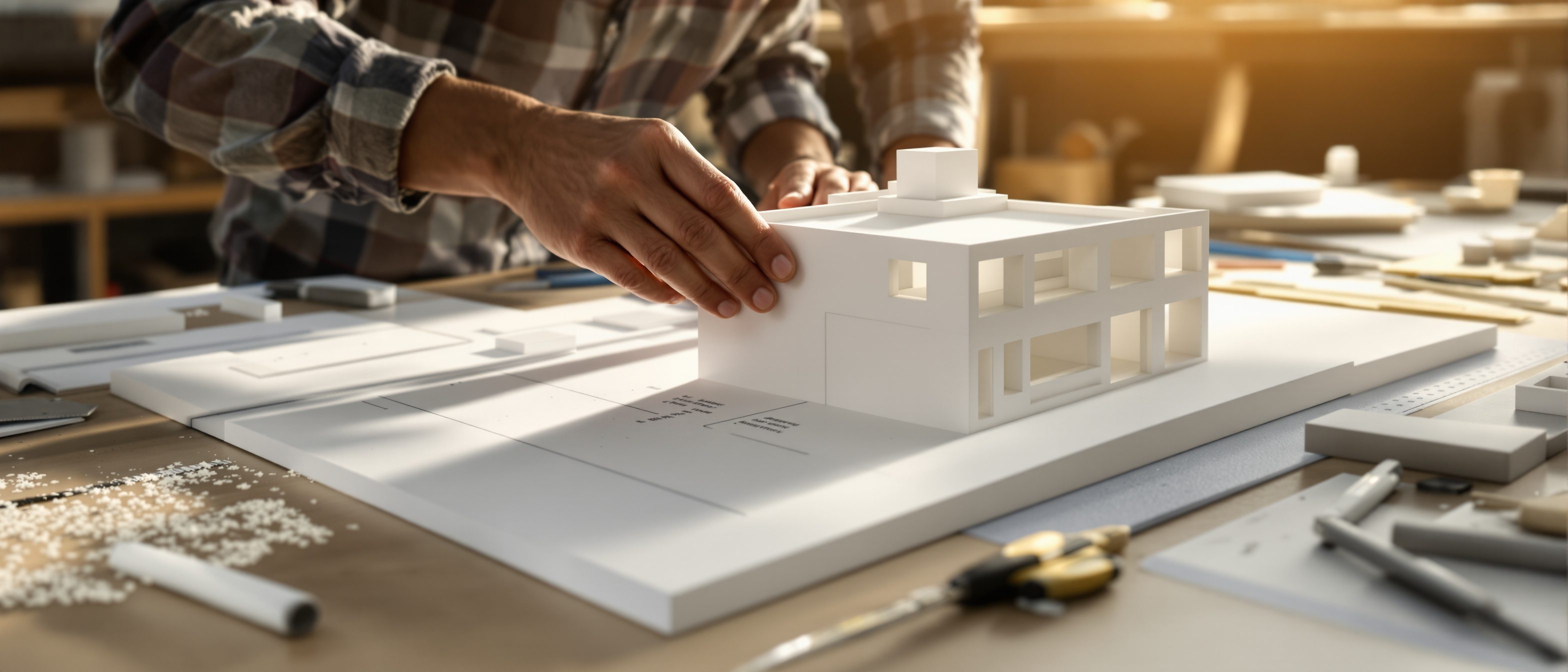
Why build models
A model gives a design mass, space and real light, and works from the first concept to the final presentation. Select a topic.[1, 2]
Seeing in three dimensions
A physical model gives a design a presence drawings cannot — you read its mass, space, proportion and the play of real light at a glance, and you can turn it, cut it and test it. Models work from the first rough concept right through to the polished presentation.[1]
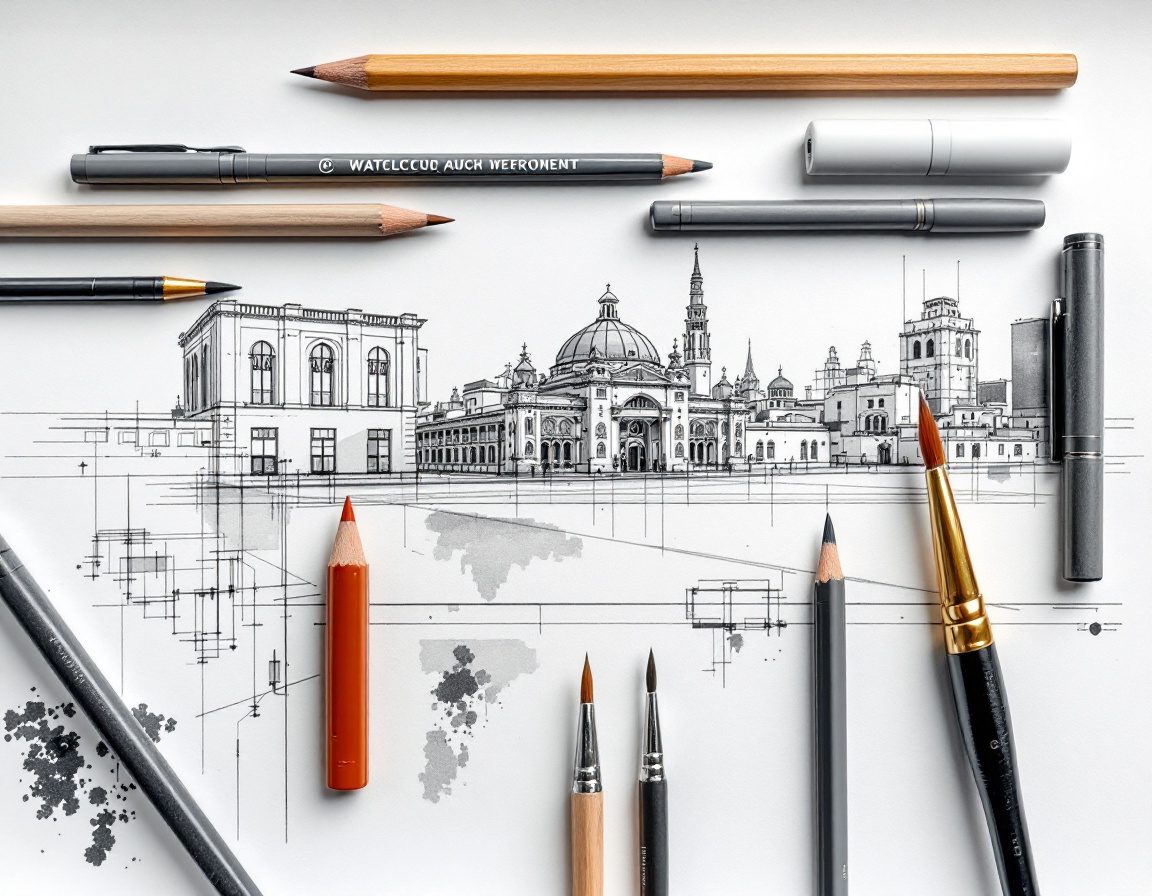
The media of delineation
Each medium says something different — line for structure, charcoal and watercolour for atmosphere, the lino-cut for bold pattern.[3, 4, 5]
| Medium | Good for |
|---|---|
| Pencil / graphite | Soft, correctable line and tone — for study and construction |
| Pen-and-ink | Crisp, permanent line and hatching — for finished, graphic work |
| Charcoal | Expressive light and shade — atmosphere and mood |
| Watercolour | Luminous washes — sky, material, light |
| Collage / mixed media | Layered, expressive images — concept and context |
| Lino-cut / print | Bold graphic pattern — studying form and repetition |
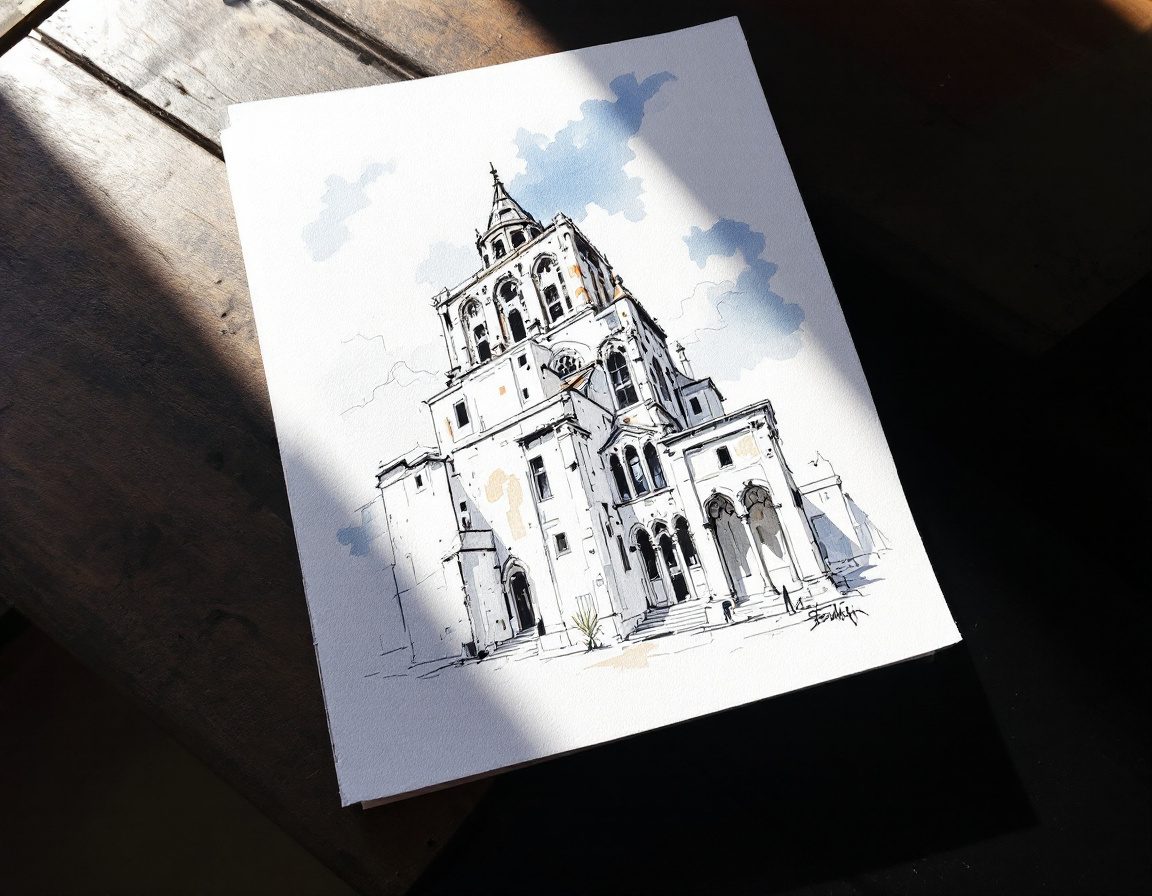
Delineation — rendering the line
Delineation adds light, shade, shadow and texture so a drawing communicates a design rather than merely recording it.[6]
Self-assessment
1. A model that explores overall form and volume with little or no detail is a:
2. Which medium is best for luminous washes that suggest sky, light and material?
3. ‘Delineation’ in architecture means:
Recap
References & further reading
- [1]Architectural model making — the guide (why models matter; what they reveal). First In Architecture. https://www.firstinarchitecture.co.uk/architectural-model-making-the-guide/
- [2]Types of architectural model — concept, study, presentation, sectional, site. Model-making overview. https://architecturalmodels.net/materials-for-architectural-models-a-comprehensive-guide/
- [3]Pen and ink in architectural drawing — line, hatching and character. Akers Architectural Rendering. https://www.akersarchitecturalrendering.com/blog/tag/Pen+and+Ink
- [4]Watercolour and tonal media in architectural rendering — atmosphere and light. Overview. https://www.archdaily.com/942862/the-evolution-of-visual-representation-in-architecture
- [5]A guide to printmaking — the lino-cut (relief) technique and mixed media. Jackson's Art. https://www.jacksonsart.com/blog/2017/11/13/guide-printmaking-techniques/
- [6]Architectural delineation and the American Society of Architectural Illustrators (ASAI, 1986). https://en.wikipedia.org/wiki/American_Society_of_Architectural_Illustrators
Further reading
- Knoll, W. & Hechinger, M. (2007). Architectural Models: Construction Techniques (2nd ed.). J. Ross Publishing. ISBN 978-1-932159-96-7.
- Ching, F.D.K. (2023). Architectural Graphics (7th ed.). Hoboken, NJ: Wiley — drawing systems and media.
- Lin, M.W. (1993). Drawing and Designing with Confidence: A Step-by-Step Guide. New York: Wiley.
Sources gathered and fact-checked June 2026. Published values vary by source, sample and method — treat as indicative and confirm against the cited standard before structural use.
The author
Amogh N P
Architect, interior designer, and creative polymath. Studio Matrx began in his notebooks — his vision of design made honest, useful, and open to everyone. Its Academy is written and taught in his memory, and free, forever.
More about Amogh →