
Design Exercises: Products for Everyone
A humble object is hard — and inclusive design serves everyone
The design exercises span the object world — a spoon, a chair, a watch dial, a headlight — and each looks simple and is not: the humblest object is the hardest problem, refined for centuries with every constraint pulling against the others. And the syllabus ends where the whole programme returns: designing for the physically and differently abled. The deep lesson is that designing for disability makes better products for everyone — the OXO Good Grips peeler, made for arthritis, is better for every hand — and that inclusive design must avoid stigma.
Learning objectives
By the end of this lesson, you will be able to — mapped to the course outcomes for Product Design:
Design everyday objects — household tools, furniture, industrial products — integrating every consideration.
Design inclusively for the physically and differently abled, so the product serves everyone.
Recognise the humblest object as a hard problem and avoid stigma in inclusive design.
From a spoon to a headlight
The exercises span household tools (a spoon), furniture (a chair, racks) and industrial products (a watch dial, a headlight). Each integrates the whole course — and the humblest object is the hardest, refined for centuries with competing constraints.[1, 2]
The range of exercises
The design exercises span the object world: HOUSEHOLD elements and tools (a spoon, cutlery), FURNITURE (a chair, a computer table, kitchen racks, cabinets) and INDUSTRIAL products (a watch dial, a gear wheel, an automobile headlight). Each looks simple and is not: a spoon must balance, hold the right amount, feel right in the mouth and be cheap to make; a chair must bear weight, fit the body, last and be produced. Every exercise integrates form, ergonomics, material, making and meaning — the whole course in one object.[1, 2]
Inclusive product design
Designing for the differently abled makes better products for everyone — the OXO Good Grips peeler, made for arthritis, is better for every hand. And its subtler lesson is to avoid stigma: a tool labelled ‘for the disabled’ shrinks its own audience.[3]
Design for the differently abled
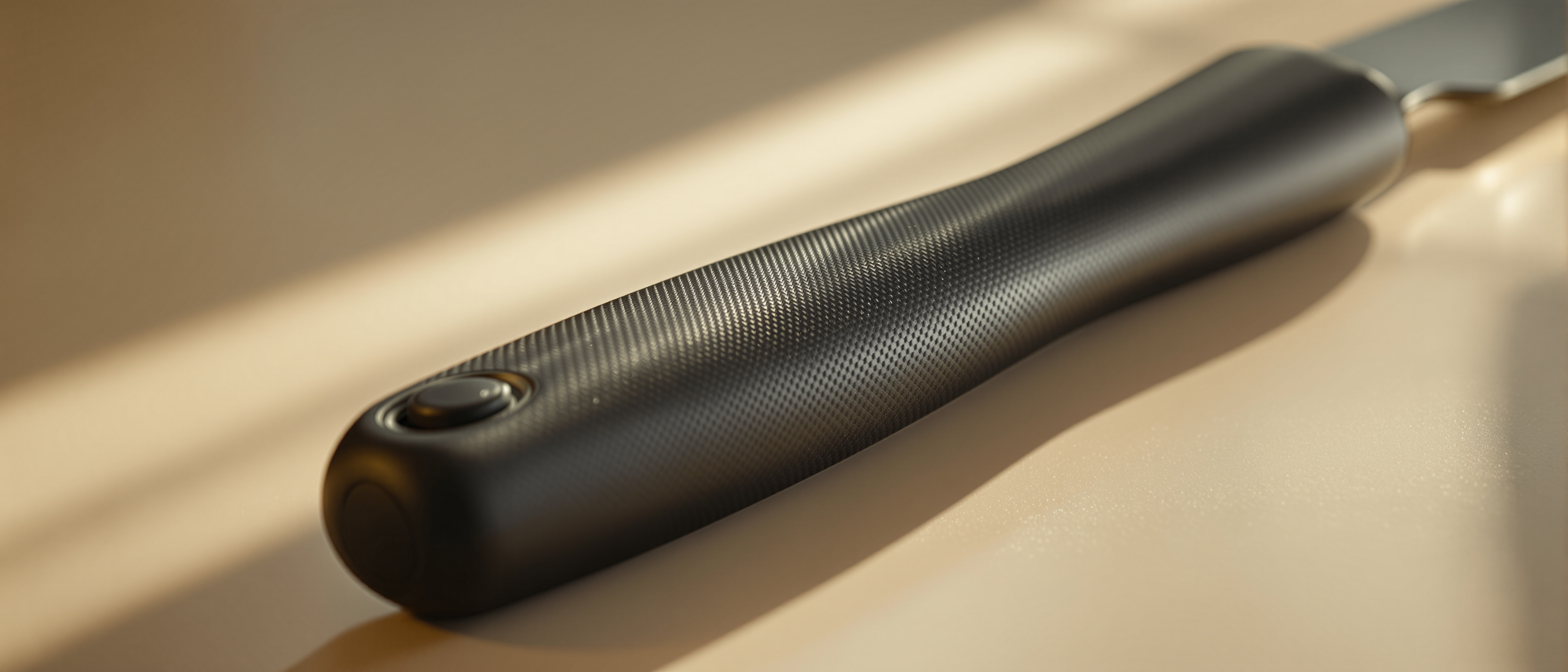
The syllabus ends where the whole programme keeps returning: designing for the PHYSICALLY and DIFFERENTLY ABLED. And the deep lesson is that designing for disability makes BETTER products for EVERYONE — the curb-cut effect at object scale. The classic case is the OXO GOOD GRIPS peeler: Sam Farber founded OXO when his wife, who had arthritis, struggled with a metal peeler, and the thick, soft, grippy handle Smart Design made for her turned out to be a better tool for every hand. Inclusive design is not a niche; it is simply better design.[3]
The synthesis
A design exercise brings the whole course together in one object — the need justified, human factors fitted, good affordances, form and material for function and end-of-life, design for manufacture, and the whole made inclusive. A good product is honest service — which is exactly Rams’s point.[1, 3]
Everything, in one object
A product design exercise brings the whole course together in one object: the NEED justified, HUMAN FACTORS fitted, the product speaking through good AFFORDANCES and displays, FORM and MATERIAL chosen for function and end-of-life, DESIGN FOR MANUFACTURE resolved, and the whole made INCLUSIVE. A good result is where all of these meet in a thing that seems simple and obvious; a poor one is usually where one was forgotten — a beautiful tool that hurts the hand, or a clever object that can't be made or recycled.[1]
At a glance
| Aspect | The fact | The folklore |
|---|---|---|
| The design exercises span | Household tools, furniture and industrial products — a spoon to a headlight | Only glamorous objects |
| The humblest object is | The HARDEST problem — centuries of competing constraints | Easy, because it's simple |
| Designing for the differently abled | Makes BETTER products for everyone — the curb-cut effect | A niche extra |
| OXO Good Grips | Made for arthritis, better for every hand — universal design | A special disabled tool |
| Inclusive design's subtle lesson | AVOID STIGMA — one product for all, no 'disabled' label | Label it 'for the disabled' |
| A good product is | Made to be used, made to be made, and for everyone | Styled to look good |
Key terms
Applied projects across the object world — household tools (a spoon), furniture (a chair), industrial products (a watch dial, a headlight) — each integrating the whole course.
The principle that a simple, refined object (a spoon, a chair) is the hardest design problem, because centuries of iteration and many competing constraints pull against each other.
Designing for the physically and differently abled — which makes better products for everyone (the curb-cut effect at object scale).
The peeler Smart Design created for Sam Farber's wife, who had arthritis; its thick, soft grip was better for every hand — an icon of inclusive, universal product design.
Inclusive design's lesson (learned by OXO) that a product labelled 'for the disabled' shrinks its audience — make one universal product for all, sold to everyone.
A product as an honest answer to a real need — made to be used, made to be made, and made for everyone, responsible for its whole life; good design is invisible service.
Study task
Design one everyday object from scratch as a full product — a better spoon, a kitchen rack, a simple tool. Work the whole course into it: justify the need; fit its human factors for the range of users; give it good affordances and signifiers so it needs no instructions; choose its form, material and technology for function and for repair and recycling; and confirm it can be made. Then make it genuinely inclusive: design it so the physically or differently abled can use it as easily as anyone — and, like OXO, do it as one universal product for all, with no stigmatising ‘special’ version. Close with an honest verdict on where your object is quiet service, and where it still needs work. The test is a humble object designed well for everyone.
Self-assessment
1. Why are humble everyday objects used as design exercises?
2. What does designing for the differently abled do for other users?
3. What is the story of OXO Good Grips?
4. What is inclusive design's subtler lesson from OXO?
5. What is a good product, in the end?
Recap
References & further reading
- [1]Product design exercises and the difficulty of everyday objects — designing tools, furniture and industrial products (Helen Marie Evans, An Invitation to Design; product-design practice). https://www.moma.org/
- [2]Designing furniture and specialty elements as products (Andrew Alpern, Handbook of Specialty Elements in Architecture; Francis D.K. Ching, Interior Design Illustrated). https://www.wiley.com/
- [3]Inclusive / universal product design and OXO Good Grips — designing for the differently abled makes better products for all, and avoiding stigma (Smart Design / OXO; MoMA collection). https://www.moma.org/collection/works/3754
Further reading
- Helen Marie Evans, An Invitation to Design.
- Andrew Alpern, Handbook of Specialty Elements in Architecture.
- Donald Norman, The Design of Everyday Things.
Sources gathered and fact-checked June 2026. Published values vary by source, sample and method — treat as indicative and confirm against the cited standard before structural use.
The author
Amogh N P
Architect, interior designer, and creative polymath. Studio Matrx began in his notebooks — his vision of design made honest, useful, and open to everyone. Its Academy is written and taught in his memory, and free, forever.
More about Amogh →