
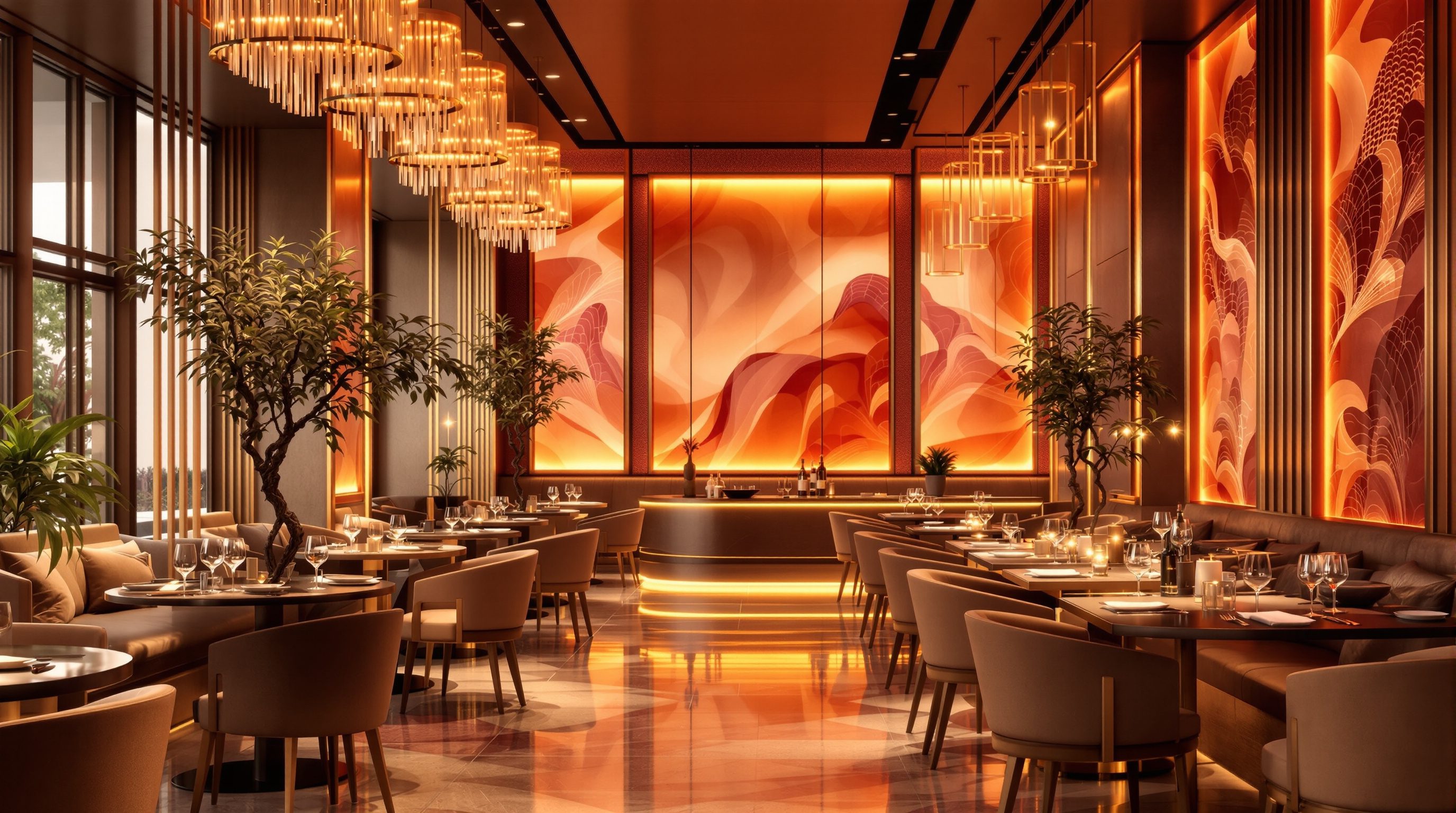
 Lesson 7.4
Lesson 7.4 · Atmosphere & the Senses
Scent, Comfort & the Multisensory
The senses designers most often forget - the smell of a place, the air you breathe, whether you are too hot or too cold - and how every sense finally fuses into one felt atmosphere and a memory you carry home
You will forget what the lobby looked like. But catch that same scent years later and the whole place comes flooding back - the senses we design least are the ones memory keeps longest.
Think of a hotel or a grandmother's house or a temple you loved, and notice what your memory actually holds. Often it is not a clear picture at all but a *smell* - a particular incense, a polish, a flower, sea air, fresh coffee - and the instant you catch it again, years later, the whole place and the whole feeling rush back. Smell is wired directly to the parts of the brain that handle memory and emotion, which is why it can summon a place more powerfully than any photograph. And yet scent, along with the air we breathe and whether we are comfortably warm, are the senses designers think about last, if at all.
This final atmosphere lesson is about those forgotten senses - scent, thermal comfort and fresh air - and then about the thing this whole module has been building toward: the fact that a guest never experiences light, sound, material, smell or temperature separately. They experience one atmosphere, all the senses fused into a single felt impression and a lasting memory. The best hospitality design is multisensory and coherent - every sense pulling in the same direction to tell one story - and its quality is often decided by the senses no one remembers to design, because a single wrong note (a bad smell, a stuffy room, a cold draught) can quietly undo everything the eye admires. We close the module by learning to design the whole sensory experience, and to defer the binding technical targets - air-change rates, thermal set-points - to the services engineers.
The senses you forget make the memory. No bad smells, comfortable air, and every sense saying one word.
Scent: the most memorable and least designed sense
Of all the senses, smell is the one most tightly wired to memory and emotion, and the one hospitality most often ignores - which makes it a huge, underused opportunity. Because the sense of smell connects almost directly to the brain's emotional and memory centres, a scent can trigger a feeling or a vivid memory instantly and involuntarily, bypassing conscious thought. This is why a particular smell can transport you to a place from years ago, and why scent is such a powerful, if subtle, tool for shaping how a hospitality space feels and how it is remembered. A guest may forget the exact look of your lobby, but catch its scent again and the whole experience returns.
The first and non-negotiable layer of scent design is the absence of bad smells and the presence of a clean, fresh base. Before any signature fragrance, a hospitality space must simply smell clean and fresh - no stale air, no smoke, no kitchen grease drifting where it should not, no damp, no drains, no cleaning-chemical harshness, no musty air-conditioning. A bad smell is one of the fastest and most visceral ways to ruin an experience and signal neglect, and no visual beauty survives it; getting the clean base right is mostly a matter of ventilation, drainage, housekeeping and keeping cooking and waste smells contained (which ties straight back to the planning and back-of-house lessons).
On top of a clean base, many hospitality brands design a signature scent - a consistent, subtle fragrance, often diffused in the lobby and public areas, that becomes part of the brand's identity and a trigger for memory and recognition. Done well, it is remarkable: guests come to associate the scent with the feeling of that hotel or spa, recognise it on return, even buy it to take home, and the brand gains a sensory signature as distinctive as its logo. The craft is restraint and appropriateness: the scent must be subtle (a faint, pleasant presence, never an overpowering cloud that triggers headaches or allergies), consistent (the same scent, reliably, so it can anchor in memory), and true to the brand and place - a fresh, green, citrus note for a bright urban hotel; sandalwood, jasmine or a warm spice for an Indian heritage property; eucalyptus or lemongrass for a spa. In India, the resonance of incense, fresh flowers (a marigold or jasmine garland at arrival), sandalwood and spices offers a deeply rooted, culturally powerful scent palette. As with all of this module, the designer sets the scent intent and the clean-air foundation, while the diffusion systems and any health and allergy considerations are handled with the relevant specialists and the operator.
Smell is wired to memory. First: no bad smells. Then: a subtle, consistent signature. Never overpowering.
Thermal comfort and fresh air: the invisible foundation
Some senses announce themselves; others are noticed only when they go wrong - and thermal comfort and air quality are the great invisible foundation of atmosphere. A guest rarely walks in and thinks "what perfect temperature and lovely fresh air"; but let the room be too hot, too cold, stuffy, draughty, humid or stale, and they will be distracted, uncomfortable and unhappy, no matter how beautiful everything looks. You cannot feel welcomed in a space that is physically uncomfortable. These are, in a real sense, the most basic layer of hospitality - the body must be at ease before the mind can relax and enjoy anything else - which is why they sit beneath light, sound and material as the foundation on which all the visible atmosphere rests.
Thermal comfort is more than a temperature set-point. It is the combined effect of air temperature, humidity, air movement and the radiant warmth or chill of surrounding surfaces, and it varies with what people are doing and wearing and with the outside climate - which matters enormously in India, where the same building must cope with fierce summer heat, monsoon humidity and, in places, genuine winter cold. A draught of cold air-conditioning down the back of the neck, a sunny glass-walled lobby that bakes in the afternoon, a humid corridor, a bedroom a guest cannot make cool enough to sleep - these are common, atmosphere-destroying failures. Good design anticipates them through orientation, shading, the facade, the HVAC strategy and, crucially, giving guests control where it matters most: a bedroom whose temperature the guest can actually set is a core comfort, and one of the commonest complaints is a room that cannot be made comfortable.
Fresh air is the close partner of thermal comfort and of scent. A space that is well ventilated with enough fresh air feels alive, clean and healthy; a stuffy, under-ventilated, stale or smoky space feels oppressive and signals poor care, and - as the pandemic made everyone acutely aware - air quality is now something guests consciously value. Fresh, clean-smelling air is the literal foundation of the scent experience: you cannot layer a lovely signature fragrance over stale, stuffy air. Designing for it means a good ventilation and fresh-air strategy, keeping cooking, smoking and waste odours contained and exhausted, managing humidity, and, where climate allows, the simple pleasure of openable windows, verandahs and fresh outdoor air that so much Indian and resort hospitality is built around. The designer sets the intent - comfort, freshness, control, a connection to outside air where possible - while the binding numbers, the thermal set-points, the air-change and fresh-air rates, the humidity targets and the system design, all defer to the mechanical and services engineers and the code. Get this invisible foundation wrong and nothing above it can succeed.
The multisensory whole: one atmosphere, not five channels
Here is the idea that ties this entire module together: a guest does not experience light, sound, material, scent and temperature as five separate channels to be added up. They experience one thing - an atmosphere - an immediate, holistic, felt impression in which all the senses fuse, usually below conscious thought. When you walk into a space and instantly feel "this is lovely" or "something is off here," you are registering the combined, simultaneous effect of everything your senses are taking in. This is why the greatest hospitality spaces feel *coherent*: every sense is pulling in the same direction, telling the same story, reinforcing one mood. The warm light, the soft buzz and gentle music, the rich tactile materials, the subtle good scent, the comfortable temperature and fresh air all agree - and the result is an atmosphere far more powerful than any single sense could create, because they amplify one another.
This has two profound consequences for how you design. First, coherence is everything: the senses must align. A space with beautiful warm lighting but a harsh cold draught, or gorgeous materials but a faint bad smell, or a serene spa look but jarringly loud music, is *incoherent* - and the guest feels the dissonance as unease even if they cannot name the culprit. One sense pulling the wrong way can pull the whole atmosphere down, which is exactly why the forgotten senses - the smell, the air, the temperature - matter so much: they are the ones most likely to break the coherence that the eye worked so hard to build. Designing atmosphere therefore means designing *all* the senses together, to one intention, and checking the whole rather than perfecting one channel.
Second, the multisensory whole is what creates emotion and memory - the real products of hospitality design, as the very first lesson argued. The full sensory experience, fused into one atmosphere, is what a guest feels in the moment and, crucially, what they *remember* and carry home: not a list of finishes but a felt impression, often anchored by one vivid sensory hook - that scent, that quality of light, the coolness of a stone courtyard on a hot day, the sound of water, the softness of the bed. The best hospitality designers think like composers of a total sensory experience, choosing a clear atmospheric intention for each space and each moment of the journey and then tuning every sense - sight, sound, touch, smell, even the taste that the food and drink provide - to deliver it coherently. When they succeed, they create not just a beautiful room but a *feeling a guest never forgets* - which is where this module, and the whole idea of designing a welcome rather than a building, comes full circle.
Guests feel ONE atmosphere, not five senses. Coherence is everything - one wrong note breaks the spell.
Designing the total sensory experience
How do you actually design something as holistic as a multisensory atmosphere, rather than just hoping the senses happen to agree? The working method is to make the atmosphere an explicit intention, then orchestrate every sense toward it. For each important space - and each important moment of the guest journey - name the feeling you want in a few plain words: *calm and healing*; *electric and glamorous*; *cosy and convivial*; *cool, serene, pared-back*; *warm, rooted, handmade*. That named intention becomes the brief every sense must serve, and it gives you a test: for any decision, ask whether it moves the atmosphere toward that feeling or away from it.
Then go sense by sense against that intention, using everything this module has taught. Light: warmth, layers, scenes, sparkle or calm - does it serve the feeling? Sound: the right level of buzz or hush, the music, the soundscape - does it agree? Touch and material: the textures, the hand-feel, the thermal comfort - do they reinforce it? Smell: a clean base and a signature scent that suits the mood. And the senses you do not directly design but can shape - the taste of the food and drink, the very experience of being served - should harmonise too. A serene urban spa, for instance, resolves into: low warm light, near-silence with soft water sound, cool smooth stone and warm timber and soft robes, a subtle eucalyptus scent, a warm, draught-free, fresh-aired calm - every sense saying the same quiet word. Change any one of those to the wrong value and the spell weakens.
Three disciplines make this reliable in practice. Check the whole, not the parts - stand in the finished (or mocked-up) space and ask what it *feels* like overall, because you can get every element individually right and still produce an incoherent whole. Hunt the weak sense - deliberately look for the one channel most likely to betray the atmosphere, which is almost always one of the forgotten ones: the smell, the air, the temperature, a noise nobody addressed. And design for the journey, not just single rooms, shaping how the sensory atmosphere *changes* as a guest moves - the compression and release, the shift from the buzzing bar to the hushed restaurant, the cool arrival into a warm interior - because the transitions are felt as keenly as the destinations. Throughout, you set and orchestrate the sensory intention while the binding technical targets - air quality and thermal performance, acoustic and lighting values, fire and health requirements - stay with the relevant specialists and codes. Design all the senses together, to one clear feeling, and you are doing the deepest work of hospitality design: making a place that is not just seen but felt, and not just felt but remembered.
Thermal comfort & HVAC (mechanical / services engineer)
Temperature set-points, humidity, air movement, zoning and guest controls
Set the comfort intent and provide guest control; defer the binding set-points, humidity targets and system design to the mechanical and services engineers and the code.
Ventilation & indoor air quality (code / engineer)
Fresh-air and air-change rates, exhaust of cooking/smoking/waste odours, filtration
Fresh air and odour containment are health matters - defer air-change rates, exhaust and filtration requirements to the current code and the ventilation engineer.
Scent systems, health & allergy (specialist / operator)
Fragrance diffusion, intensity, allergen and sensitivity considerations
Keep any signature scent subtle and consistent; coordinate diffusion, intensity and allergy/health considerations with a scenting specialist and the operator.
Fire & smoke (NBC 2016 / fire authority)
Smoke control, fire performance, safe use of any open flame or diffusion
Any flame, diffusion or smoke-affecting element defers to the fire code and the fire/life-safety specialist - atmosphere never overrides safety.
Workshop — compose a coherent multisensory atmosphere
This capstone workshop pulls the whole module together. You will take one space, name the feeling you want, and design all five senses to deliver it coherently - then hunt the weak sense that could break the spell.
This whole module and a notebook. Best done by sitting in or vividly recalling a real space and designing its atmosphere sense by sense - no software needed.
Goal: a coherent, multisensory atmosphere brief for one space
Inputs: one defined hospitality space (real or invented - a spa, a bar, a lobby, a bedroom) + this whole module + a notebook
Time: ~55 minutes
- 1Name the FEELING: in two or three plain words, state the single atmosphere you want this space to produce (e.g. 'calm and healing', 'electric and glamorous', 'warm and rooted'). This is the brief every sense must serve.
- 2Design SIGHT and SOUND to that feeling: specify the lighting (warmth, layers, scenes, sparkle or calm) and the acoustics (buzz or hush, music, soundscape) that serve it, using lessons 7.1 and 7.2.
- 3Design TOUCH, SMELL and COMFORT: specify the key materials and textures, the scent (clean base plus any signature), and the thermal and fresh-air intent (and the guest control you would give), using lessons 7.3 and this one.
- 4CHECK THE WHOLE: read your five-sense design back and ask - does every sense pull the same way? Where do they agree, and is anything pulling against the feeling?
- 5HUNT THE WEAK SENSE: deliberately find the one sense most likely to betray this atmosphere (usually smell, air or temperature) and fix it, then note which binding targets (air-change, set-points, acoustic, fire) you would hand to the engineers and code.
You’ll walk away with
A one-page multisensory atmosphere brief for one space: a named feeling, a sense-by-sense design (sight, sound, touch, smell, comfort) that coheres to it, a check of the whole, the weak sense identified and fixed, and the binding targets correctly deferred.
Three altitudes on the same idea
Read the band that fits you — or all three.
Your base-build moves quietly decide whether the forgotten senses can ever be right. Thermal comfort and fresh air begin with orientation, the facade, shading, the depth of plan, the ventilation strategy and the space and routes you give the HVAC - and in India the architecture's response to heat, humidity, monsoon and sun is the first line of comfort, before any system. You also control the possibility of the great sensory pleasures: daylight, cross-ventilation, openable windows, verandahs, courtyards and a connection to outdoor air and greenery that so much regional hospitality depends on. And you set the planning that contains smells and noise - keeping kitchens, waste and plant away from and exhausted clear of guest areas. Provide a building that is comfortable, fresh and connected to the outside by design, coordinate the HVAC and ventilation early, and defer the thermal set-points, air-change rates and system sizing to the mechanical and services engineers and the code.
You are the composer of the total sensory atmosphere - this lesson is your synthesis of the whole module. Beyond light, sound and material, you shape the scent strategy (a clean base and a subtle, consistent signature suited to the brand and place), influence thermal comfort and freshness through materials, openings and the guest controls you provide, and - above all - orchestrate every sense toward one named feeling for each space and each moment of the journey. Work to an explicit atmospheric intention, check the coherent whole rather than perfecting one channel, and hunt the weak sense that could break the spell (usually smell, air or temperature). Coordinate scent diffusion, allergy and air-quality considerations with the operator and specialists, and defer the binding HVAC, acoustic and health targets to the relevant engineers and codes, while you own the felt, remembered experience.
Start noticing the senses you have been ignoring - they are where atmosphere is quietly won or lost. In every hospitality space, ask: what does it smell like (clean, signature, or bad)? Is the air fresh or stuffy? Am I comfortably warm, or too hot, too cold, draughty? And then the big one: does it feel coherent - do all the senses agree, or is something pulling the wrong way? Train yourself to name the single feeling a space is going for and to spot the weak sense that undermines it. Notice what you remember of places you have loved - often a smell, a quality of light, a coolness - and you will understand that the real product is a felt, remembered atmosphere. You are not expected to design HVAC or scent systems yet, but learning to read and compose the whole multisensory experience is the summit of a designer's sensitivity.
“Atmosphere is basically a visual matter - get the look, the lighting and the materials right and the space will feel great. Smell, air and temperature are technical, back-of-house concerns for the engineers, not part of the designer's atmosphere work.”
Do it yourself
No tools needed - reason it through, and pay attention to the senses you usually ignore.
- 1Why is smell so powerful for memory and emotion, and what are the two layers of scent design (before and after a signature)?
- 2Why are thermal comfort and fresh air called the invisible foundation of atmosphere?
- 3Explain why a guest experiences 'one atmosphere, not five senses', and why coherence matters so much.
- 4What is the 'weak sense', and why is it usually one of the forgotten ones?
- 5Describe how you would design all the senses, to one intention, for a serene spa.
The one line to carry out
Peer-reviewed journals & authoritative standards
- 01Scent marketing — Wikipedia — Scent marketing, 2026.
- 02Sensory design — Wikipedia — Sensory design, 2026.
- 03Thermal comfort — Wikipedia — Thermal comfort, 2026.
- 04Biophilic design — Wikipedia — Biophilic design, 2026.
With the senses tuned and fused into one atmosphere, the guest-facing experience is complete on the surface. Next the course goes behind the scenes, into the invisible engine - the back-of-house and operations - that makes all of this possible, day after day.
The author
Amogh N P
Architect, interior designer, and creative polymath. Studio Matrx began in his notebooks — his vision of design made honest, useful, and open to everyone. Its Academy is written and taught in his memory, and free, forever.
More about Amogh →