
Ventilation & Passive Design
Moving air and the climate-wise building.
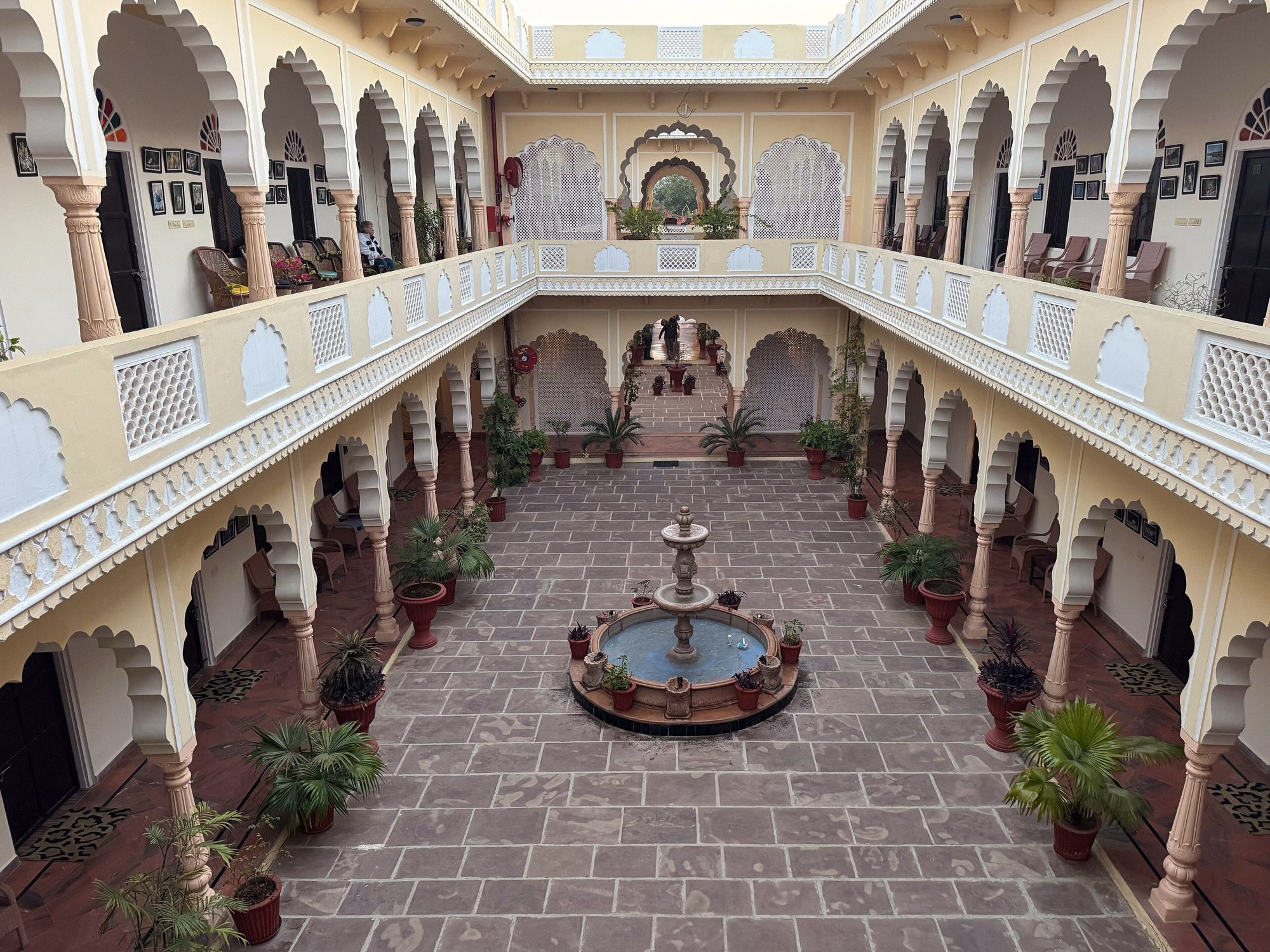
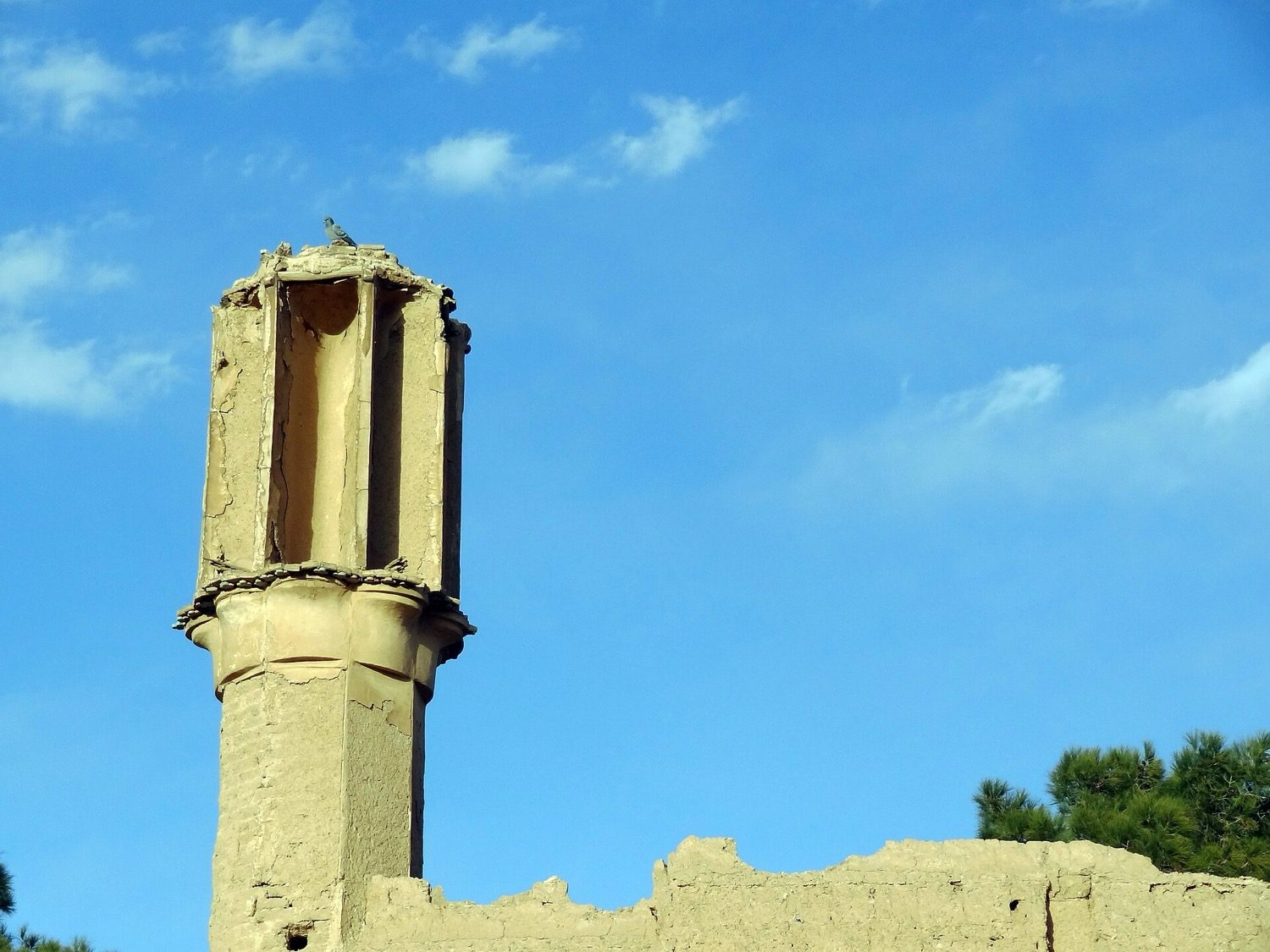
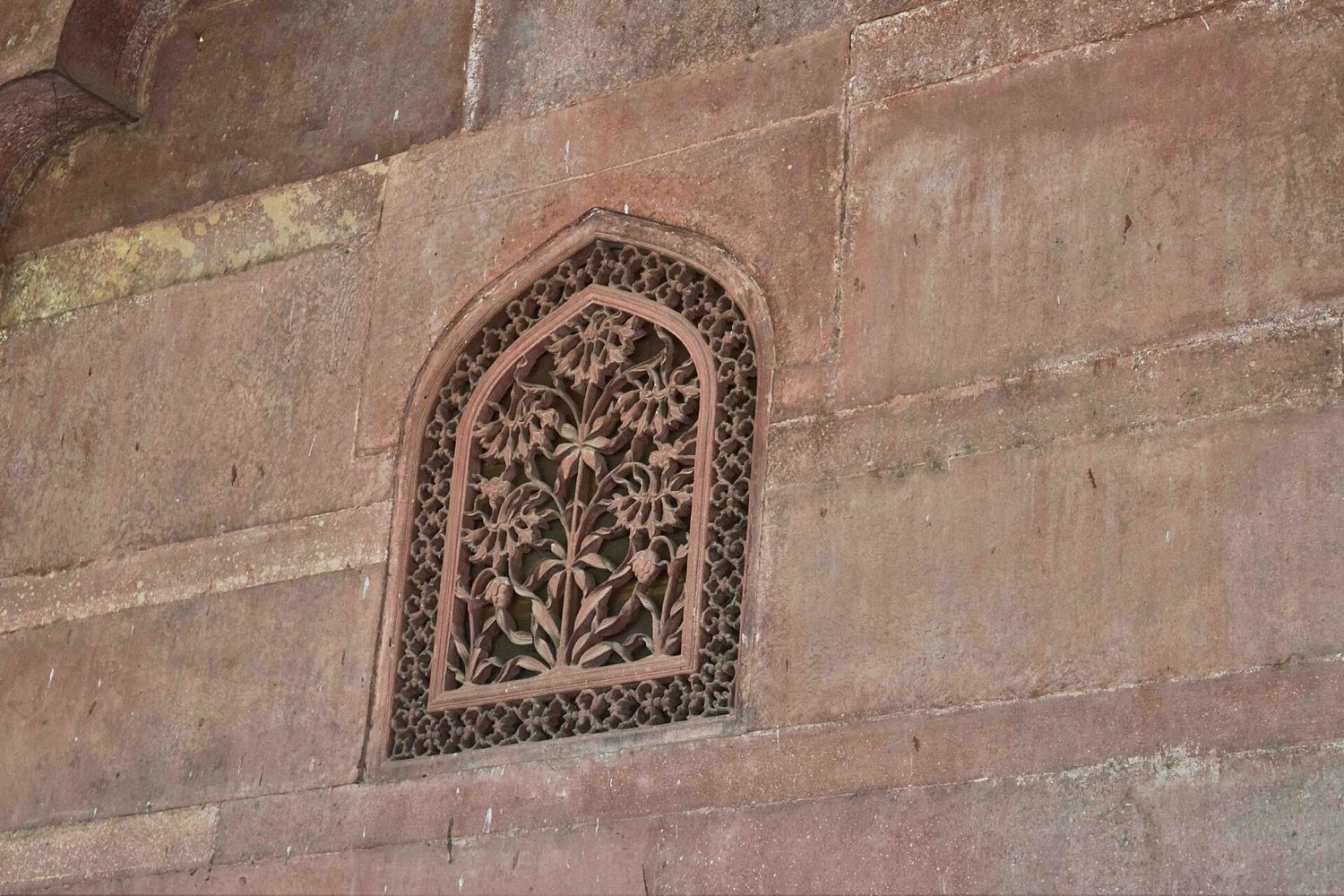
Moving air cools people and flushes heat from a building — and old buildings did it with nothing but form: the courtyard, the jaali, the windcatcher. This final unit gathers natural ventilation, the passive-design strategy for each climate, and the vernacular devices that have always known the answer.
Learning objectives
By the end of this lesson, you will be able to — mapped to the course outcomes for Climatology & Building Physics:
Distinguish wind-driven and stack-driven natural ventilation.
Estimate stack airflow and air changes per hour for a room.
Select passive-design strategies appropriate to each climate.
Explain how vernacular devices achieve passive comfort.
Moving the air
Wind-driven cross ventilation needs an inlet and an outlet; buoyancy-driven stack effect needs a height and a temperature difference. Together they cool people and replace stale air.[11, 12]
Two ways to move air
Wind-driven cross ventilation needs an inlet and an outlet on different pressure faces; making the outlet larger speeds the indoor air. Buoyancy-driven stack effect needs a height difference and a temperature difference — warm air rises out high openings, drawing cool air in low. Stack works even on a still day; cross ventilation needs wind.[11, 12]
Stack airflow & air changes
Passive design & vernacular devices
Each climate has its strategy — mass and courtyards for hot-dry, cross-ventilation and light construction for warm-humid, insulation and south sun for cold — and the vernacular courtyard, jaali and windcatcher embody them.[1, 11]
At a glance
| Aspect | One | The other |
|---|---|---|
| Ventilation driver | Cross: wind pressure, needs inlet + outlet | Stack: buoyancy, needs height + ΔT |
| Works when… | Cross: there is wind | Stack: even in still air (with ΔT) |
| Hot-dry vs warm-humid | Hot-dry: mass, courtyards, small openings | Warm-humid: cross-vent, large shaded openings, light |
| Device | Courtyard: open core, stack + night cooling | Windcatcher: tower capturing high breeze |
| Evaporative cooling | Effective in hot-dry (low humidity) | Useless in warm-humid (adds moisture) |
Key terms
Wind-driven airflow through an inlet and outlet on different pressure faces.
Buoyancy-driven airflow — warm air rises out high openings; needs height + ΔT.
A factor (~0.65) for the real flow through an opening versus the ideal.
Whole-room air replacement rate = airflow × 3600 ÷ volume.
Ventilation through openings on one face only — weaker, shallow reach.
An open-to-sky core giving stack ventilation, night cooling and shaded light.
A perforated screen that shades, diffuses light and accelerates airflow.
A tower that captures high-level wind and ducts it indoors (badgir).
The indoor-to-outdoor illuminance ratio (%) under a standard sky.
Using south sun, mass and glazing (e.g. a Trombe wall) to heat without machinery.
Think it through
Pick a climate and sketch a single room that uses two passive strategies for it (e.g. a shaded courtyard plus cross-ventilation). Use the calculator to check whether a 1 m² high opening over a 3 m stack gives a useful number of air changes.
Self-assessment
1. Stack-effect ventilation requires —
2. Effective cross ventilation needs —
3. Which strategy is WRONG for a warm-humid climate?
Recap
References & further reading
- [1]O.H. Koenigsberger et al., Manual of Tropical Housing and Building. Orient Longman.
- [3]National Building Code of India 2016, Part 8 Section 1 (Lighting & Ventilation). Bureau of Indian Standards.
- [11]B. Givoni, Man, Climate and Architecture / Passive and Low Energy Cooling of Buildings. Elsevier / Wiley.
- [12]S.V. Szokolay, Introduction to Architectural Science. Routledge.
Further reading
- B. Givoni, Passive and Low Energy Cooling of Buildings. Wiley.
- S.V. Szokolay, Introduction to Architectural Science. Routledge.
- O.H. Koenigsberger et al., Manual of Tropical Housing and Building.
Sources gathered and fact-checked June 2026. Published values vary by source, sample and method — treat as indicative and confirm against the cited standard before structural use.
The author
Amogh N P
Architect, interior designer, and creative polymath. Studio Matrx began in his notebooks — his vision of design made honest, useful, and open to everyone. Its Academy is written and taught in his memory, and free, forever.
More about Amogh →