

Climate & Climatic Zones
Reading the climate you must design for.
Climate-responsive design begins with the climate itself. A building in Jaisalmer and one in Mumbai face opposite problems — searing dry heat versus warm, sticky humidity — and the right answer for one is a mistake for the other. This unit learns to read the elements of climate, India's six zones, and the site's own microclimate.
Learning objectives
By the end of this lesson, you will be able to — mapped to the course outcomes for Climatology & Building Physics:
List the elements of climate and the factors that modify them.
Classify India's climatic zones by their temperature and humidity criteria.
Distinguish macroclimate from a site's microclimate and explain the urban heat island.
State the design implications of each climatic zone.
The elements of climate
Five elements — solar radiation, temperature, humidity, precipitation and wind — shaped by latitude, altitude, topography, water and vegetation. Weather is the instant; climate is the long-term average.[1]
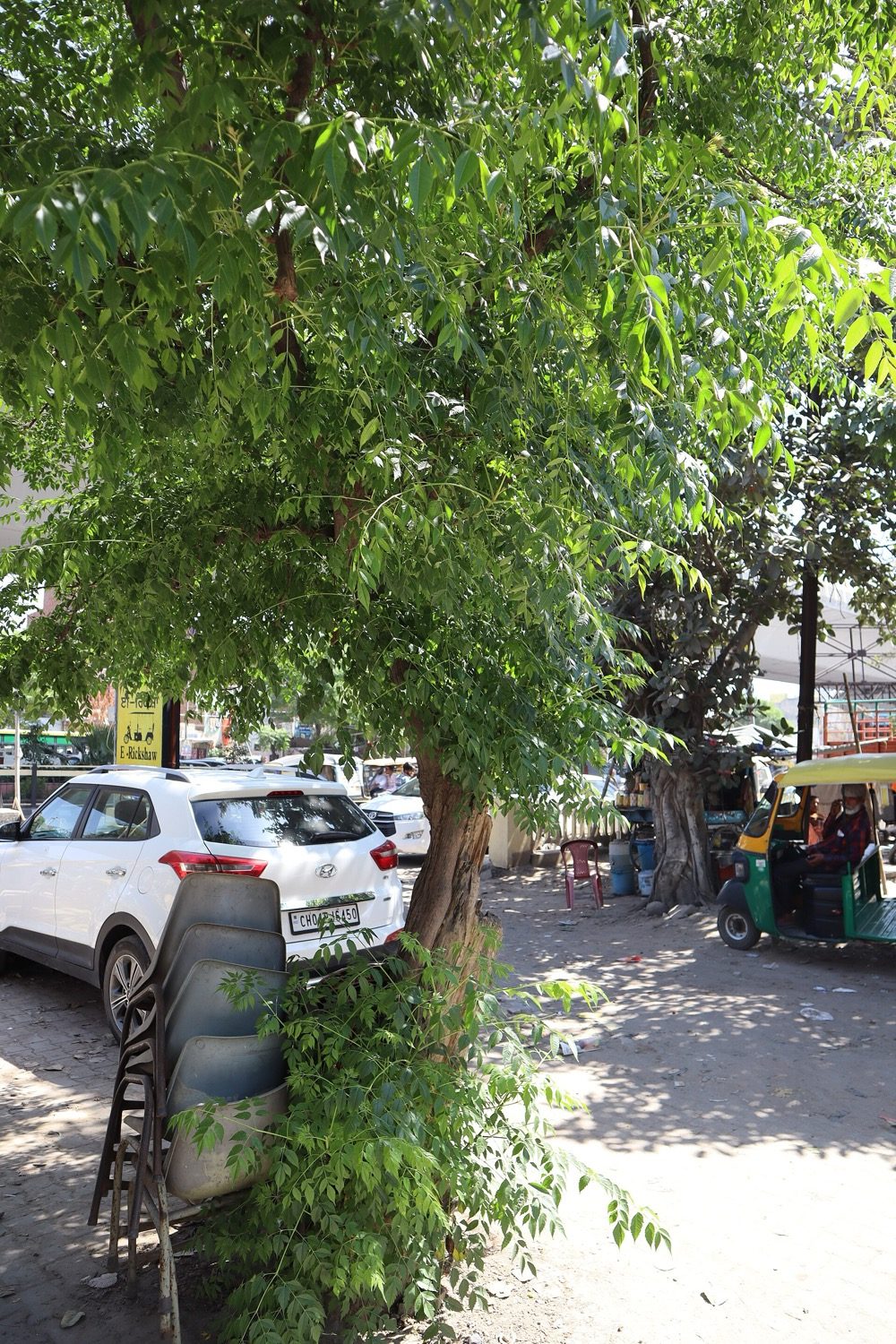
India's climatic zones
NBC and SP 41 classify India by mean monthly temperature and humidity into hot-dry, warm-humid, composite, moderate and cold — each demanding a different building.[2, 3]
| Zone | Temp | Humidity | Cities | Key strategy |
|---|---|---|---|---|
| Hot-Dry | > 30 °C | < 55% | Jaisalmer, Jodhpur, Ahmedabad | Heavy thermal mass, small shaded openings, courtyards, light colours, evaporative cooling. |
| Warm-Humid | > 30 °C | > 55% | Mumbai, Chennai, Kolkata, Goa | Maximise cross-ventilation, lightweight construction, large shaded openings, raised floors. |
| Composite | varies | varies | Delhi, Nagpur, Lucknow | Seasonal hybrid — mass + courtyards for summer, ventilation for monsoon, south sun for winter. |
| Moderate (Temperate) | 25–30 °C | < 75% | Bangalore, Pune | The gentlest — modest shading, good ventilation, little heating or cooling. |
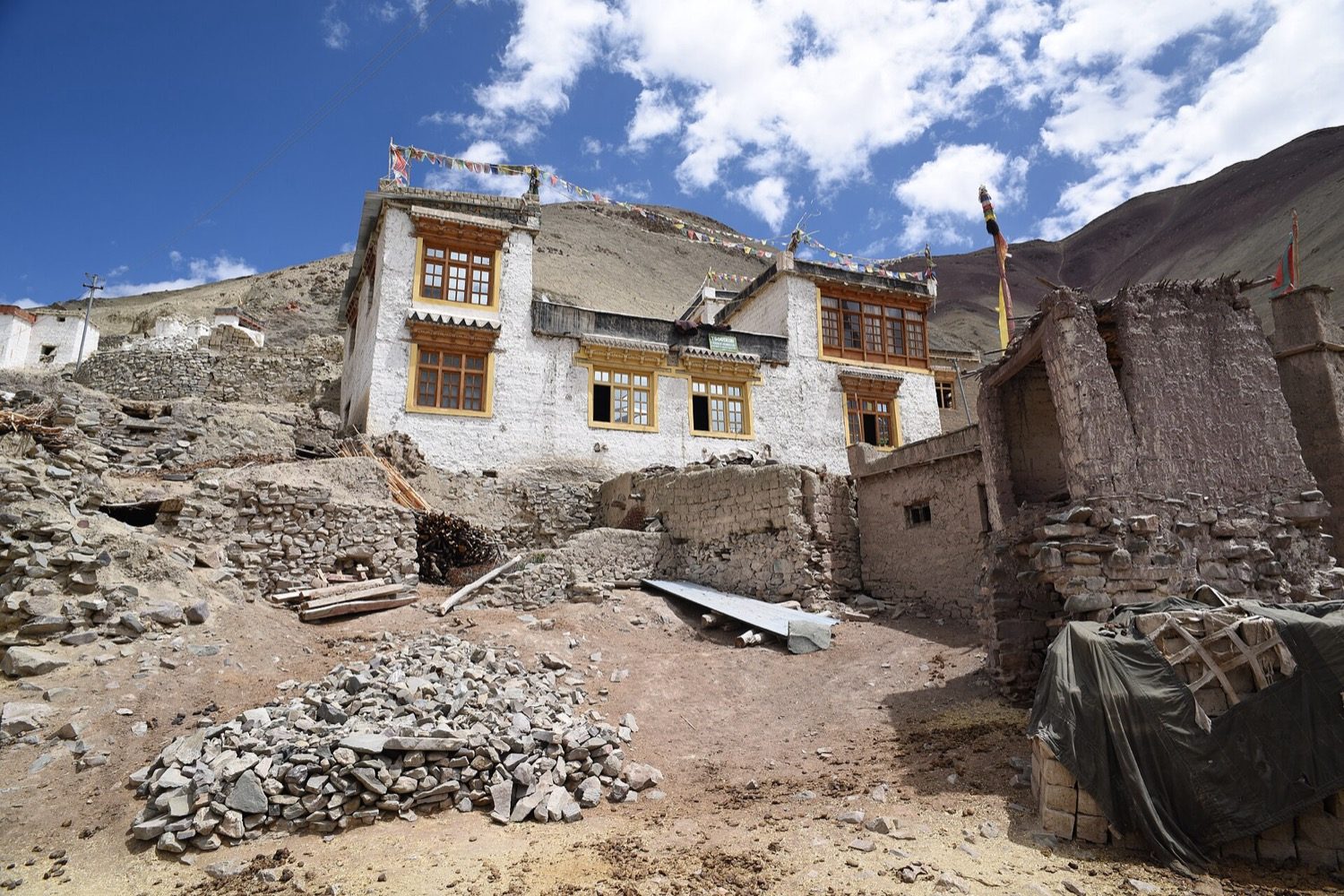
| Cold | < 25 °C | varies | Shimla, Leh, Darjeeling | Compact form, insulation, south glazing for solar gain, minimal exposed surface. |
At a glance
| Aspect | One | The other |
|---|---|---|
| Defining criteria | Hot-Dry: >30 °C, <55% RH | Warm-Humid: >30 °C, >55% RH |
| Right response | Hot-Dry: mass, small shaded openings, courtyards | Warm-Humid: lightweight, big openings, cross-ventilation |
| Scale | Macroclimate: regional (zone map) | Microclimate: the site itself |
| Composite zone | No single zone for ≥6 months | Designs adapt season by season |
| Cold zone problem | Heat loss, not heat gain | Compact form, insulation, south sun |
Key terms
Weather is the instantaneous state; climate is its long-term statistical average (≥30 years).
A region grouped by similar temperature and humidity for design (NBC/SP 41).
The regional climate over hundreds of kilometres — what the zone map shows.
The locally modified climate of a specific site, differing from the region.
An urban core running several °C hotter than its rural surroundings.
The swing between day-maximum and night-minimum temperature; large in hot-dry/deserts.
The fall of air temperature with altitude — about 6.5 °C per 1000 m.
A surface's reflectivity; high-albedo (light) surfaces stay cooler.
Think it through
Name your home town's climatic zone and justify it from its summer temperature and humidity. Then list two features of a local building that respond to that climate — and one that fights it.
Self-assessment
1. India's climatic zones are classified mainly by —
2. A warm-humid climate (Mumbai, Chennai) is best served by —
3. The urban heat island is mainly caused by —
Recap
References & further reading
- [1]O.H. Koenigsberger et al., Manual of Tropical Housing and Building: Climatic Design. Orient Longman.
- [2]SP 41 (S&T):1987 — Handbook on Functional Requirements of Buildings. Bureau of Indian Standards.
- [3]National Building Code of India 2016, Part 8 & Part 11. Bureau of Indian Standards.
Further reading
- O.H. Koenigsberger et al., Manual of Tropical Housing and Building. Orient Longman.
- B. Givoni, Man, Climate and Architecture. Elsevier.
- S.V. Szokolay, Introduction to Architectural Science. Routledge.
Sources gathered and fact-checked June 2026. Published values vary by source, sample and method — treat as indicative and confirm against the cited standard before structural use.
The author
Amogh N P
Architect, interior designer, and creative polymath. Studio Matrx began in his notebooks — his vision of design made honest, useful, and open to everyone. Its Academy is written and taught in his memory, and free, forever.
More about Amogh →