
Timber — Roofing & Joinery
Trusses, joints, and the great timber roofs of South India.
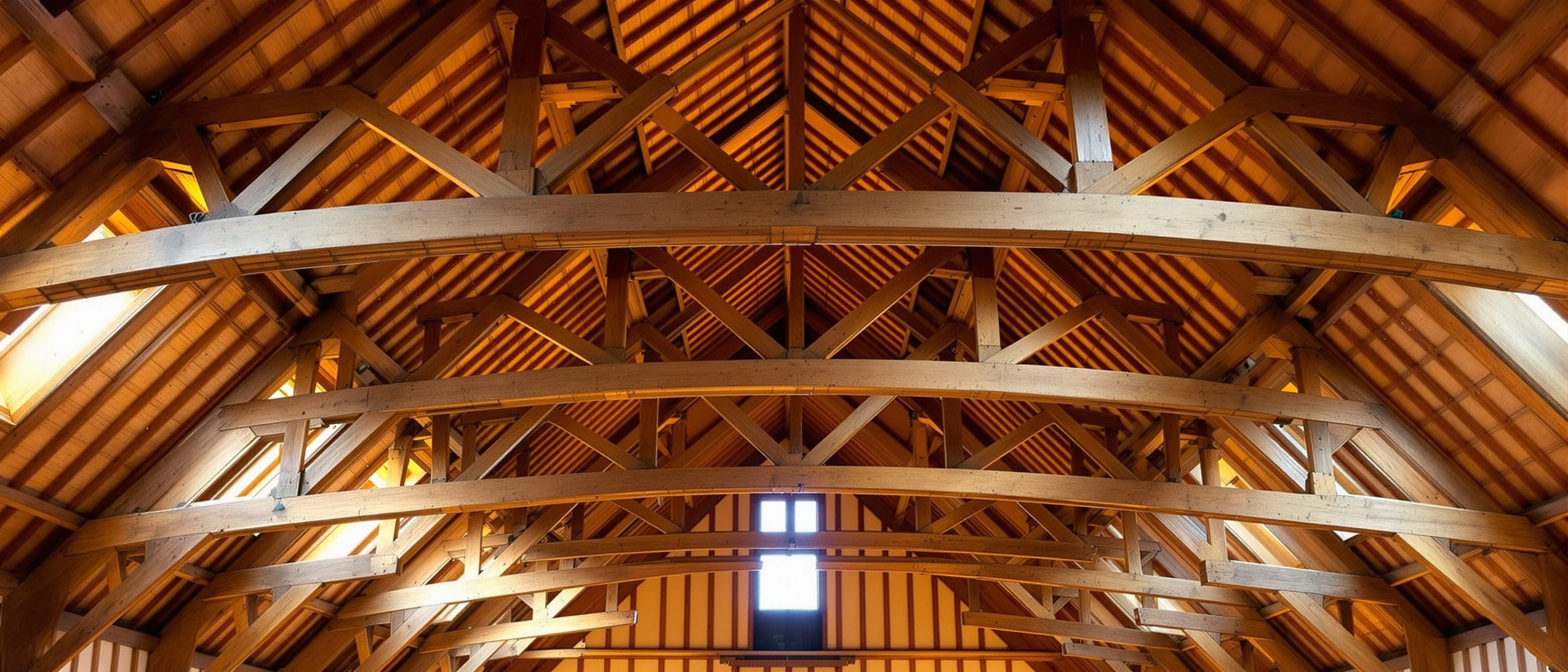
Timber is the original engineered material — strong, light, warm, and worked entirely by hand. This lesson covers the Indian structural timbers and why they are seasoned, the trusses that let a roof span without internal walls, the joints that hold them, and one of the great roofs of South India — the Madras terrace.
Learning objectives
By the end of this lesson, you will be able to — mapped to the course outcomes for Building Materials & Construction I:
Identify the main Indian structural timbers and why timber is seasoned.
Name the members of a king-post and queen-post truss and explain why a truss works.
Match common carpentry joints to where they are used.
Read the layered build-up of a Madras terrace roof.
Timber as a material
Indian construction draws on a few prized structural timbers. All must be seasoned — dried to reduce moisture — before use, or they warp, split and rot. The structural code IS 883 sorts timber into strength groups by stiffness.[1]
| Timber | Character | Use |
|---|---|---|
| Teak (Tectona grandis) | premier hardwood | Strong, durable, dimensionally stable, free of bad seasoning defects — doors, frames, furniture, structure.[2] |
| Sal (Shorea robusta) | heavy hardwood | Very strong and hard, slow to season (refractory) — beams, sleepers, piles.[2] |
| Deodar (Cedrus deodara) | strongest Indian conifer | Light, durable softwood — construction, beams, window frames, shingles.[2] |
Pitched-roof trusses
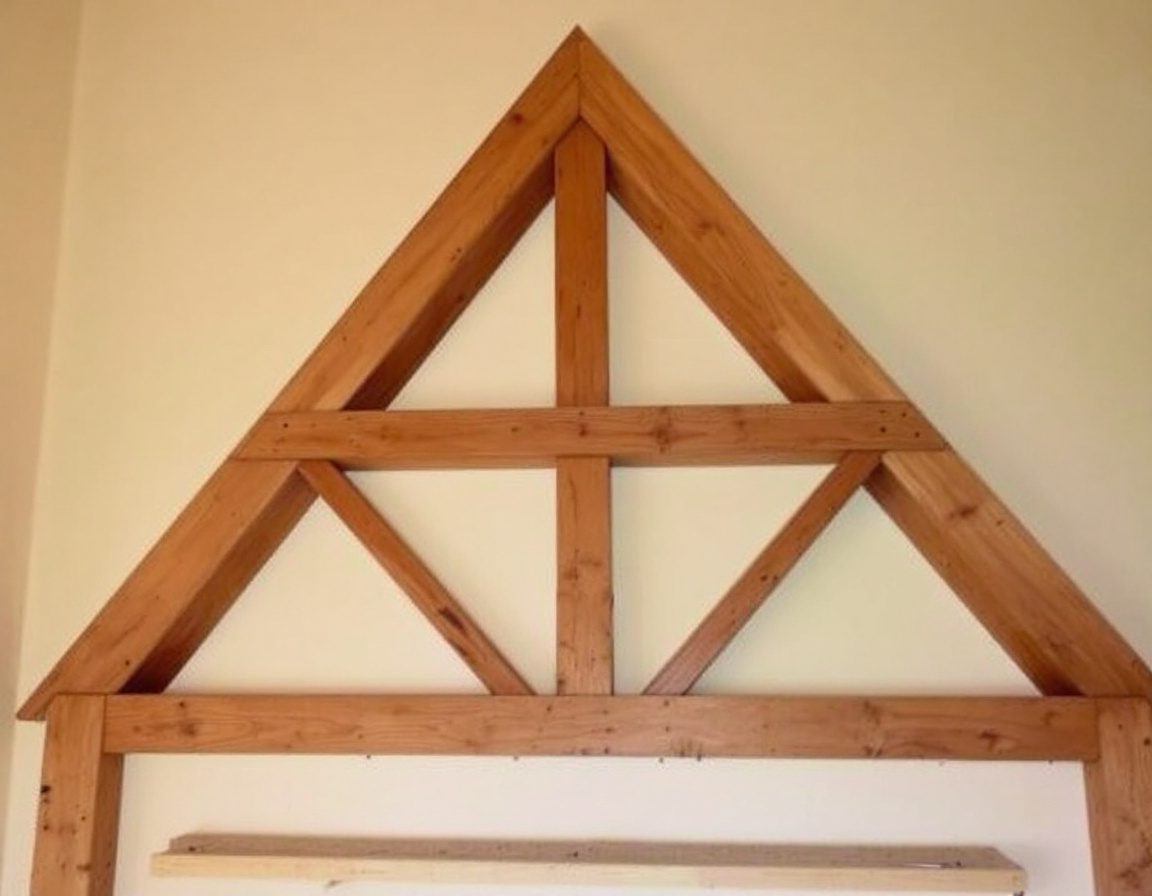
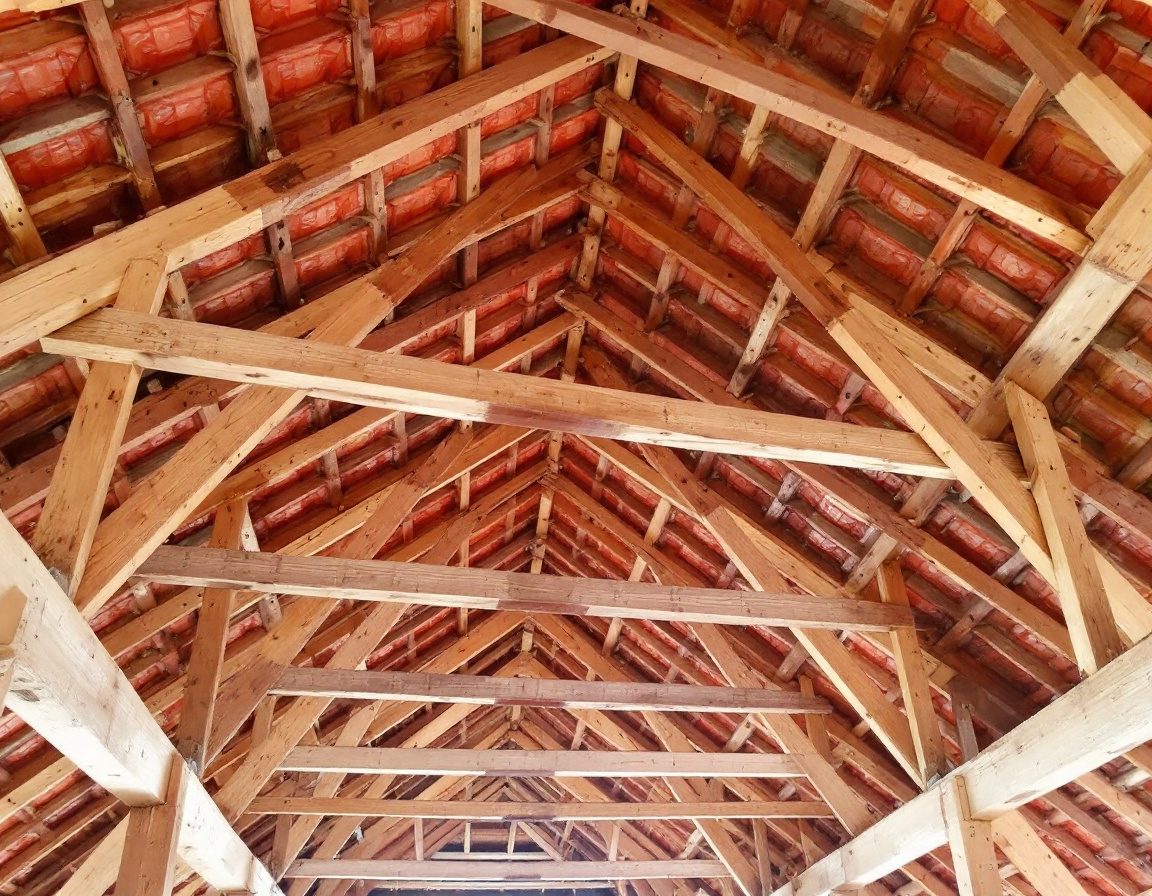
A truss is a triangle: when a load pushes down on the sloping rafters, they try to spread the walls apart, and the horizontal tie beam in tension holds them in. The wider the span, the more members you add. Select a truss.[4]
Lean-to (mono-pitch)
The simplest roof — rafters on a single slope between a high and a low wall. Spans up to about 2.4 m.[3]
Timber joinery
With no bolts, traditional carpentry holds itself together with cut joints — each shaped for the forces it must carry.[7]
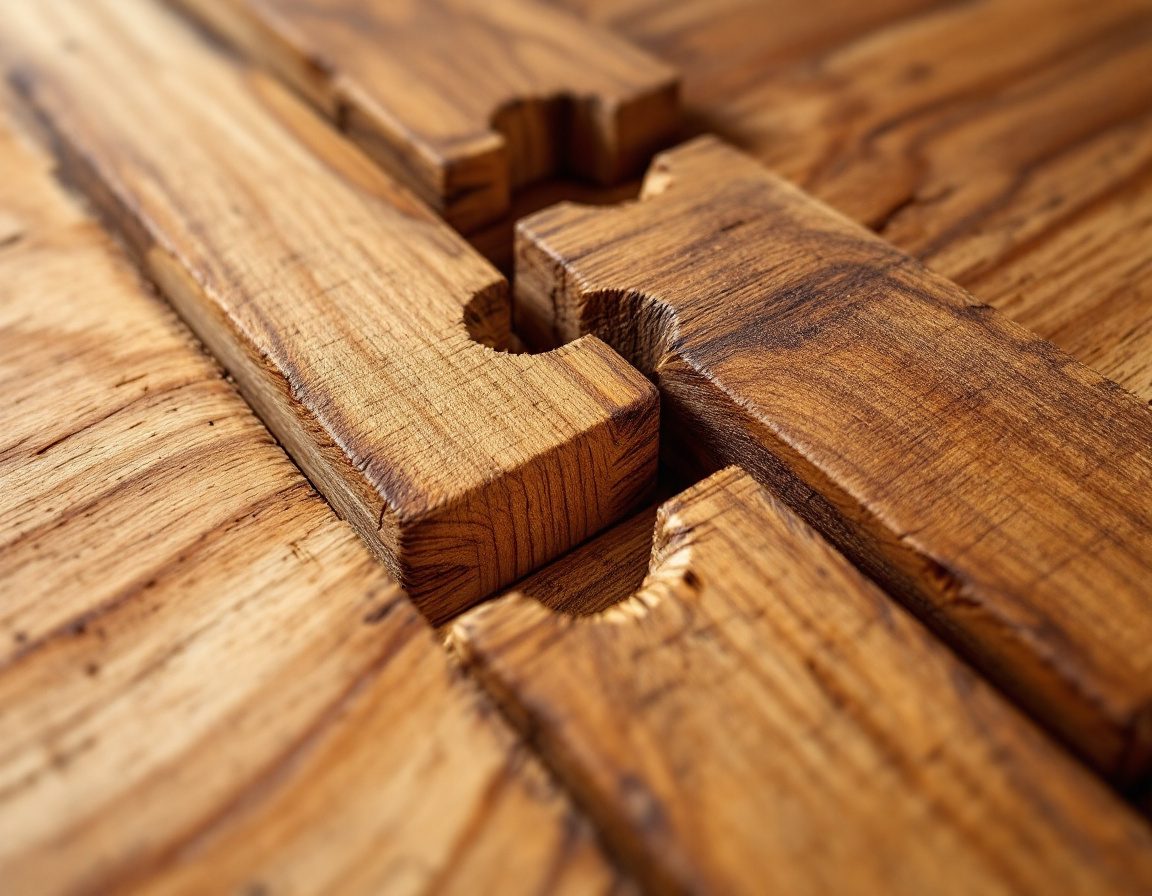
A tenon (tongue) fits a mortise (slot) — the strong framing joint for doors, windows and truss members.
Interlocking flared pins resist pulling apart — drawer, box and cabinet corners.
Half-depth cut from each member so faces sit flush at a crossing.
An open mortise receives a tenon — common at strut-to-tie junctions in trusses.
A tongue on one board enters a groove in the next — floor and wall boarding.
Inserted dowels (wood or metal) lock the ends together — strong and concealed.
The Madras terrace roof
The Madras terrace roof is the great flat roof of South India — prized for being durable and cool in the heat. It is built up in clear layers.
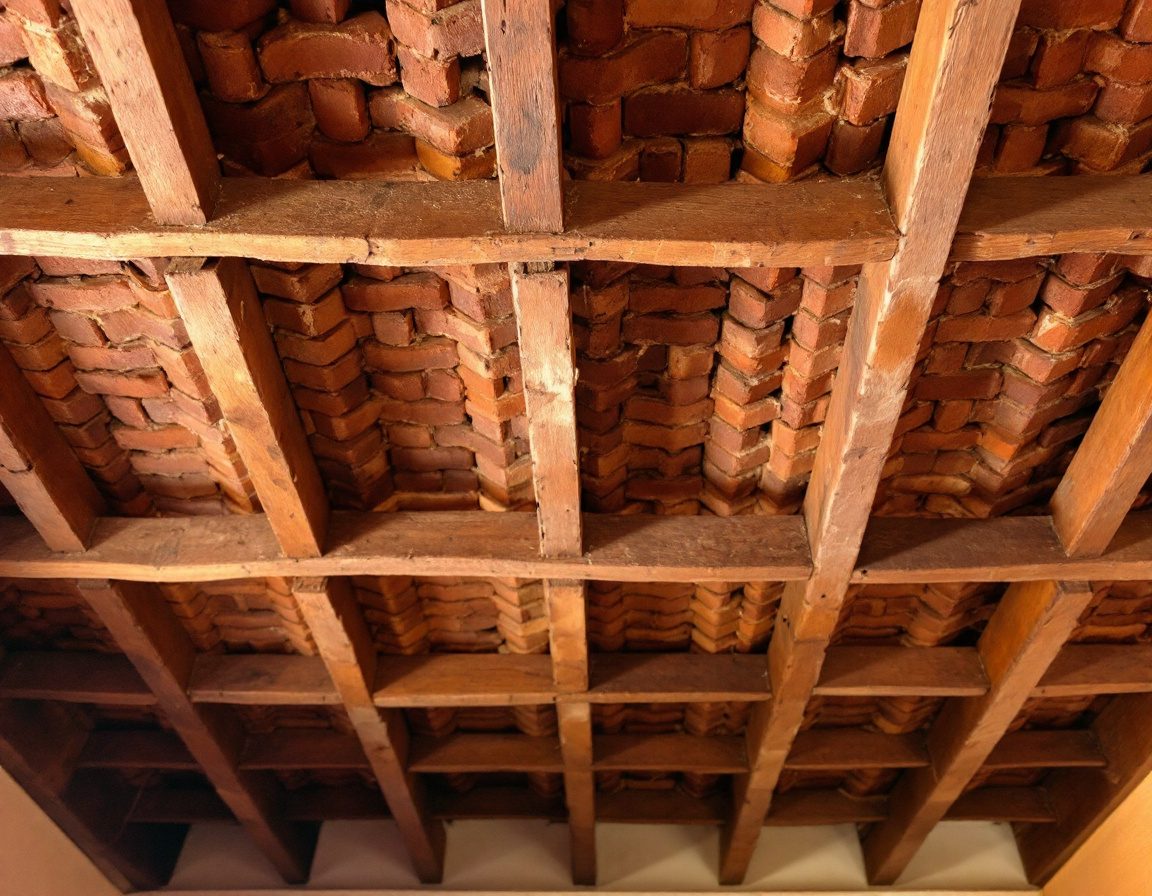
- 1Timber joists (usually teak) spanning the shorter way at close spacing.
- 2Flat 'Madras terrace' bricks laid on edge at ~45° in a herringbone pattern, bedded in lime mortar.
- 3A lime-concrete (brick-bat) topping to level and weatherproof.
- 4A smooth finish / weathering coat on top.
Build-up after Brick&Bolt / Estate Orbits construction guides.[6]
Self-assessment
1. Why does a roof truss work?
2. Which truss suits the widest span (8–12 m)?
3. In a Madras terrace roof, what are laid on edge between the joists?
Recap
References & further reading
- [1]IS 883:2016 — Design of Structural Timber in Buildings — Code of Practice (Fifth Revision). BIS. https://archive.org/details/gov.in.is.883.2016
- [2]Indian structural timbers (teak, sal, deodar) — properties and uses; IS 399 classification. https://law.resource.org/pub/in/bis/S03/is.399.1963.pdf
- [3]Pitched-roof types and spans (lean-to, couple, collar). First in Architecture — roof construction details. https://www.firstinarchitecture.co.uk/detail-post-pitched-roof-details/
- [4]King post truss — members and spans. Gharpedia. https://gharpedia.com/blog/king-post-truss/
- [5]Queen post truss — members and spans. Firgelli Automations technical blog. https://www.firgelliauto.com/blogs/mechanisms/queen-post-roof-truss
- [6]Madras terrace roof — construction build-up. Brick&Bolt construction guide; Estate Orbits. https://www.bricknbolt.com/blogs-and-articles/construction-guide/madras-terrace-roof
- [7]Timber joints in carpentry and joinery. CivilEngPro. https://civilengpro.com/timber-joints-in-carpentry-and-joinery/
Further reading
- Punmia, B.C., Jain, A.K. & Jain, A.K. Building Construction (Carpentry & Joinery). New Delhi: Laxmi Publications.
- Rangwala, S.C. Building Construction. Anand: Charotar Publishing House.
- McKay, W.B. Building Construction (carpentry & joinery volume). London: Routledge.
- IS 1003 (Parts 1 & 2) — Timber Panelled and Glazed Shutters. BIS.
Sources gathered and fact-checked June 2026. Published values vary by source, sample and method — treat as indicative and confirm against the cited standard before structural use.
The author
Amogh N P
Architect, interior designer, and creative polymath. Studio Matrx began in his notebooks — his vision of design made honest, useful, and open to everyone. Its Academy is written and taught in his memory, and free, forever.
More about Amogh →