
Commencement to OC/CC
The two certificates that bookend a legal build — and why the last one decides whether your house is truly yours.
Lesson byAmogh N P· Architect & interior designer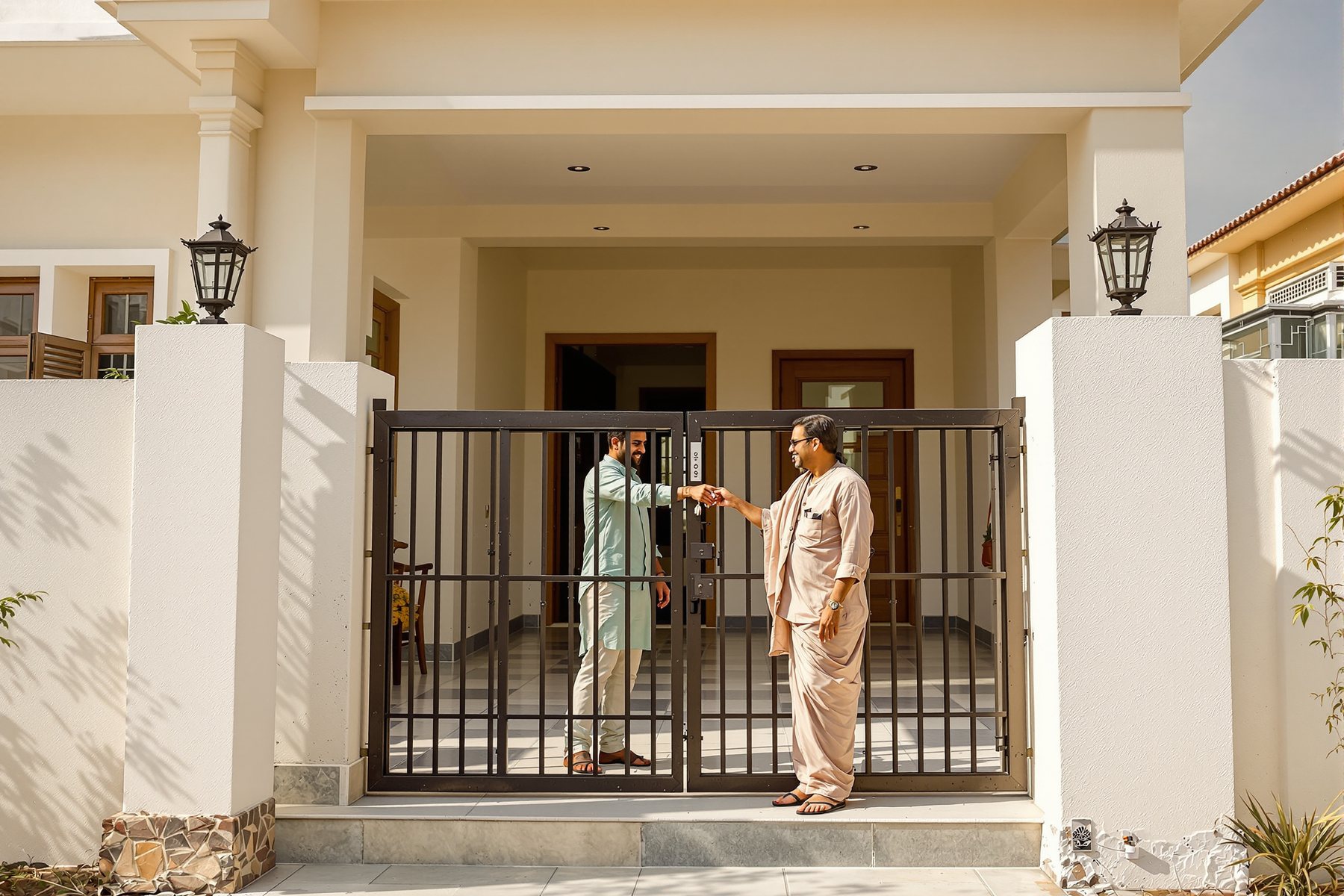
The house was finished, the family moved in, and the bank held back the last 15%.
Everything looked done — paint dry, furniture in, a housewarming planned. But the final loan disbursement, the legal water and power meters, and a clean resale title were all waiting on one document the owner had never chased: the Occupancy Certificate. A house can be built and still not be legally fit to occupy. The OC is the line between the two — and it's the easiest thing to forget at the exact moment you most want to stop dealing with paperwork.
Three certificates: permission to start, proof you finished, permission to live
The commencement certificate starts you; the completion certificate proves you finished right
Three certificates bookend a legal build, in order:
- Commencement Certificate (CC) — issued after plan sanction, this is the authority's formal permission to begin construction. Some states fold it into the sanction; others issue it separately, sometimes after the foundation/plinth is checked. You start on this, not on the sanctioned plan alone. - Completion Certificate — applied for once building finishes, this certifies the structure was built as per the sanctioned plan — same FAR, same setbacks, same height. An engineer/architect submits as-built drawings; the authority may inspect. - Occupancy Certificate (OC) — the final clearance confirming the building is safe and fit to occupy: structurally sound, with working water, sewerage, electricity, fire safety and the required NOCs.
Beware the trap: a small deviation during the build — a balcony enclosed, a setback shaved, an extra room — can hold up the Completion Certificate and OC until it's regularised or removed. Build to the sanctioned plan so the closing certificates are a formality, not a fight.
Build exactly what was sanctioned, and the OC almost signs itself.
No OC, and your finished house is legally incomplete
The OC isn't bureaucratic decoration — it's the document the rest of your life with this house runs on:
- Home loan — banks commonly release the final disbursement only against the OC, and a future buyer's loan against your house can be refused without it. - Legal utilities — permanent water, sewerage and electricity connections (and gas) are meant to be sanctioned only for a building with an OC; living on temporary/construction connections is a standing risk. - Resale & title — selling without an OC shrinks your buyer pool, drops your price, and can stall the buyer's registration and loan. It's a quiet discount you pay later for paperwork skipped now. - Penalties & safety — occupying without an OC can attract fines and, in principle, action; it also means no independent body has certified the building safe to live in.
Apply for the OC the moment the build genuinely matches the sanctioned plan — don't let "we've already moved in" turn into years of an unregularised home. If a deviation crept in, regularise it early while it's cheap; some states run periodic regularisation/amnesty windows, but never count on one.
Treat the **OC as part of "finished", not an optional extra** — a house without one is built but not legally complete. Make obtaining it a milestone in your contract and hold a retention payment until the architect delivers the Completion Certificate and OC. The day you most want to stop dealing with approvals is exactly the day this matters most: for your final loan tranche, your legal meters, and your eventual resale.
Close the project formally: as-built drawings, the Completion Certificate application, and the OC, with every NOC and the deviation report reconciled to the sanctioned plan. Counsel clients against mid-build changes that breach sanction, and document any approved revisions. Many disputes and unpaid final fees trace to a project that was "finished" on site but never legally completed on paper — own that closure.
The certificate chain — commencement, completion, occupancy — is how a project is legally born, verified and released for use; it mirrors the design-certify-build-oversee roles and closes the regulatory loop opened at sanction. Understand that as-built must reconcile to as-sanctioned, and that the OC ties together structural, services and fire-safety compliance into a single fitness-to-occupy clearance.
“Once the house is built, I don't really need the Occupancy Certificate.”
You do. Without an OC the house is built but not legally fit to occupy: banks may withhold the final loan disbursement, permanent water/sewerage/electricity connections can be refused, resale value and your buyer pool shrink, and occupying it can attract penalties. The OC certifies the building was completed per the sanctioned plan and is safe to live in — it's the difference between a finished structure and a legal home.
Make the OC a finish-line milestone, not an afterthought:
- 01Write the Completion Certificate and OC into your contract as deliverables, and tie a retention payment (e.g. the last 5-10%) to your architect handing them over.
- 02Through the build, check that what's going up matches the sanctioned plan exactly — flag any deviation immediately, while it's cheap to fix or formally revise.
- 03When the build is done, apply for the Completion Certificate and OC before you settle in fully — they unlock your final loan tranche, legal utility meters and a clean resale title.
The hardest discipline in building comes right at the end, when you're exhausted and want to just move in. But a house without an Occupancy Certificate is built, not legally complete — and the gap shows up later as a withheld loan tranche, a refused meter, or a resale haircut. Build to the sanctioned plan, chase the OC, and only then is the house truly, fully yours.
Three certificates bookend a build: the Commencement Certificate (permission to start), the Completion Certificate (built per the sanctioned plan), and the Occupancy Certificate (OC) — the fitness-to-occupy clearance. The OC unlocks your final home-loan disbursement, legal water/power/sewerage connections, and a clean resale. Build to the sanctioned plan so it's a formality, and never skip it.
What is the difference between OC and CC in construction?
The Completion Certificate confirms the building was constructed as per the sanctioned plan — same FAR, setbacks and height. The Occupancy Certificate (OC) goes further and certifies the building is safe and fit to occupy, with working water, sewerage, electricity, fire safety and the required NOCs. You typically need both; the OC is the one that lets you legally move in.
Why is the occupancy certificate important for a home loan?
Banks commonly release the final loan disbursement only against the OC, because it proves the house is legally complete and safe to occupy. Without it, your last tranche can be withheld, and a future buyer may be unable to get a loan against the property. The OC protects both your financing and your resale value.
Can I sell a house without an occupancy certificate in India?
You can try, but it's harder and costs you: many buyers and their banks won't proceed without an OC, shrinking your buyer pool and your price, and it can stall the buyer's registration and loan. An unauthorised deviation may need regularising first. It's far cheaper to obtain the OC when you finish than to fix it at sale.
The author
Amogh N P
Architect, interior designer, and creative polymath. Studio Matrx began in his notebooks — his vision of design made honest, useful, and open to everyone. Its Academy is written and taught in his memory, and free, forever.
More about Amogh →That closes Approvals & Compliance — your house is now legal to build and legal to live in. Next, Module 5 turns to the people who'll actually raise it: choosing your team and signing a contract that protects you.