
 Lesson 4.1
Lesson 4.1 · BIPV in the Building Envelope
Solar Roofs & Roof Integration
The roof faces the sky more squarely than any other surface a building has, so it catches the most sun, can be tilted to catch even more, and is usually the first and best place to turn the envelope into a generator - if the covering can generate while it keeps the rain out
Every roof already faces the sky all day long. The only question a solar architect asks is whether that surface is going to keep wasting the sunlight - or start turning it into the building's power.
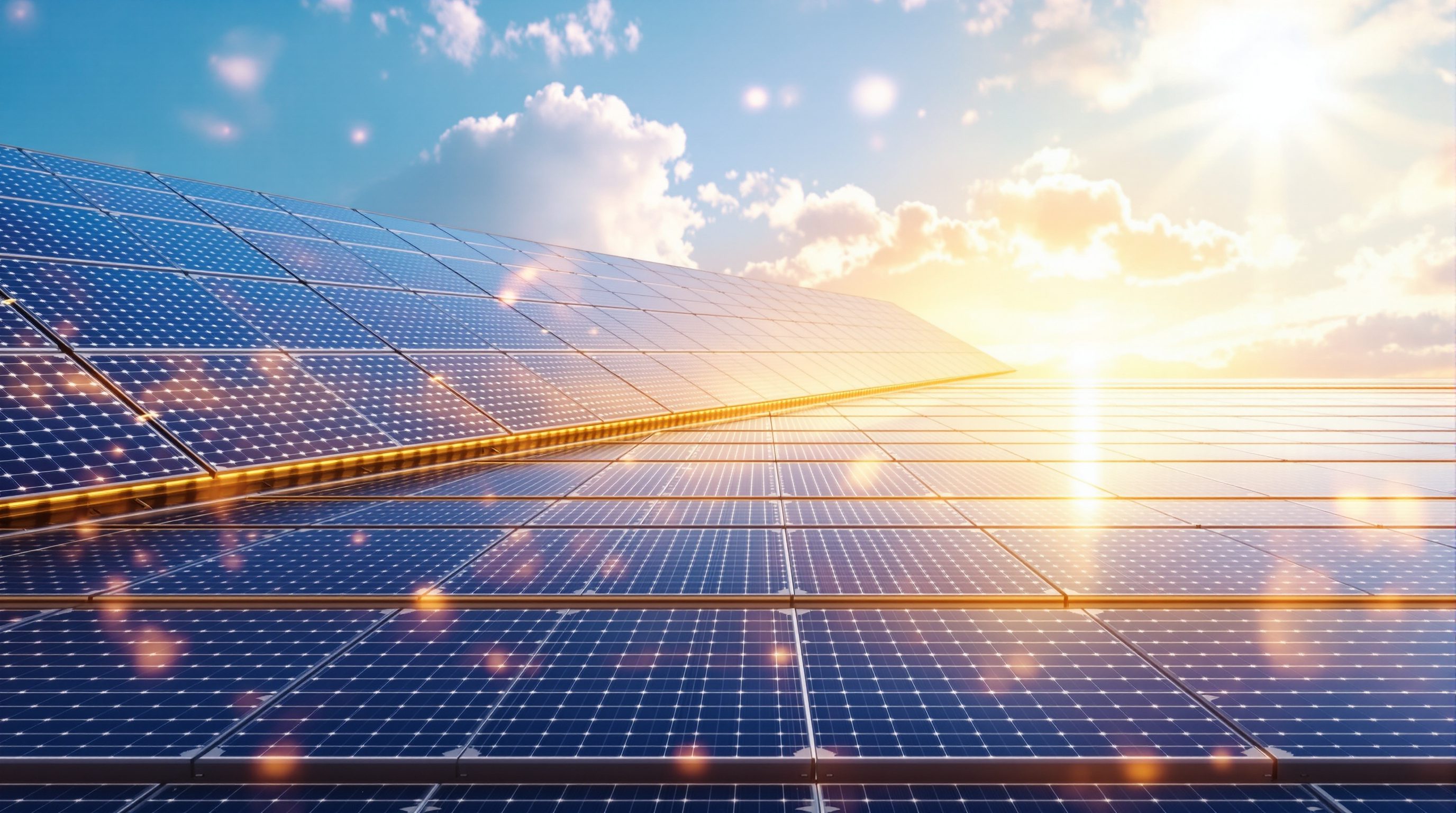
Of all the surfaces on a building, the roof is the one that looks most directly at the sun. It is large, it is usually unshaded, and unlike a wall it can be tilted to face the sun squarely - so for pure electricity per square metre, the roof beats every other part of the envelope, most of the time, by a wide margin. That is why, whenever someone asks where to start with solar on a building, the honest answer is almost always the same: the roof, first.
That makes the roof the natural home of building-integrated photovoltaics too. But a BIPV roof has to do something a bolted-on panel never worries about - it has to *be the roof*. It must keep the rain and wind out, carry snow and maintenance loads, last for decades, and shed heat, all while generating. This lesson looks at the three main ways to make a roof itself generate - solar tiles and shingles, in-roof (flush) arrays, and PV bonded to standing-seam metal - and is honest that on a plain, hidden roof a cheap bolted-on array (BAPV) often still wins. The roof is the prize surface; making the roof covering itself the generator is a design choice you make with eyes open.
Roof = best sun, look here first. Solar tiles / in-roof / standing-seam. But: don't leak, and ventilate behind it. Hidden flat roof? Cheap bolt-on usually wins.
Why the roof usually wins
Start with the physics, because it settles most of the argument. A photovoltaic surface generates in proportion to the sunlight that lands on it, and the roof collects more sunlight, over the year, than any other part of a typical building. Three things make it the prize. First, orientation and tilt: a roof can be pitched to face the sun and set at a tilt close to the ideal for its latitude, so it catches the sun far more squarely than a vertical wall ever can - and it can be laid out to face the best direction (broadly south in the northern hemisphere, north in the southern) rather than being stuck with whatever way the site faces. Second, exposure: roofs are usually the least shaded surface on a building - above the trees, the neighbours and the street furniture that throw shadows on walls and windows - and shading is the single most brutal enemy of PV yield. Third, area: on most low- and mid-rise buildings the roof is simply the biggest single uninterrupted plane the envelope offers.
Put those together and the roof typically delivers the highest annual yield per square metre of any envelope surface, which is exactly why conventional rooftop solar took off first and why it dominates installed solar on buildings worldwide - and in India, where the rooftop-solar programme is enormous and net-metering policy is built around it. For a solar architect this has a clear consequence: the roof is where you look first, every time. If a building is going to generate at all, the roof is almost always part of the answer, and often the whole of it.
The honest corollary matters just as much. Because the roof is so good, and because on many buildings it is barely seen from the ground, it is also the surface where the case for *integrated* PV is weakest and the case for a cheap bolt-on array is strongest. A flat commercial roof nobody looks at wants racked, tilted, ventilated standard panels - BAPV - almost every time. The roof is the prime *solar* surface; whether it should be a prime *BIPV* surface is a separate, honest question this lesson keeps returning to.
Roof = biggest, least-shaded plane, and you can TILT it at the sun. Best yield per square metre. Look here first - always.
Three ways to make a roof generate
When integration does make sense - a visible pitched roof on a house, a design-led building, a re-roofing that can pay for itself twice - there are three broad families of roof BIPV, and it helps to hold them apart.
Solar tiles and shingles replace the roof covering unit by unit. A solar shingle or solar tile is a small PV element shaped and laid like a conventional tile or slate, so the finished roof reads as a roof, not as an array sitting on one. This is the most visually seamless option and the one most associated with high-end housing; it is also generally the most expensive per watt and the most labour-intensive to lay and wire, with many small units and many connections. It shines where appearance is paramount and the roof is seen.
In-roof (flush) systems set a more-or-less standard PV laminate *into* the roof plane rather than on racking above it, with a surrounding flashing kit that makes the array itself the weather layer over its footprint. The result sits flush with the surrounding tiles or slates - cleaner than a raised array, cheaper than full solar tiles, and a common sensible middle path on pitched domestic roofs, especially on new build or a re-roof.
Standing-seam PV bonds flexible thin-film laminates onto the flat pans of standing-seam metal roofing. The metal roof does the weatherproofing; the PV rides on it with no roof penetrations, which suits large industrial and agricultural roofs and lightweight structures. Yield per square metre is usually lower (thin-film), but the metal roof was going on anyway and there are no holes to leak.
Across all three, the through-line of this course holds: the PV *is* the roof, so removing it would leave a hole - that is what makes it BIPV rather than a bolt-on. The binding choices between these families - loads, fixings, fire behaviour, exact weather detailing - are set with the manufacturer's system and the engineer, never picked from a brochure alone.
Weathertightness and heat - the two things that bite
A roof that generates is still, first, a roof - and two physical realities decide whether a roof BIPV system is a success or an expensive regret: keeping the water out, and keeping the modules cool.
Weathertightness is non-negotiable and unforgiving. Every joint, every edge, every penetration where a cable passes through, every junction between PV and conventional covering, is a place water can get in - and a roof leak is far more damaging and far harder to trace than a shortfall in generation. Integrated roof PV therefore lives or dies on its flashing, laps, drainage and detailing, and this is precisely the territory to hand to the manufacturer's tested system and a competent roofing engineer. A BIPV roof that generates beautifully but leaks has failed at its primary job. This is also why re-roofing moments are the natural time to integrate: the weather layer is being rebuilt anyway, so the PV can become part of a properly detailed new roof rather than a retrofit that compromises an old one.
Heat is the quieter enemy. PV modules lose efficiency as they get hotter - a hot cell simply produces less - and a roof in full sun, especially in the Indian climate, gets very hot. A bolted-on array on racking has air moving freely on all sides and stays relatively cool; an integrated roof element pressed into the roof build-up can trap heat behind it, running hotter and generating less, and potentially driving heat into the space below. Good roof BIPV therefore designs in ventilation behind the modules - an air gap or ventilated cavity that lets warm air rise away and keeps the PV (and the roof) cooler. This ventilation penalty is one of the real, honest reasons a well-ventilated bolt-on array can out-generate an integrated one of the same area. Design the airflow deliberately; do not assume it.
Get weathertightness and ventilation right and a roof BIPV system can be excellent. Get either wrong and you have a leak, a hot roof, or a generator that quietly under-delivers - which is why both are engineered, not assumed.
A BIPV roof is a ROOF first. Rule 1: don't leak (flashing = engineer). Rule 2: stay cool (ventilate behind, or lose yield).
So when is a solar roof the right move?
The competent, honest position is not "integrate the roof because you can," but "integrate the roof when integration earns its premium." Weigh it case by case.
Roof BIPV tends to win when the roof is *seen* and appearance matters - a house, a boutique building, anything where a raised array would look like an afterthought; when the roof is being built or replaced anyway, so the PV displaces the cost of tiles, slates or metal you would otherwise buy, and can be detailed into a new weather layer; when the roof form is complex or design-led and a rigid rectangular array would sit awkwardly; and where the client values solar being an expressed, intentional part of the architecture. In these cases the integration buys real things - a better-looking building, a displaced material cost, a properly detailed roof - that offset its higher price per watt.
Roof BIPV tends to lose when the roof is a plain, hidden expanse nobody sees - a flat commercial or warehouse roof, a rooftop behind a parapet - where a cheap, well-ventilated, optimally tilted bolt-on array (BAPV) will generate more electricity per rupee with less risk; when the existing roof is sound and has decades of life left, so there is no material cost to displace and every reason not to disturb a working weather layer; and wherever squeezing the maximum kilowatt-hours out of a tight budget is the whole point. On a hidden roof, honesty usually points to BAPV.
And two things are always deferred, whichever way you go: the structural question of whether the roof and structure can carry the system safely, and the electrical and fire design of the array itself, belong to qualified structural and electrical engineers and the manufacturer's tested data, not to a designer's assumption or a yield figure read off a datasheet. The architect owns the judgement of *whether and how* to integrate the roof beautifully and weather-tight; the engineers own whether it stands up, stays dry in the binding sense, and is electrically safe. That division - design judgement here, binding engineering there - is the discipline that makes a solar roof a genuine asset rather than a gamble.
Weathertightness
Whether the integrated roof actually keeps water out
Flashing, laps, drainage and penetration detailing follow the manufacturer's tested system and a roofing engineer. A BIPV roof that leaks has failed its primary job. Module 5.4.
Ventilation / heat
Keeping the modules (and roof) cool enough to perform
PV loses output as it heats; integrated roofs need a designed air gap behind them. A well-ventilated bolt-on array can out-generate a trapped integrated one. Module 6.4.
Structural loading
Whether the roof and structure can carry the system safely
Dead, wind, snow and maintenance loads on the roof BIPV belong to a qualified structural engineer, never a designer's assumption. Module 7.
Roof BIPV vs BAPV
Integrated roof covering versus a bolt-on array
Integrate when the roof is seen, being re-covered anyway, or design-led; use BAPV on plain hidden roofs where cheap tilted panels yield more per rupee. Choose honestly. Modules 0.3, 5.2.
Workshop - decide how a real roof should generate
The roof is the prime surface, but the right way to make it generate depends on the roof. In this workshop you assess one real roof and reason to an honest recommendation - integrated, bolt-on, or neither.
A roof you can see or picture, a rough sense of its orientation and shading, and this lesson. No calculation - the yield numbers, loads and detailing come later, with proper tools, the manufacturer and an engineer.
Goal: a reasoned recommendation for how one roof should (or should not) generate
Inputs: a building whose roof you can see or picture + its rough orientation + this lesson
Time: ~40 minutes
- 1Describe the roof honestly: its pitch and orientation, roughly how much sun it gets, whether it is shaded (trees, neighbours, plant, parapets), how visible it is from the ground, and its rough age and remaining life.
- 2Estimate the prize: qualitatively, is this a high-, medium- or low-yield roof? Note the one or two factors driving that (great orientation but shaded? big but flat and hidden?).
- 3Pick the family: if integration fits, would solar tiles/shingles, an in-roof flush array, or standing-seam PV suit this roof best - and why? If integration does not fit, say a bolt-on array (BAPV) is the honest answer and why.
- 4Stress-test the two obligations: for your chosen approach, note where water could get in (what detailing would you flag to the manufacturer and engineer?) and how the modules would stay cool (is there a ventilation path?).
- 5Write a one-paragraph recommendation: how this roof should generate, whether integrated or bolt-on, with the weathertightness, ventilation and structural questions explicitly flagged as engineer-and-manufacturer decisions.
You’ll walk away with
A one-page roof recommendation: the roof described, its solar prize estimated, an honest integrated-vs-bolt-on-vs-neither call with a named integration family if relevant, and the weathertightness, ventilation and structural questions flagged for the specialists. Reasoning, not a specification.
Three altitudes on the same idea
Read the band that fits you — or all three.
The roof is your highest-yield surface, so it is where solar design starts - but making the roof covering itself the generator is a deliberate choice, not a default. Reach for roof BIPV (solar tiles, in-roof arrays, standing-seam PV) when the roof is seen, when it is being built or re-covered anyway so the PV displaces a material cost, or when the architecture wants solar expressed; reach for a plain bolt-on array (BAPV) on a hidden flat roof where cheap, tilted, well-ventilated panels will out-generate an integrated system per rupee. Whichever you choose, design in ventilation behind the modules to protect yield and detail the weather layer obsessively - then defer the binding weathertightness system, structural loading, and electrical and fire design to the manufacturer's tested product and qualified engineers. Own the integration and the honest go/no-go; hand off what stands up, stays dry and is safe.
A solar roof reaches the interior mostly as heat and as the top-lit spaces it can transform. An integrated roof pressed into the build-up without ventilation can run hot and push that heat into the rooms below, so the ventilated cavity that protects PV yield also protects interior comfort - a reason to care that it is designed in. Where a roof carries semi-transparent PV over an atrium or a rooflit space, it becomes a daylight question too: how much light it admits, its colour and the shadow patterns it casts all shape the room beneath. Coordinate with the architect and engineers on where roof PV sits and how it is ventilated, and treat any top-lit generating surface as both an energy element and a daylighting one. The binding thermal, structural and electrical design belongs to the engineers; the comfort and light of the space below is yours to shape.
Learn the roof first, because it is where the physics of yield is friendliest and the BAPV-vs-BIPV choice is sharpest. The roof wins on orientation, tilt, low shading and area, so it delivers the best annual yield per square metre - which is why rooftop solar dominates worldwide and in India. Know the three roof-integration families (solar tiles and shingles, in-roof flush arrays, standing-seam PV) and the test that makes them BIPV: remove the PV and there is a hole in the roof. Then hold the two honest caveats - a BIPV roof must stay weather-tight (or it leaks, which is worse than under-generating) and must be ventilated behind (or heat cuts its output), which is exactly why a well-ventilated bolt-on array often beats an integrated one on a hidden roof. You are learning to judge when a solar roof earns its place, not to engineer it - the loads, waterproofing and electrical safety defer to engineers and manufacturers.
“The roof is the best place for solar, so the smartest, greenest move is always to replace the whole roof with integrated solar tiles - a solar-tile roof is simply the premium version of rooftop solar and beats bolted-on panels every time.”
Do it yourself
No tools needed - reason it through.
- 1Explain the three reasons - orientation/tilt, exposure and area - the roof usually delivers the best solar yield per square metre.
- 2Describe the three families of roof BIPV (solar tiles/shingles, in-roof, standing-seam) and one situation each suits.
- 3Why is weathertightness the primary obligation of a solar roof, and why is a re-roofing moment the natural time to integrate?
- 4Why does an integrated roof risk running hotter than a bolt-on array, and what does good design do about it?
- 5Give two situations where a plain bolt-on array (BAPV) is the honest answer for the roof rather than integrated PV.
The one line to carry out
Peer-reviewed journals & authoritative standards
- 01Solar shingle — Wikipedia - Solar shingle, 2026.
- 02Building-integrated photovoltaics — Wikipedia - Building-integrated photovoltaics, 2026.
- 03Rooftop solar power — Wikipedia - Rooftop solar power, 2026.
- 04Photovoltaic mounting system — Wikipedia - Photovoltaic mounting system, 2026.
The roof is the prize, but it is not the only surface - and on a tall building it is a small fraction of the envelope. Next we turn to the facade: far more area, a real vertical-orientation yield penalty, and the chance for solar to become the face of the building.
The author
Amogh N P
Architect, interior designer, and creative polymath. Studio Matrx began in his notebooks — his vision of design made honest, useful, and open to everyone. Its Academy is written and taught in his memory, and free, forever.
More about Amogh →