
Research, Case Studies & Site
The ground the design will stand on.
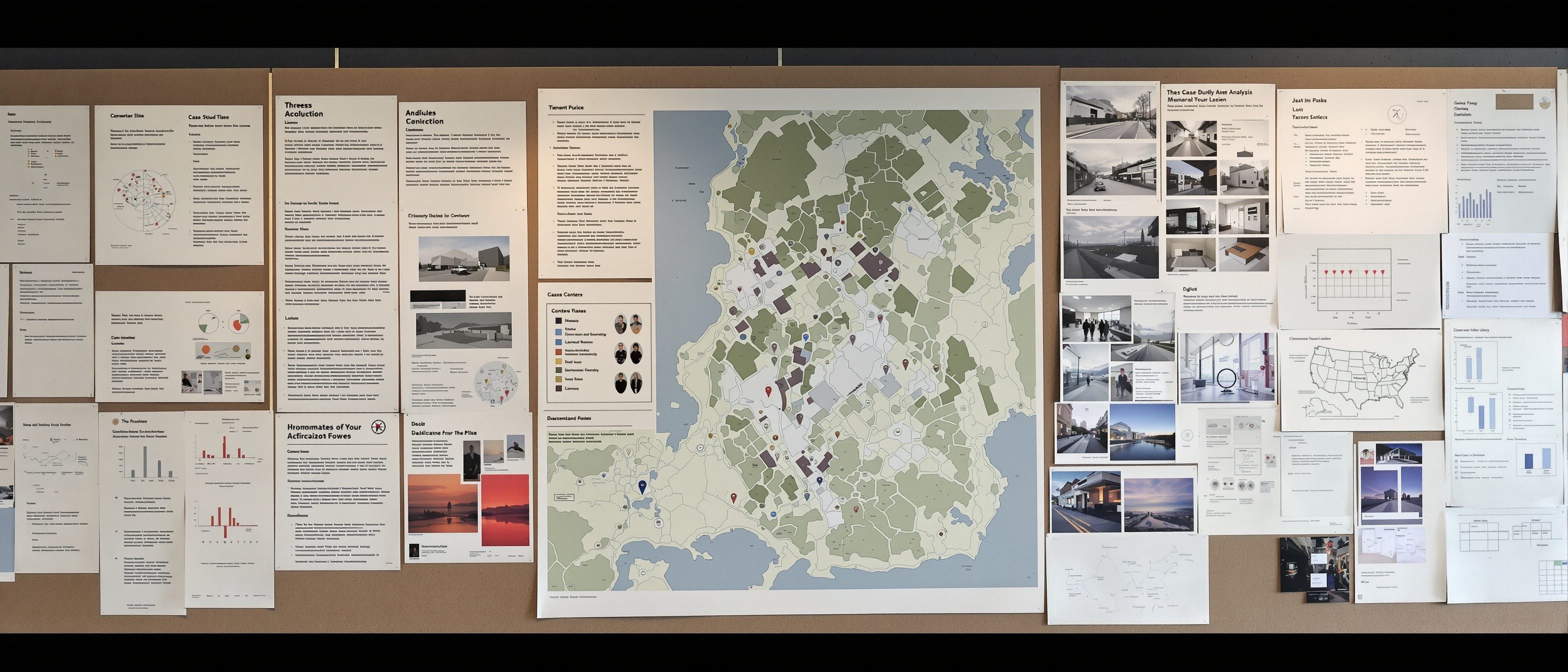
A thesis design is only as strong as the ground it stands on. Learn the research that grounds the project — the literature, theory and standards, read with a question; case studies of built examples that have addressed your issue, analysed for lessons, not described; and site selection and analysis — context, climate, access, by-laws and character — because the site is half the design.
Learning objectives
By the end of this lesson, you will be able to — mapped to the course outcomes for the Architecture Thesis:
Conduct the literature and standards research behind the project.
Analyse case studies for transferable lessons.
Select and analyse a site.
Explain why the site is half the design.
Research & case studies
Research builds an argument from sources that bears on your issue, not a reference pile; and a case study analyses how an example addressed the issue, ending in transferable lessons.[1]
Read with a question
The RESEARCH layer builds your understanding of the issue — the LITERATURE (books, papers, theory), the STANDARDS and codes, and the precedents. The discipline (from your Research Methods training): read with a QUESTION, not at random; take STRUCTURED notes; distinguish evidence from opinion; and CITE as you go. The research is what lets you claim your design is informed, not arbitrary. MISCONCEPTION→correct: 'research means collecting lots of references' — it means BUILDING AN ARGUMENT from sources that bears on YOUR issue; a pile of unread references is not research, and the jury will see straight through it.[1]
Site selection & analysis
Site selection is a design decision — choose a site that suits the issue and is analysable; and a thorough site analysis drives and justifies the design.[2]
Choose the right ground
SITE SELECTION is a design decision in itself. A good thesis site SUITS the issue and the programme, is real and accessible enough to study, and offers something to RESPOND to. Justify your choice: why HERE? You may choose a real site or, for some theses, a representative one — but it must be analysable. MISCONCEPTION→correct: 'any site will do — the building is what matters' — the site shapes everything: orientation, access, climate response, character, by-laws; choosing it carelessly cripples the design before it starts. Choose the site as deliberately as the topic.[2]
At a glance
| Aspect | Detail | Note |
|---|---|---|
| Research | An argument from sources | Not a pile of references |
| Case study | Analysis → lessons | Not a description |
| Depth | 3 analysed | > 10 described |
| Site | A design decision | Choose it deliberately |
| Site analysis | Half the design | Not a chapter to tick off |
Key terms
Reading theory, standards and precedents — with a question, recorded rigorously.
An ANALYSIS of a built example aimed at your issue — lessons, not description.
A principle from a case study you carry into your design.
Choosing a site that suits the issue and is analysable — justified.
Context, climate, access, by-laws and character — half the design.
A design whose form and response visibly derive from the site study.
Thesis task
Pick one building that has addressed an issue like your thesis' and write a true CASE STUDY of it — not a description, but an analysis ending in three transferable lessons. Then list the things your site analysis must cover for your project, and write one sentence on why you would choose a particular site over another for your issue.
Self-assessment
1. A good architectural case study primarily —
2. Site analysis matters because the site —
3. Good thesis research means —
Recap
References & further reading
- [1]Groat & Wang, Architectural Research Methods — literature, case-study and qualitative methods.
- [2]Site-analysis and architectural-programming references (e.g. Edward T. White, Site Analysis).
- [3]Research Methods course (cross-link) — research discipline applied to the thesis.
Further reading
- Edward T. White — Site Analysis.
- Groat & Wang — Architectural Research Methods.
- Roberto Lima / case-study method references.
Sources gathered and fact-checked June 2026. Published values vary by source, sample and method — treat as indicative and confirm against the cited standard before structural use.
The author
Amogh N P
Architect, interior designer, and creative polymath. Studio Matrx began in his notebooks — his vision of design made honest, useful, and open to everyone. Its Academy is written and taught in his memory, and free, forever.
More about Amogh →