
Professional liability & authenticity
The model can draft, render and suggest all day. But when something carries your stamp, the buck stops at a human — and no AI can hold a registration.
Lesson byAmogh N P· Architect & interior designer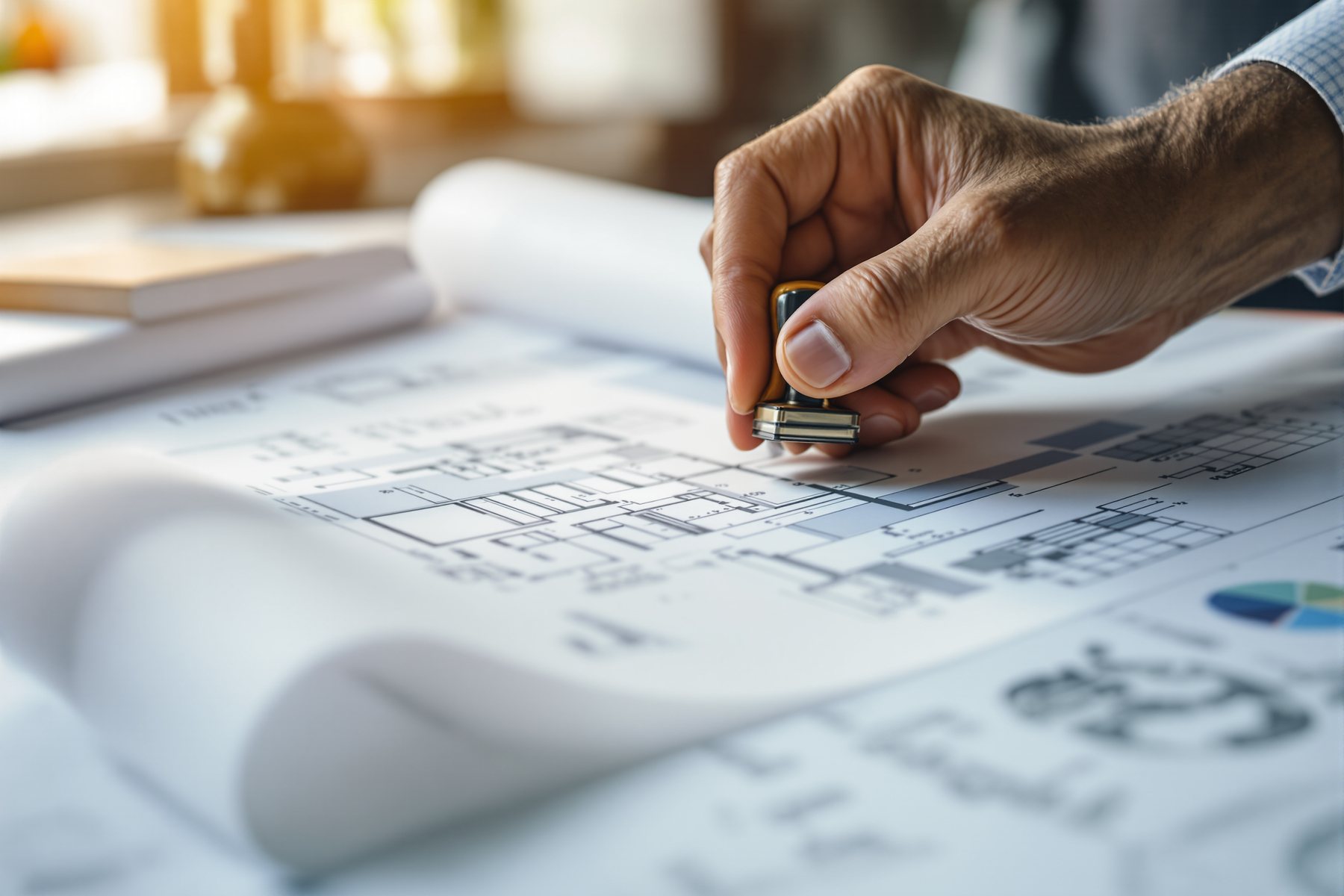
The contractor built it as drawn. The drawing was AI-confident, dimensionally wrong, and carried your stamp.
Picture the inquiry. A spec section was drafted by an LLM and pasted into the issue set; an AI floor plan's dimensions made it through to a working drawing; a render's promised detail was never buildable. The model produced all of it fluently and confidently, and a tired human stamped it. When the dispute lands, nobody serves notice on Midjourney or ChatGPT. They serve it on the registered professional who signed. AI carries no registration, no insurance, no accountability — it cannot. The entire weight of authenticity and liability stays exactly where it always was: on you. This lesson is about holding that responsibility without fear, by verifying everything AI touches before it carries professional weight.
You sign it, you own it — AI changes nothing about that
AI is a tool in your hand; the professional responsibility is still entirely yours
Here is the line that doesn't bend: you remain professionally liable for everything you sign, regardless of how much AI helped. A model can't be a registered architect, can't carry professional indemnity, can't be held accountable in a tribunal. It has no skin in the game and no licence to lose. So none of the responsibility transfers to it — it all stays with the human who put their name to the work.
This is the 'brilliant intern, never the architect of record' rule from the very first module, arriving at its destination. You'd never let an intern seal a drawing or certify compliance unsupervised. AI gets exactly that treatment, with one extra danger: the intern at least sounds unsure when they're guessing. The model never does. It hands you a hallucinated setback and a real one in identical, confident prose.
So the verification you'd do for a junior's work isn't optional overhead with AI — it's the core of the job.
The model has nothing to lose. You have a registration. Act accordingly.
A persuasive image and a buildable, certifiable drawing are different objects
The most common and most dangerous slip: letting an AI render drift into the role of a contract document. They are not the same object and never were.
An AI render exists to align taste and communicate intent — mood, atmosphere, a feel. A contract document — the stamped drawing, the dimensioned plan, the verified specification, the BOQ — is what someone builds and bills from, and it must be correct, coordinated, compliant and yours. Recall the red list: AI fails confidently on dimensions, structure, codes, products and prices, and there's no red underline under a hallucinated number.
The practical firewall: nothing an AI produced enters a sanction set, a structural document, a specification or a contract without a human professional re-deriving and verifying it. The render persuades; the stamped drawing builds. Keep those two jobs in two different boxes and most AI-liability disasters simply can't happen.
Tell the client AI was used — honesty is both ethics and protection
Authenticity is the quieter half of liability. Clients are paying for your judgement and authorship; they deserve to know where AI sat in the process. Disclose AI use — not as a confession, but as a professional courtesy that also protects you. 'These concept visuals were AI-assisted; the design decisions, the drawings and the compliance are ours and verified' is a sentence that builds trust and pre-empts the 'you tricked me with a fake picture' complaint.
Disclosure pairs with provenance: keep a record of what AI touched and how you verified it (the log habit from lesson 9.1 earns its keep again here). If a deliverable is ever questioned, you can show your working — what the AI did, what you checked, what you decided.
The through-line of this whole module: AI augments the professional; it never replaces the professional's accountability. Verify everything it touches before that thing carries your weight, and you can use these tools fearlessly.
Disclosure isn't an apology for using AI. It's proof you used it like a professional.
Your stamp is the firewall and the liability. Make the rule explicit in your QA: nothing AI generated — a spec paragraph, a plan dimension, a code reference — enters a sanction set, structural document or contract without a registered professional re-deriving it. Keep AI in the concept and communication lanes where it pays, and route every compliance-, dimension- and structure-touching output through your normal checking process. Disclose AI assistance to the client and log what you verified. The render persuades; only your checked, stamped drawing builds.
Your liability is quieter but real: a client builds, buys and lives from what you specify. The danger is an AI render's promised sofa, finish or layout migrating into the actual scheme as if it were real and costed. Hold the line — concept imagery aligns taste; the FF&E schedule, joinery details and clearances are your verified deliverables. Tell clients which visuals are AI-assisted illustrations versus what's specified and sourced. That honesty prevents the 'but the picture showed marble' dispute on site.
Without a senior to catch you, you are the entire verification loop, so make it a ritual, not a hope. Before anything you produced with AI carries professional weight, re-derive every dimension, code reference and product from a real source, and never let a render stand in for a contract drawing. Disclose AI use to clients in writing — it protects a small practice more than a big one, because you can't absorb a single dispute. Used this way, AI makes you faster without ever putting your name at risk.
Re-derivation gate (your own QA)
Verify-before-it-counts rule
A hard rule: nothing AI produced enters a sanction set, structural doc, spec or contract until a human professional re-derives and checks it. The single highest-value habit in this lesson. The limitation: it relies on discipline under deadline — make it a checklist step, not a good intention.
Code-checking AI (UpCodes Copilot, VitruAI) — as assistant only
First-pass, never the ruling
Useful to speed cross-referencing, but mostly US/intl codes and India NBC support is still maturing. Treat any compliance answer as a first pass to verify against the actual gazetted regulation and local bye-law. The limitation: it will sound authoritative on a rule it has wrong — the verification is yours.
Provenance + disclosure log
Authenticity record
Per-deliverable note of what AI touched, what you verified and what you decided, plus the line you disclosed to the client. Protects you in a dispute and demonstrates professional use. The limitation: only useful if kept contemporaneously — write it as you work, not after a complaint.
Studio Matrx AskDesignAI
Assistive guidance, human decides — as a live example
A worked example of AI in the assistant lane: it surfaces guidance and options, but the design decision and accountability stay with you. The limitation, true of every assistant: its suggestions are a starting point to verify, never a professional opinion you can sign behind.
“If an AI tool generated the spec or the floor plan and it turned out wrong, the liability sits with the tool or the vendor, not with me.”
There's no one to pass it to. An AI model holds no registration, no professional indemnity and no accountability — it can't be the author of record or the responsible professional. When you put your name to work, you adopt it as your own; the law and your registration treat AI as a tool you chose to use, exactly like a pencil or a plugin. The responsibility never transfers. That's precisely why verifying everything AI touches isn't optional.
Workshop — build your 'before it carries my stamp' verification checklist
Turn professional responsibility into a concrete gate. You'll build the short checklist that every AI-touched deliverable must pass before it carries your name — and run a real one through it.
One real deliverable that AI helped produce (a spec draft, a plan, a render) and your project's source-of-truth references. Free.
BEFORE-MY-STAMP CHECKLIST

Deliverable: ____________   AI's role: ____________

[ ] DIMENSIONS    every measurement re-derived from a real drawing
[ ] CODE          every setback/FAR/fire/NBC ref verified vs the actual bye-law
[ ] STRUCTURE     spans, junctions, cantilevers checked by a professional
[ ] PRODUCTS      every named product/spec confirmed as real + available
[ ] PRICES        every rate checked against a real source
[ ] CITATIONS     every IS code / reference confirmed to exist + apply
[ ] ROLE          is this a render (persuade) or a contract doc (build)?
[ ] DISCLOSURE    client told AI was used + how it was verified

VERDICT: stamp / fix + recheck / downgrade to concept-only
- 1Take one real AI-assisted deliverable and write what AI's role actually was at the top.
- 2Work the red-list rows (dimensions, code, structure, products, prices, citations) one at a time, checking each against a real source — tick only what you've genuinely verified.
- 3Answer the ROLE question honestly: is this a render meant to persuade, or a document someone will build from? If it's drifting toward a contract doc, that raises the bar.
- 4Write your DISCLOSURE line — the sentence you'll give the client about AI's role and your verification.
- 5Reach a verdict: stamp it, fix-and-recheck, or downgrade it to concept-only and never let it into the issue set.
- 6Save the completed checklist with the deliverable as your provenance record — your proof of professional process if it's ever questioned.
You’ll walk away with
A reusable 'before-my-stamp' checklist plus one completed run against a real deliverable — the gate that lets you use AI fearlessly because nothing it produced carries your weight unverified.
One quick test, if you have five minutes.
- 01Take an AI-drafted spec paragraph and find the first hard claim in it — a code, a product, a dimension. Verify just that one thing against a real source, and notice how confident the wrong-or-right sentence sounded either way.
You remain professionally liable for everything you sign — AI carries no registration and none of the responsibility transfers to it. So renders never become contract documents, and nothing AI produced enters a sanction set, spec or contract without a human re-deriving it. Disclose AI use honestly and log what you verified. Augmentation, never replacement, of your accountability.
AI can't hold a registration, so liability never leaves you. Renders persuade; only verified, stamped drawings build. Re-derive every AI-touched dimension, code, product and price before it counts. Disclose AI use to clients and keep a provenance log. Verify everything AI touches before it carries your weight.
If AI generated my drawings, who is legally liable for mistakes?
You are. An AI tool holds no registration, no professional indemnity and no accountability, so it can't be the responsible professional and the liability can't transfer to it. When you sign or stamp work, you adopt it as your own — the law treats AI as a tool you chose to use. That's exactly why everything AI touches must be verified before it carries professional weight.
Are AI renders considered contract documents?
No. An AI render communicates intent and aligns taste; it is not a buildable, coordinated, compliant drawing. Contract documents — stamped plans, dimensioned drawings, verified specs, the BOQ — must be correct and are yours to certify. Never let a persuasive render stand in for a contract document; re-derive everything that someone will build or bill from.
Should I tell clients I used AI in their project?
Yes. Disclose it as a professional courtesy that also protects you: name where AI assisted (often concept visuals and drafting) and make clear the design decisions, drawings and compliance are yours and verified. Pair disclosure with a provenance log of what AI touched and how you checked it. Honesty builds trust and pre-empts any 'you misled me with a fake image' complaint.
The author
Amogh N P
Architect, interior designer, and creative polymath. Studio Matrx began in his notebooks — his vision of design made honest, useful, and open to everyone. Its Academy is written and taught in his memory, and free, forever.
More about Amogh →_With the ethics, data and liability settled, you can look up from the desk — honestly, without hype — at where all of this is actually heading by 2026 and beyond._