
BOQs, code-checking & research
Let the machine draft the schedule and cross-reference the clauses at the speed of thought — then prove every line against the gazetted code before a rupee or a sanction depends on it.
Lesson byAmogh N P· Architect & interior designer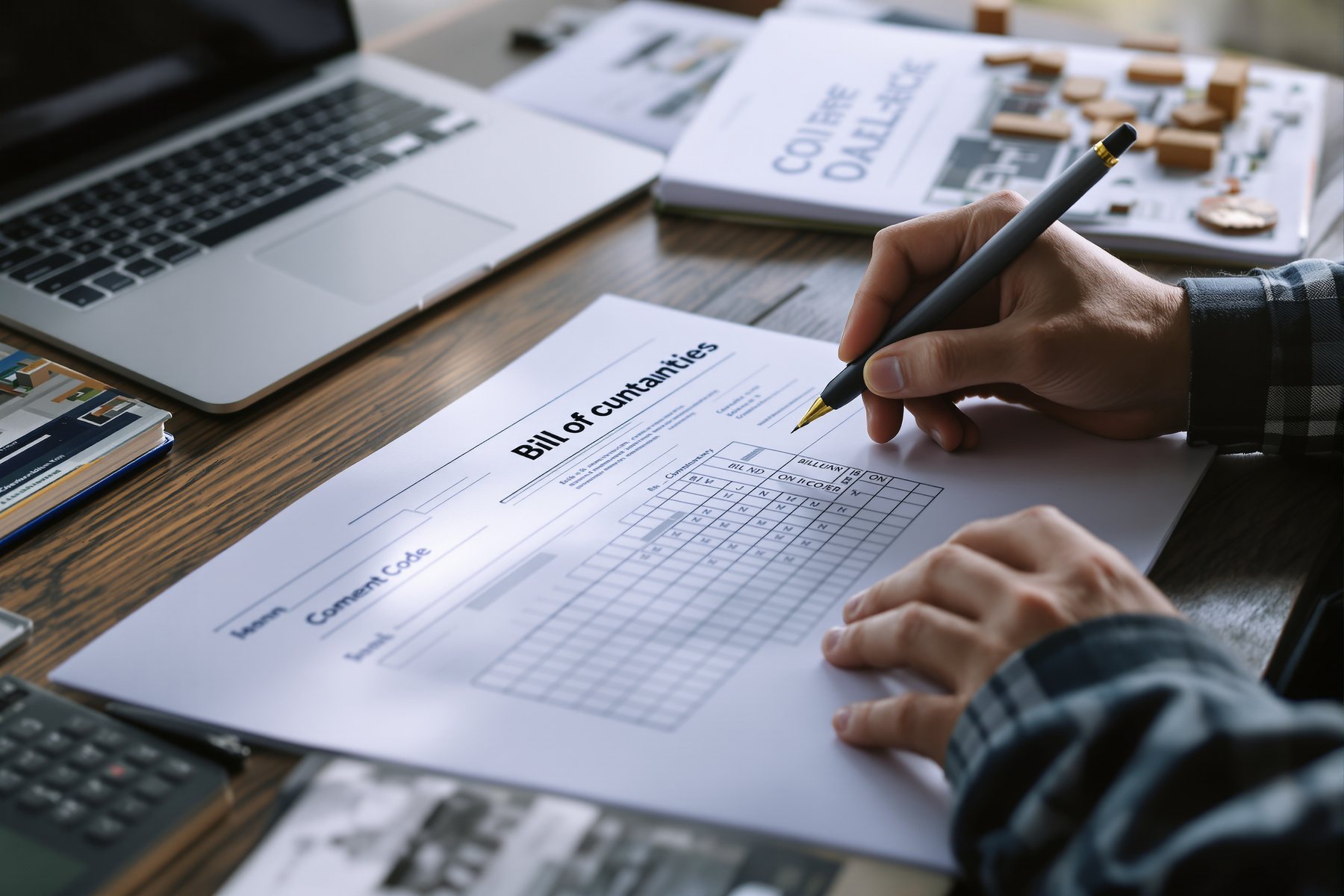
The AI cross-referenced 40 fire clauses in ninety seconds. Two of them were for the wrong occupancy class.
A Chennai practice was racing a tender deadline and tried something new: it fed the project scope to a code-checking assistant and asked for every relevant fire-safety requirement. Ninety seconds later it had a tidy, confident list of forty clauses — a job that normally ate an afternoon. The senior architect was impressed, then careful. She read every line against the actual code. Most were spot-on. But two clauses had been pulled for the wrong occupancy class, and one referenced a US standard that does not apply in India at all. The tool had saved her three hours of cross-referencing and very nearly cost her a compliance error. That is the deal with AI on numbers and rules: enormous speed, zero authority.
Assistive, never authoritative — the BOQ and the code clause
A first-pass skeleton in minutes, every rate and quantity still yours to prove
A bill of quantities and a schedule are tabular, repetitive and structured — exactly the shape ChatGPT (GPT-5 era as of 2026) is strongest at. Describe the scope and it will draft a clean BOQ skeleton: trade headings, item descriptions, units, a sensible structure for quantities and rates. For a 3BHK fit-out it can lay out civil, finishes, joinery, electrical and plumbing as a ready table you fill in.
What it gives you is the structure and the nomenclature — the boring scaffolding that used to take an hour to set up. What it does not give you is reliable quantities or rates. It will cheerfully insert a plausible ₹/sqft figure and a plausible quantity that have no relationship to your project, your city's rates, or measured drawings.
So the workflow is: AI drafts the schedule's bones; you measure the real quantities from the drawings and price every line from a real, current rate source. A model-generated number in a BOQ is a placeholder, never a figure — treat it like a typo you haven't found yet.
UpCodes, VitruAI and Melt Code speed the search — they don't make the ruling
A new category of code-compliance AI has matured by 2026: UpCodes Copilot, Melt Code and VitruAI automate code and zoning cross-referencing — point them at a question and they surface the relevant clauses fast. Used well, they turn a tedious afternoon of flipping through the code into minutes.
Two hard caveats, both from the landscape. First, these tools are built mostly around US and international codes; India's NBC support is still maturing — so for an Indian project you verify locally, against the actual National Building Code of India and your municipal bye-laws. Second, and deeper: a code-checking AI is assistive, not authoritative. Treat its output as a first pass — a fast way to find which clauses might apply — that you then confirm against the gazetted regulation. It is never the ruling itself.
And never forget the LLMs underneath: a plain ChatGPT or Claude will fluently invent a fire norm or an IS code that sounds exactly right. The regulatory check stays manual, every time.
A code-checking AI tells you where to look. The gazetted code tells you what's true. Never confuse the index for the law.
Where AI is genuinely safe — summarising long documents you then read
Now the good news. The research and digestion uses are the safest high-value thing language AI does, because here you are not asking it for facts it might invent — you are asking it to compress a document you can check against the original.
Feed Claude a 90-page tender (its 200k-token context swallows the whole thing) and ask for the scope, the deliverables, the unusual clauses, the risky payment terms, the dates. Feed it a stack of product datasheets and ask for a comparison. Feed it three research papers and ask for the consensus and the disagreements. This is the green list at its best: a knowledgeable human reads the summary, and the source document is right there to verify against.
The one discipline: a summary is a lens, not a substitute. For anything that carries money or liability — a payment milestone, a penalty clause, a liquidated-damages figure — go back to the exact words in the original. The model points you to the clause; you read the clause.
Use AI to set up BOQ structure and to run a _first_ code search, then run both through your normal professional process — measured quantities, current rates, a clause-by-clause check against the gazetted NBC and local bye-laws. A practical rule for your office: any AI-surfaced code clause gets a manual citation to the actual code section before it enters a compliance note or a sanction submission, and any AI-drafted BOQ line gets a real quantity and a real rate before it enters a tender. For Indian work, assume the global code tools don't know your bye-laws until proven otherwise.
Your BOQ is mostly finishes, joinery, FF&E and services — and AI is a fast way to draft that schedule's structure and item descriptions. But the danger is sharper for you: it invents product specs and prices that a client might act on. Build the BOQ bones with AI, then price every line from real, sourced, current vendor quotes. On code, your live concerns are fire, electrical, and means-of-egress for commercial fit-outs — exactly where a wrong AI clause bites — so treat any code answer as a prompt to call your services consultant, not as the answer.
This is where a solo or small studio gains the most: drafting BOQ skeletons and digesting long tenders used to need junior hours you don't have. Free tiers will draft the schedule and summarise the tender; code-checking tools run roughly the price of a render subscription as of 2026. But you have no senior to catch a mis-cited clause, so make the verification step non-negotiable: every code reference confirmed against the actual NBC or bye-law, every BOQ rate confirmed against a real quote, before anything ships. Use this platform's cost guides and calculators as your real-rate sanity check.
ChatGPT (OpenAI, GPT-5 era)
BOQ & schedule drafting
Best tabular output for BOQ skeletons, trade nomenclature and unit-price schedules. Gives you structure, not real numbers — measure quantities from drawings and price from current rates yourself.
UpCodes Copilot
Code cross-referencing — assistive
Automates code and zoning cross-referencing fast; mostly US and international codes, India NBC support still maturing. A first-pass index to verify against the gazetted code, never the ruling.
VitruAI / Melt Code
Code-checking AI — first pass
Similar assistive code-checking; speeds the search across large code sets. Confirm every surfaced clause against the actual National Building Code of India and local bye-laws before relying on it.
Claude (Anthropic)
Tender & research digestion
About 200k-token context digests a full 90-page tender or research stack in one pass. The safest high-value use — but read the exact wording of any money or liability clause in the original.
“A dedicated code-checking AI like UpCodes or VitruAI is purpose-built for compliance, so I can rely on its output as the compliance answer.”
Even a purpose-built code AI is assistive, not authoritative — it speeds up finding and cross-referencing clauses, but it does not certify compliance, and most are trained mainly on US and international codes with India's NBC support still maturing. Its job is to help you locate the right clauses faster; your job is to confirm each one against the gazetted National Building Code and your local bye-laws and to sign off. The tool indexes the code; only the code rules.
Workshop — draft a BOQ skeleton and a code first-pass, then prove them
You'll build a BOQ skeleton for one trade and run a first-pass code search for one requirement, then verify both against real sources — turning 'fast and confident' into 'fast and checked'. About an hour, free tier, one real project scope.
Free: ChatGPT (BOQ tables) and Claude (long-document digest). One trade scope from a real project, plus access to your local bye-laws or the NBC.
BOQ + CODE FIRST-PASS PROMPT (paste, fill brackets):

PART A - BOQ SKELETON
Draft a Bill of Quantities SKELETON for:
  Trade: [e.g. internal partitions and finishes]
  Project: [3BHK fit-out] in [CITY].
Rules:
 - Columns: Item No | Description | Unit | Qty | Rate | Amount.
 - Leave Qty, Rate and Amount BLANK (I measure and price
   these myself). Do NOT invent numbers.
 - Use standard Indian trade nomenclature.

PART B - CODE FIRST-PASS
List the building-code TOPICS I should check for this trade
(e.g. fire rating, egress, ventilation). For each, name the
likely code area, then write: [VERIFY against NBC + local
bye-law]. Do NOT state specific clause numbers as fact.
- 1Run Part A. Confirm the model left Qty/Rate/Amount blank. If it slipped in a number anyway, delete it and note that — proof of why you check.
- 2Measure real quantities for two or three line items from your drawings, and price them from a current rate source or a real quote. Watch a skeleton become a real BOQ.
- 3Run Part B, then verify one surfaced code topic against the actual NBC or your bye-law. Find the real clause number yourself; mark whether the AI pointed you at the right area.
- 4Optionally, paste a real (or sample) tender into Claude and ask for scope, deliverables, dates and the three riskiest clauses. Then open the tender and read those clauses' exact words.
- 5Write a two-column note: what AI drafted/found fast vs what you had to measure, price or verify. That ratio is your supervision rule for BOQ and code work.
- 6Save the prompt as a reusable template and write your keep-line: 'AI drafts the BOQ bones and the code topics; I own every quantity, rate and clause number.'
You’ll walk away with
A real BOQ skeleton with two or three lines properly measured and priced, a verified first-pass code checklist with at least one clause confirmed against the gazetted source, and a reusable BOQ-plus-code prompt template you can run on any trade.
A quick stress-test, five minutes.
- 01Ask a plain LLM (no code tool) for 'the fire-safety clauses of the NBC for a residential building' and check how many clause numbers it cites are real and current. Count the invented ones.
- 02Ask it for a per-square-foot rate for a finish in your city, then compare against a real quote. Note the gap — and that it never flagged any uncertainty.
On BOQs, codes and research, AI is a brilliant accelerator and a terrible authority. It drafts the schedule's bones and indexes the code in minutes — but the quantities, the rates and the clauses are yours to measure, price and verify against the gazetted source. Tender digestion is its safest win because the original is right there to check. Speed from the machine; truth from the document.
AI drafts BOQ skeletons (ChatGPT, structure not numbers) and runs first-pass code searches (UpCodes, VitruAI, Melt Code — assistive, mostly US/intl, India NBC maturing). It digests tenders and research safely because you can check the source. Always verify quantities, rates and every code clause against the gazetted NBC and local bye-laws.
Can AI write a bill of quantities for my project?
It can draft the BOQ's structure — trade headings, item descriptions, units and standard nomenclature — in minutes, which is genuinely useful. It cannot give you reliable quantities or rates; any number it inserts is a plausible-looking placeholder unrelated to your drawings or your city's rates. Use AI for the skeleton, then measure real quantities from the drawings and price every line from a current, real rate source.
Are AI code-checking tools like UpCodes reliable for Indian projects?
Treat them as assistive, not authoritative, and be extra careful in India. Tools like UpCodes Copilot, VitruAI and Melt Code are built mostly around US and international codes, with India's NBC support still maturing. They speed up finding which clauses might apply, but you must confirm every clause against the actual National Building Code of India and your local bye-laws. The tool indexes the code; only the gazetted code rules.
Is it safe to use AI to summarise a tender or research document?
This is the safest high-value use of language AI, because you are compressing a document you can check against the original — not asking the model to invent facts. Claude's long context can digest a 90-page tender and surface scope, dates and risky clauses fast. The one rule: for anything carrying money or liability — payment terms, penalties, damages — go back and read the exact words in the source, not just the summary.
The author
Amogh N P
Architect, interior designer, and creative polymath. Studio Matrx began in his notebooks — his vision of design made honest, useful, and open to everyone. Its Academy is written and taught in his memory, and free, forever.
More about Amogh →These tools answer from the general internet they were trained on. What if the assistant could answer from YOUR past projects, YOUR specs, YOUR standards instead — grounded in documents you trust? That's the next lesson: building a studio knowledge assistant.