
B.Arch CurriculumFree, forever
A tribute to Amogh N P
Acoustics in Architecture
Architecture is seen, but it is also heard — and sound, left to chance, ruins a room. This elective makes acoustics a design tool: the physics of sound and the decibel; how sound reflects, absorbs and reverberates, with Sabine's formula to size it; the room defects — echo, flutter, focusing — and their cures; noise control and sound insulation, the difference between absorbing and blocking; and the acoustic design of the auditorium, where the whole art comes together. A field begun, in 1900, by one physicist and one concert hall.
Course byAmogh N P· Architect & interior designer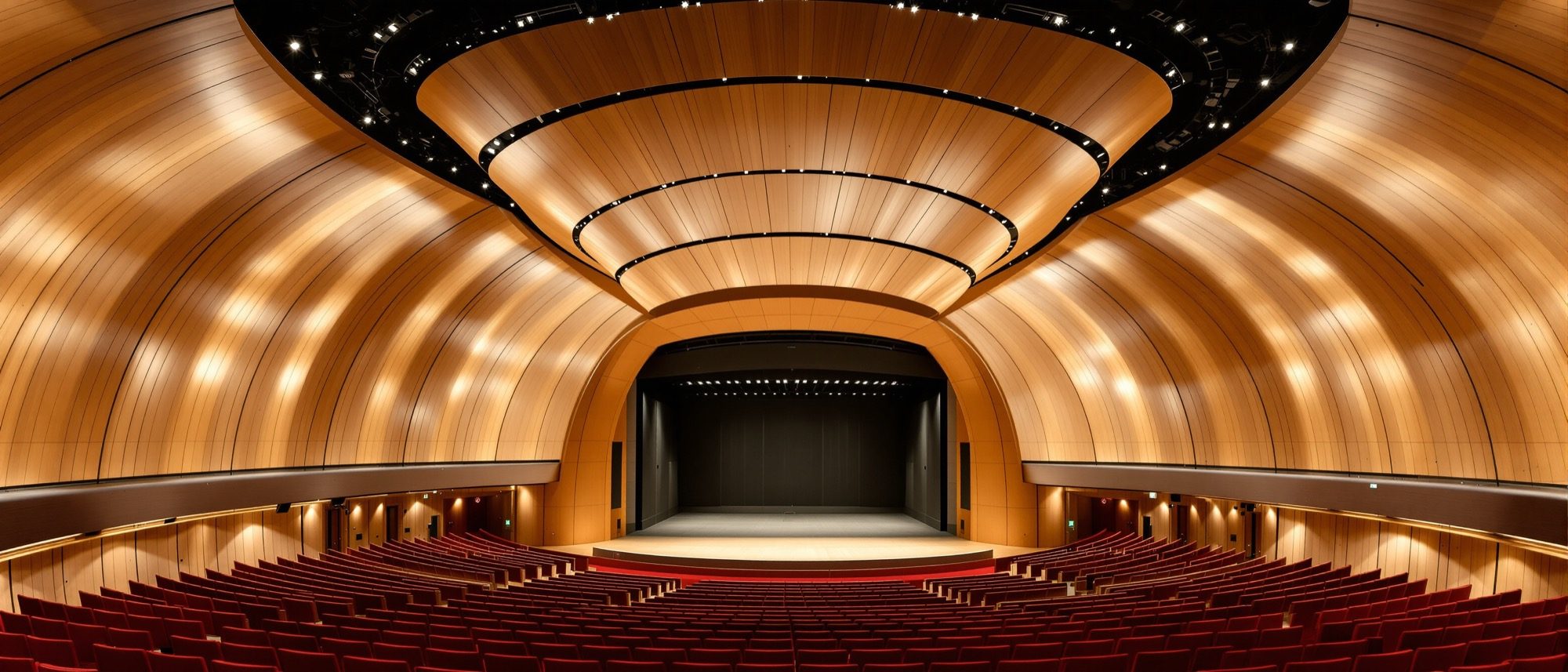
The syllabus
5 units · 5 liveTranscribed from the official B.Arch syllabus. All 5 units are live as full interactive lessons — each with original diagrams, a self-assessment quiz and a studio task.
Unit 1 — Fundamentals of Sound
LiveThe nature of sound — a longitudinal pressure wave; frequency, wavelength and amplitude; the audible range and the speed of sound; the decibel and sound pressure level; the inverse-square law and adding decibels; and human hearing and the dBA.
Unit 2 — Behaviour of Sound
LiveHow sound reflects, absorbs, transmits, diffracts and diffuses; the absorption coefficient and the sabin; reverberation and reverberation time; Sabine's formula and the optimum RT for different uses.
Unit 3 — Room Acoustics & Defects
LiveThe acoustic defects — echo, flutter echo, sound focusing, dead spots, excessive reverberation, resonance — their causes and cures; and acoustic correction — porous, panel and Helmholtz absorbers, diffusers and room shape.
Unit 4 — Noise Control & Insulation
LiveAirborne and structure-borne noise; sound insulation and transmission loss; the mass law and the STC rating; the NRC; the difference between absorption and insulation; source-path-receiver control; and the CPCB ambient-noise standards.
Unit 5 — Auditorium Design
LiveThe acoustic design of the auditorium — volume per seat, floor rake, shape, early reflections and reflectors, sound reinforcement and RT targets; acoustics for other building types; and the story of Sabine and Boston Symphony Hall.
Course outcomes
What you will be able to doUnderstand the physics of sound and how it is measured (the decibel).
Apply the behaviour of sound and Sabine's formula to reverberation.
Diagnose room-acoustic defects and prescribe acoustic correction.
Apply noise control and sound insulation in buildings.
Apply acoustic principles to the design of an auditorium and other building types.
Understand acoustic standards (CPCB, NBC) and design responsibility.
The author
Amogh N P
Architect, interior designer, and creative polymath. Studio Matrx began in his notebooks — his vision of design made honest, useful, and open to everyone. Its Academy is written and taught in his memory, and free, forever.
More about Amogh →Architecture is heard, too.
Sound physics, reverberation and Sabine's formula, room defects, noise control and the auditorium. Read the units, study the diagrams, then test yourself.
The curriculum is free, forever