Self-healing concrete, walls grown from mushrooms, glass that makes electricity. A field guide to the materials shaping the next decade of construction — with the honest catch on each, and where India actually stands.
Studio Matrx Editorial
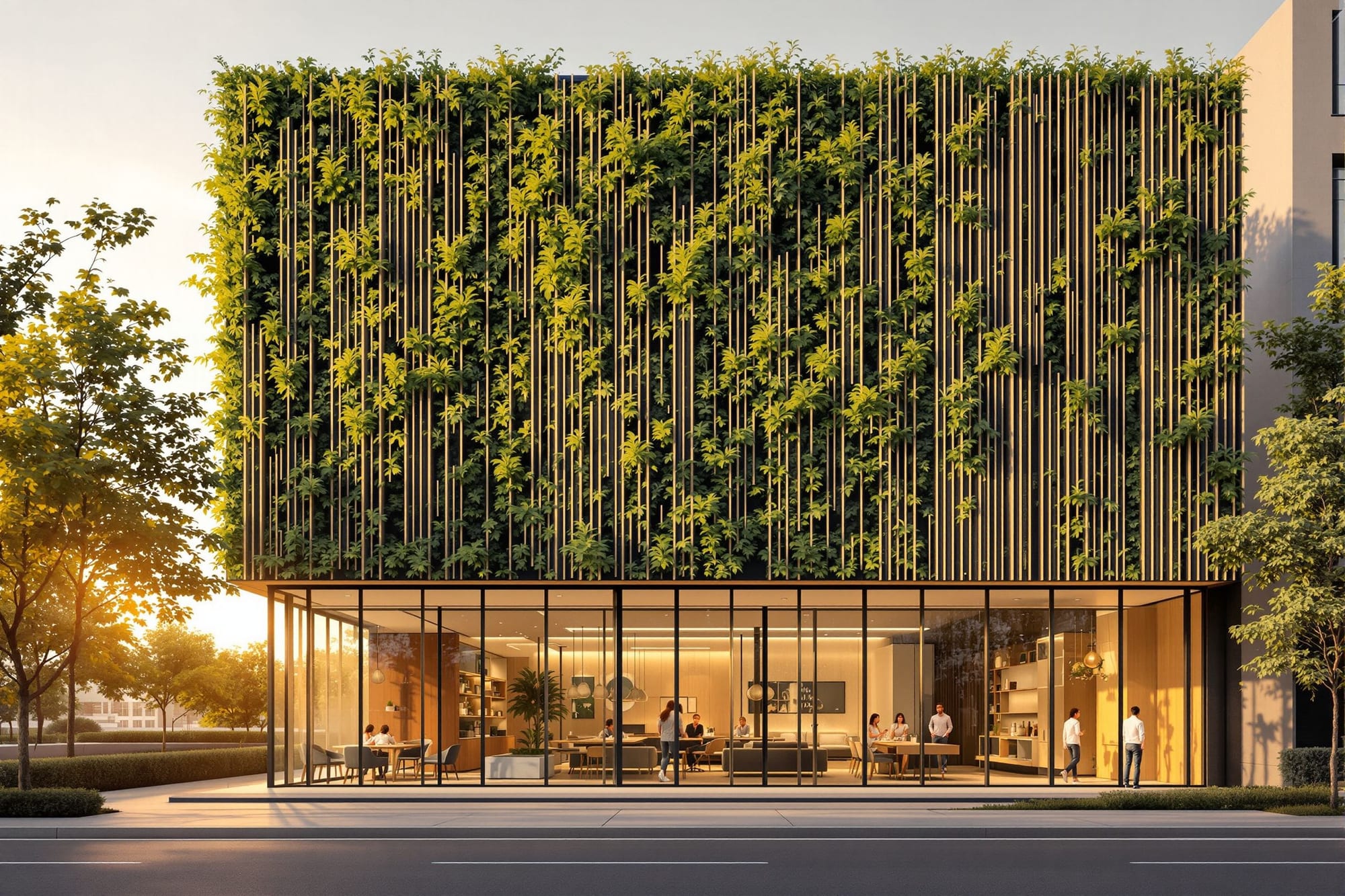
Illustration · The next facade is likely to be part garden, part timber, part power station.
Every leap in architecture has really been a leap in materials. Reinforced concrete gave us the tower; float glass gave us the glass wall; steel gave us the span. The next decade's buildings are being decided right now, in laboratories and pilot plants, by materials most architects have not yet held in their hands.
Ten of them are worth knowing. Some are already on real façades; others are still growing in a Petri dish. What follows is a field guide — what each one is, where it is genuinely being used, and, just as importantly, the catch. Because a material feature that only lists the promise is a brochure, not journalism. For every one of these, we state the limitation as plainly as the appeal, and we say honestly where India stands, which is often further behind the headlines than the headlines suggest.
01
Structural & baseEmerging
Self-healing concrete
Concrete that seals its own cracks.
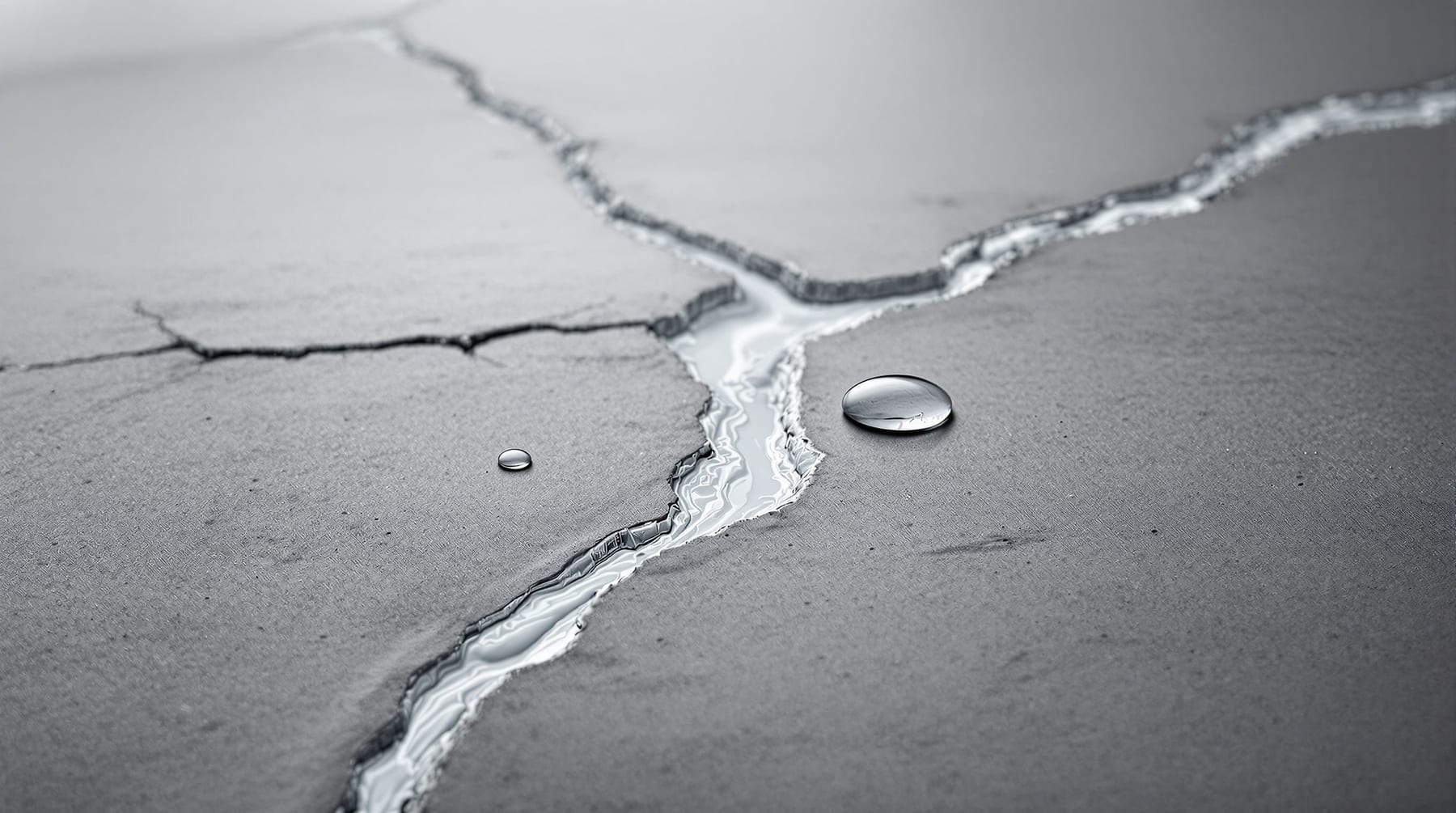
Dormant bacteria (Bacillus spores) and a calcium-lactate feed are mixed into the concrete. When a crack forms and water seeps in, the spores wake, metabolise the feed and precipitate limestone — sealing the crack from the inside before water can reach and corrode the steel reinforcement.
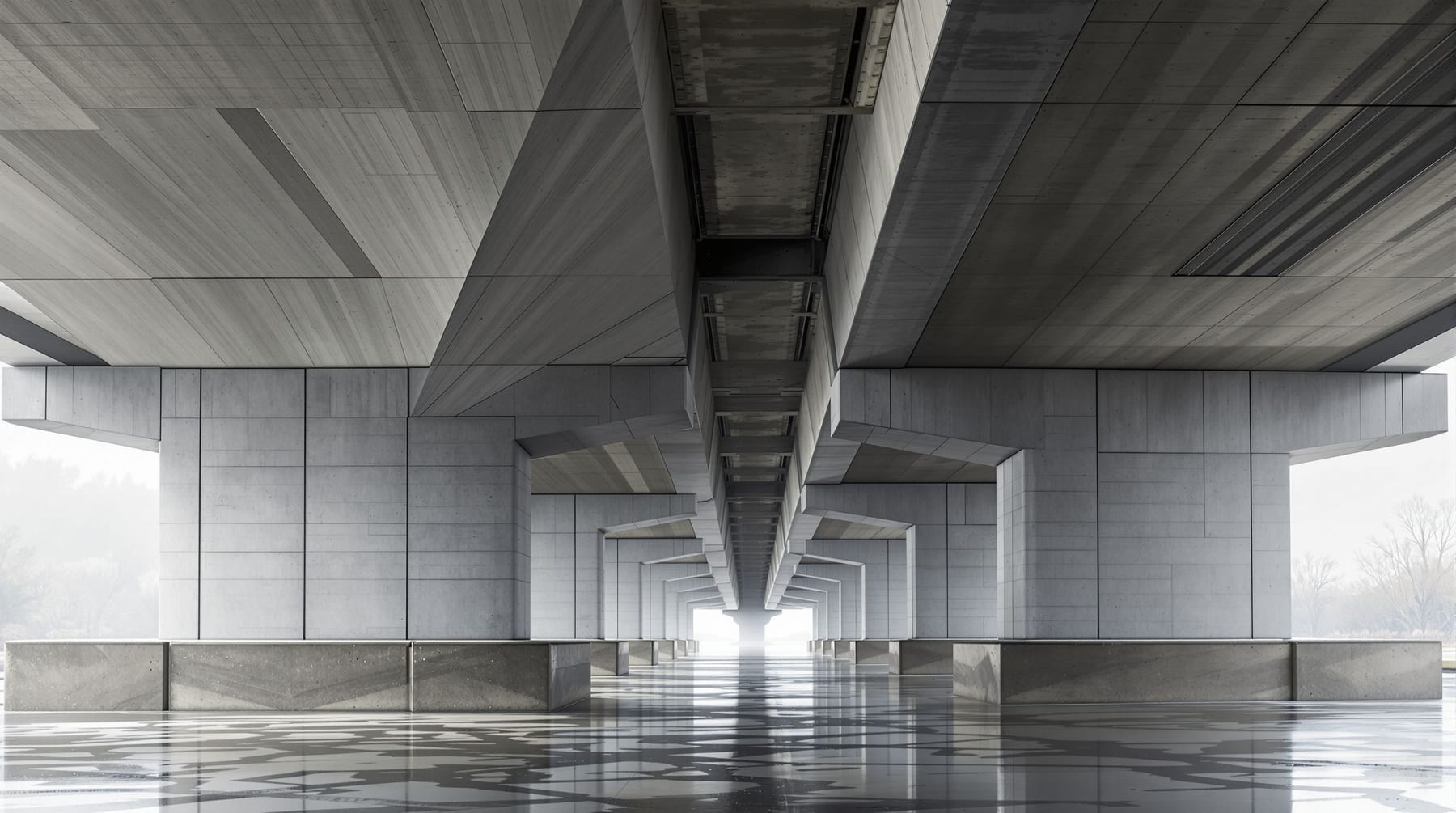
Illustration · A crack seals itself — pale limestone, precipitated by bacteria where the water gets in.Illustration · Where it earns its keep — the concrete of bridges, tunnels and basements, hard to inspect and costly to repair.
Seen in
Developed at Delft University of Technology by microbiologist Dr Henk Jonkers with Prof. Erik Schlangen, and commercialised through the Delft spin-out Basilisk, with full-scale demonstrators on irrigation canals and basement structures. In India it remains research, not concrete: India is one of the largest contributors to self-healing-concrete academic study — with active groups at IIT Roorkee, NIT Patna and IIT Jodhpur — but there is no verified built Indian project yet.
The promise
Autonomously seals micro-cracks (demonstrated up to ~0.8 mm), keeping out the water and chlorides that corrode rebar — the main killer of reinforced concrete.
Extends service life and cuts inspection and repair costs, especially in structures that are expensive or impossible to reach.
The spores are dormant, non-pathogenic and can survive for decades in dry concrete until water activates them.
The catch
Cost: the bacterial additive can roughly double the price of the concrete mix, so it is reserved for high-value structures.
It reliably heals only narrow cracks in moist conditions — wide cracks or dry environments heal poorly, and healing is not endlessly repeatable.
Still early-commercial; multi-decade field performance data is thin, and it is not written into mainstream structural codes, including the Indian IS codes.
“It is combining nature with construction materials. Nature is supplying us a lot of functionality for free—in this case, limestone-producing bacteria.”
Dr Henk Jonkers — Microbiologist, Delft University of Technology; developer of bio-concrete source
02
Structural & baseEmerging
Carbon-negative concrete
Concrete that stores more carbon than it emits.
A family of approaches to the world's most carbon-heavy material. Some inject captured CO₂ into fresh concrete, where it mineralises and lets producers use less cement (carbon-reduced). Others go further — replacing cement entirely with industrial by-products like steel slag and curing the blocks with CO₂ that is locked in permanently as mineral (genuinely carbon-negative).
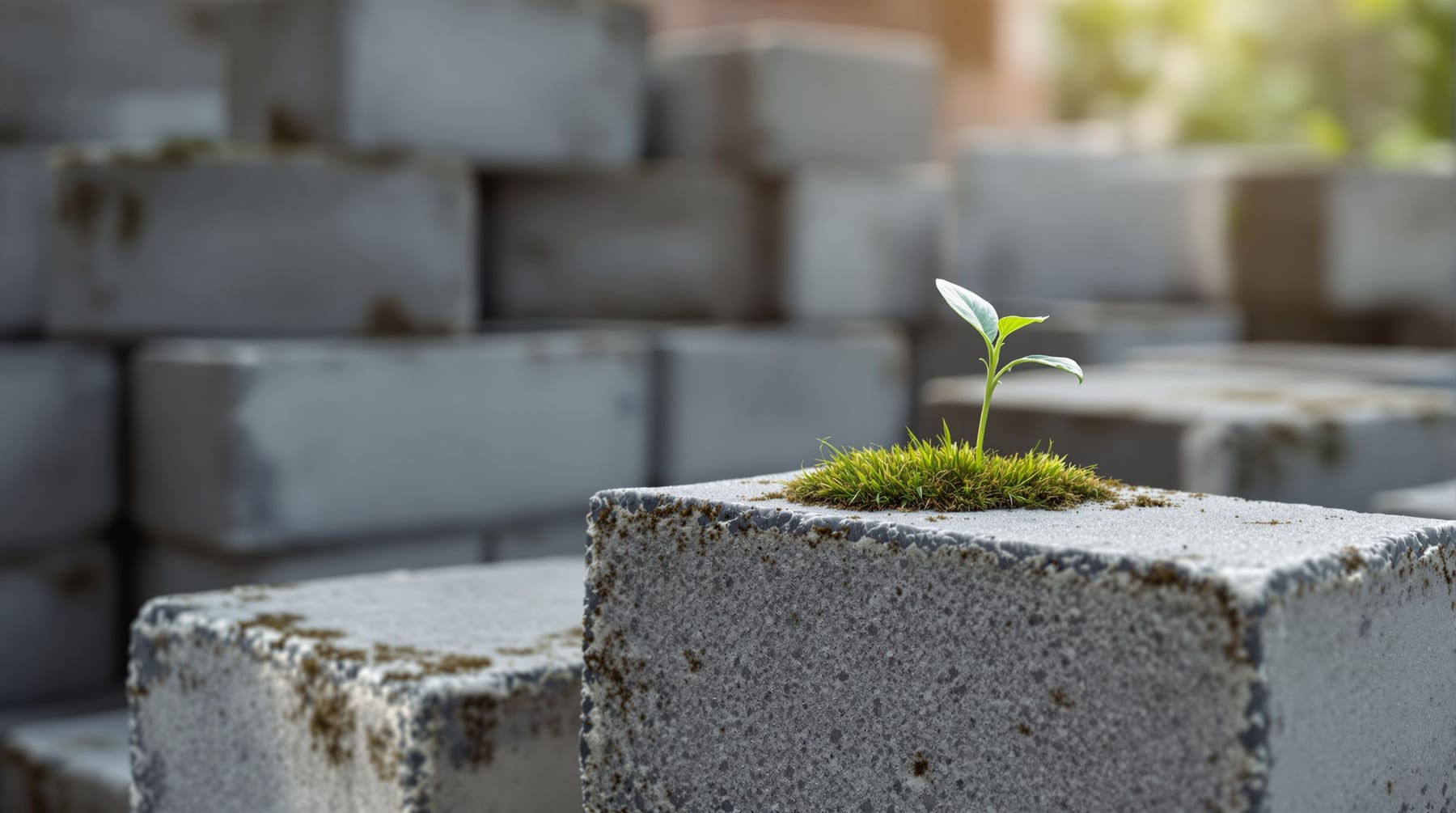
Illustration · Concrete that banks carbon — and, in the cement-free versions, stores more than it emits.Illustration · A wall of low-carbon blocks, cast rather than fired.
Seen in
Canada's CarbonCure injects CO₂ into ready-mix at 650+ plants worldwide — but it is carbon-reduced, not negative. Montreal's CarbiCrete goes the whole way: cement-free blocks bound with steel slag and cured with CO₂, now in commercial production. In India the story is different in chemistry: Visakhapatnam's Greenjams makes carbon-negative 'Agrocrete' blocks from agricultural residue, and Karnataka's Carbon Craft Design makes carbon-negative tiles from captured carbon black. (A caution: the much-cited 'CarbonCure at Infosys' project is in Indianapolis, USA — not India.)
The promise
Directly attacks the embodied carbon of the planet's most-used material; the cement-free routes store more CO₂ than they emit.
CO₂-injection integrates into existing plants with little new equipment, and can improve strength — letting producers cut cement at equal performance.
Sequestration is permanent: the CO₂ becomes stable mineral calcium carbonate, not a leak-prone store. Cement-free routes also consume industrial waste like slag.
The catch
'Carbon-negative' is often overstated — CO₂-injection only reduces cement by around 5%. Read the claim carefully; reduced is not negative.
The genuinely negative routes depend on a reliable supply of steel slag and a CO₂ source, which constrains where they scale.
Cement-free blocks sit outside conventional OPC-based codes; Indian standards and supply chains for these specific systems are not yet established.
“Concrete is the largest contributor to embodied carbon in the built environment. This presents a massive opportunity to permanently remove large amounts of CO2 from the atmosphere.”
Yuri Mytko — Chief Marketing Officer, CarbiCrete source From India
“It is about time we repair the damage done to the environment and restore ecosystems for the well-being of the planet, and subsequently humans.”
Tarun Jami — Founder, Greenjams (maker of Agrocrete carbon-negative blocks) source
03
Structural & baseLab-scale
Smart brick
Blocks that snap together, services built in.
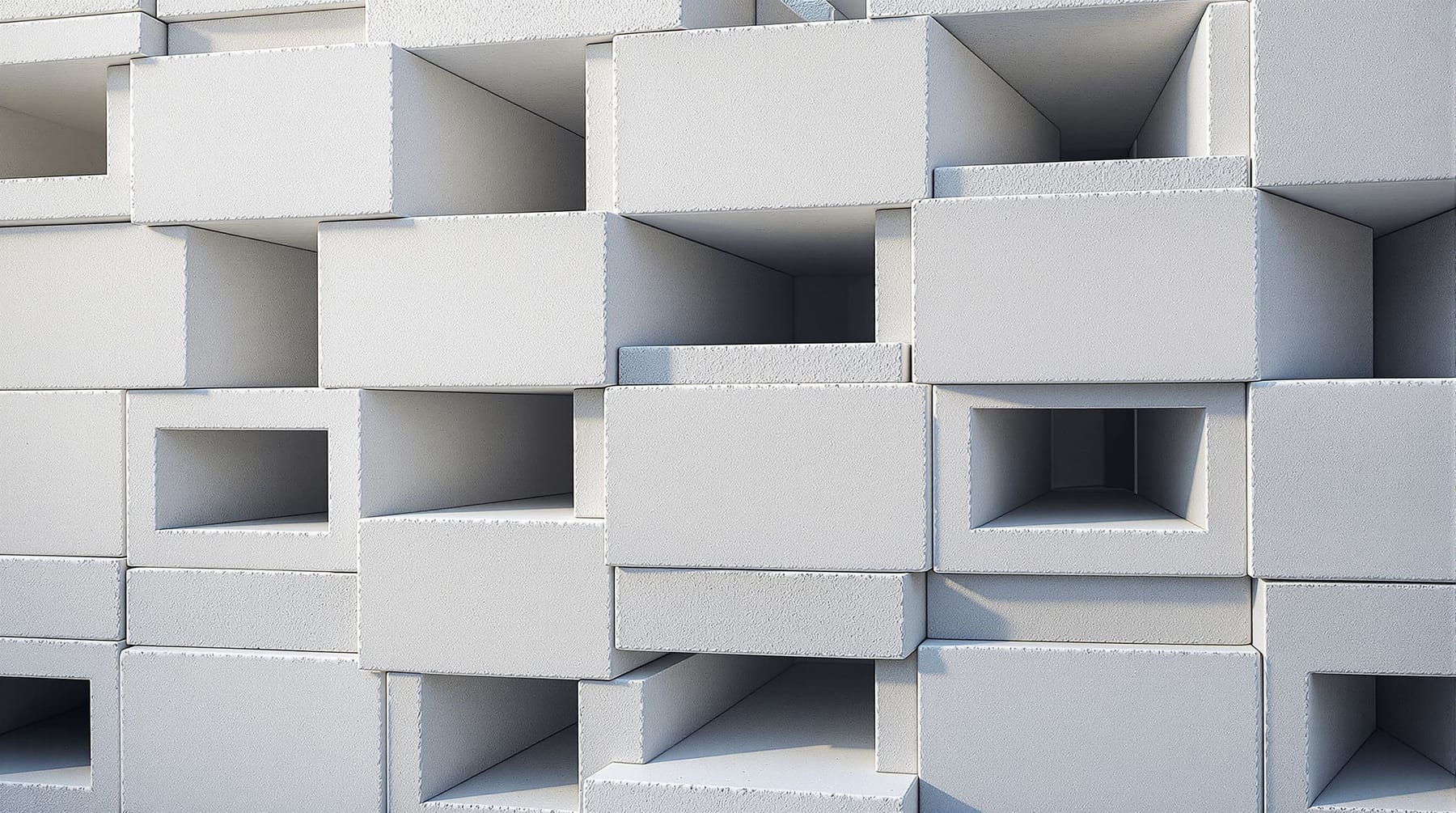
High-strength interlocking blocks that assemble like LEGO — no mortar — with internal cavities designed to carry insulation, plumbing and wiring, plus channels for reinforcing bars. The idea is to plan the services inside the wall rather than chase them into it afterwards.
Illustration · Services designed into the block, not chased into the wall.Illustration · Mid-assembly — the service channels line up as the courses stack.
Seen in
The flagship concept is Kite Bricks (Israel), whose engineered 'Smart Bricks' remain a patented prototype seeking funding — no building has yet been constructed with them. India has the underlying building block but not the branded product: mortarless interlocking hollow-concrete-block systems (Hydraform-type, and Indian research on interlocking hollow blocks) whose vertical cores can route conduit and take grouted reinforcement.
The promise
Mortarless, interlocking assembly is fast and low-skill — quicker builds, less labour, potentially lower cost.
Services and insulation can be pre-planned inside the wall, avoiding the chasing and cutting of conventional blockwork.
Little or no wet mortar means less water, cement and site waste; blocks can be dismantled and reconfigured.
The catch
Commercially immature — the headline product is a prototype only, which makes it a risky thing to specify.
Mortarless, interlocking structural systems face limited code coverage and engineer confidence for load-bearing and seismic use.
Internal channels need tight casting tolerances and specialised moulds; long-term behaviour of open cavities (moisture, pests, thermal bridging) is not field-proven.
“I'd like people in Africa and other places in the world to be able to build with our brick and get a thermally insulated house using the same money they would have spent on tin.”
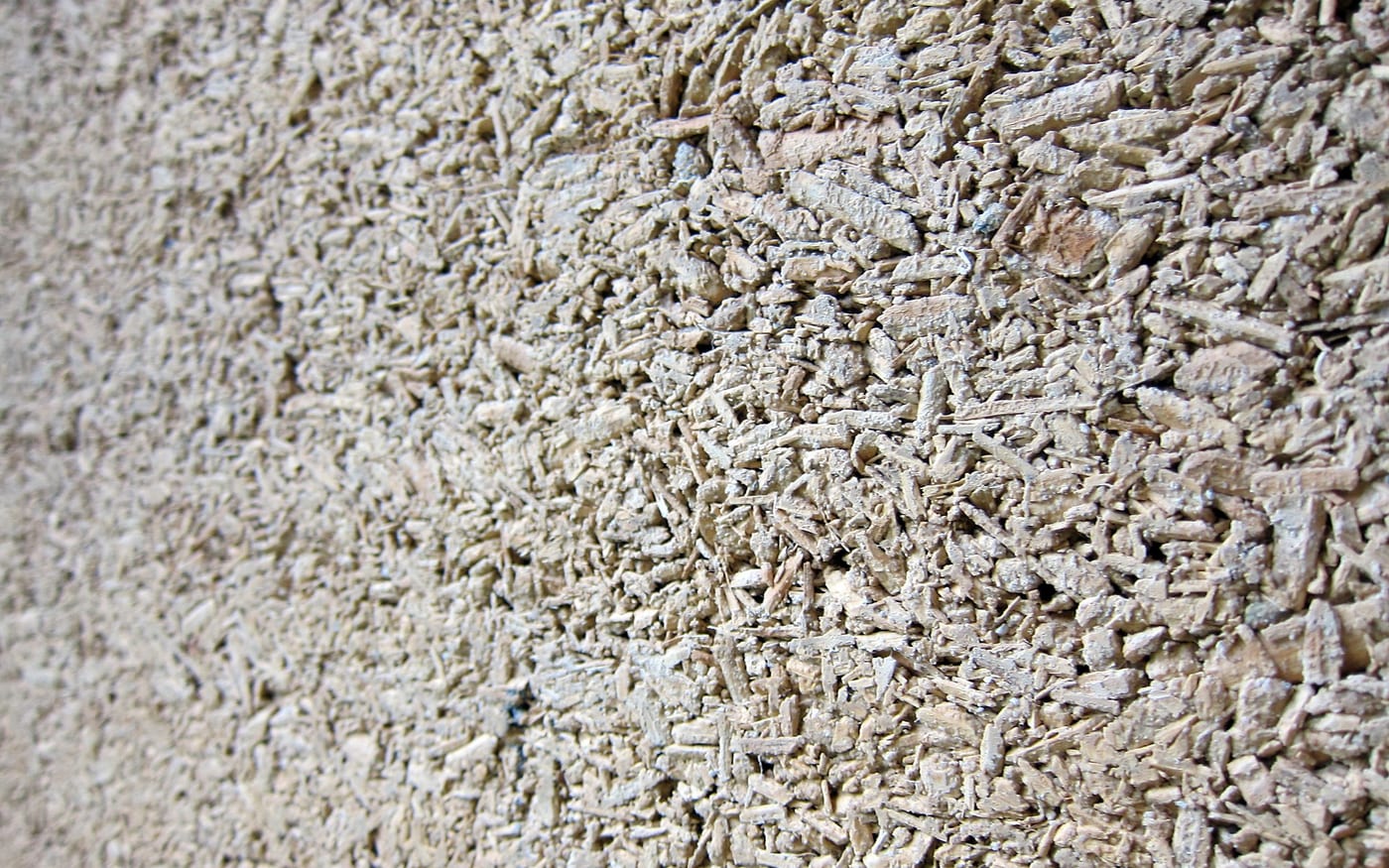
Hemp shiv (the woody core of the hemp stalk) bound with lime. It is not a structural material but an insulating, humidity-buffering infill that carbonates over its life — the lime slowly reabsorbing CO₂, so the wall stores more carbon than it emits.
Illustration · Hemp hurd bound in lime — a wall that insulates, breathes, and banks carbon.A real hempcrete wall — hemp hurd bound in lime. Photograph: Jnzl’s Photos, CC BY 2.0, via Wikimedia Commons.
Seen in
In India, the Himalayan Hemp Eco Stay in Nauti village, Uttarakhand — reported as the country's first hempcrete homestay — was built by architect couple Namrata Kandwal and Gaurav Dixit through their startup Gohemp, a 2019 Global Housing Technology Challenge winner. Internationally, Belgium's IsoHemp runs an industrial plant producing several million hempcrete blocks a year, exporting across Europe, the US and Australia.
The promise
Strong thermal mass and humidity buffering — a breathable wall that stays comfortable across hot and cold seasons.
Carbon-storing: research cited by IsoHemp puts sequestration at roughly 75 kg of CO₂ per cubic metre, making walls close to carbon-neutral or better.
Fire-resistant, termite- and mould-resistant, and light — lowering foundation loads and helping seismic performance.
The catch
Not load-bearing — the single biggest limitation. Hempcrete always needs a separate structural frame of timber, steel or concrete.
Slow to cure and dry, with low compressive strength; it is vulnerable to prolonged saturation before it has carbonated.
In India, supply chains are immature — few processing centres — and cannabis-cultivation rules constrain raw-material supply.
“Himalayan Hemp Eco Stays is the first hempcrete homestay in India.”
Namrata Kandwal — Architect and co-founder, Gohemp Agroventures source From the world
“We need many more centers for processing in order to make it worthwhile for farmers growing it and for architects and builders to be able to use it.”
Steve Allin — Director, International Hemp Building Association source
05
Eco-insulation & compositesEmerging
Mycelium composites
Insulation grown from mushroom roots.
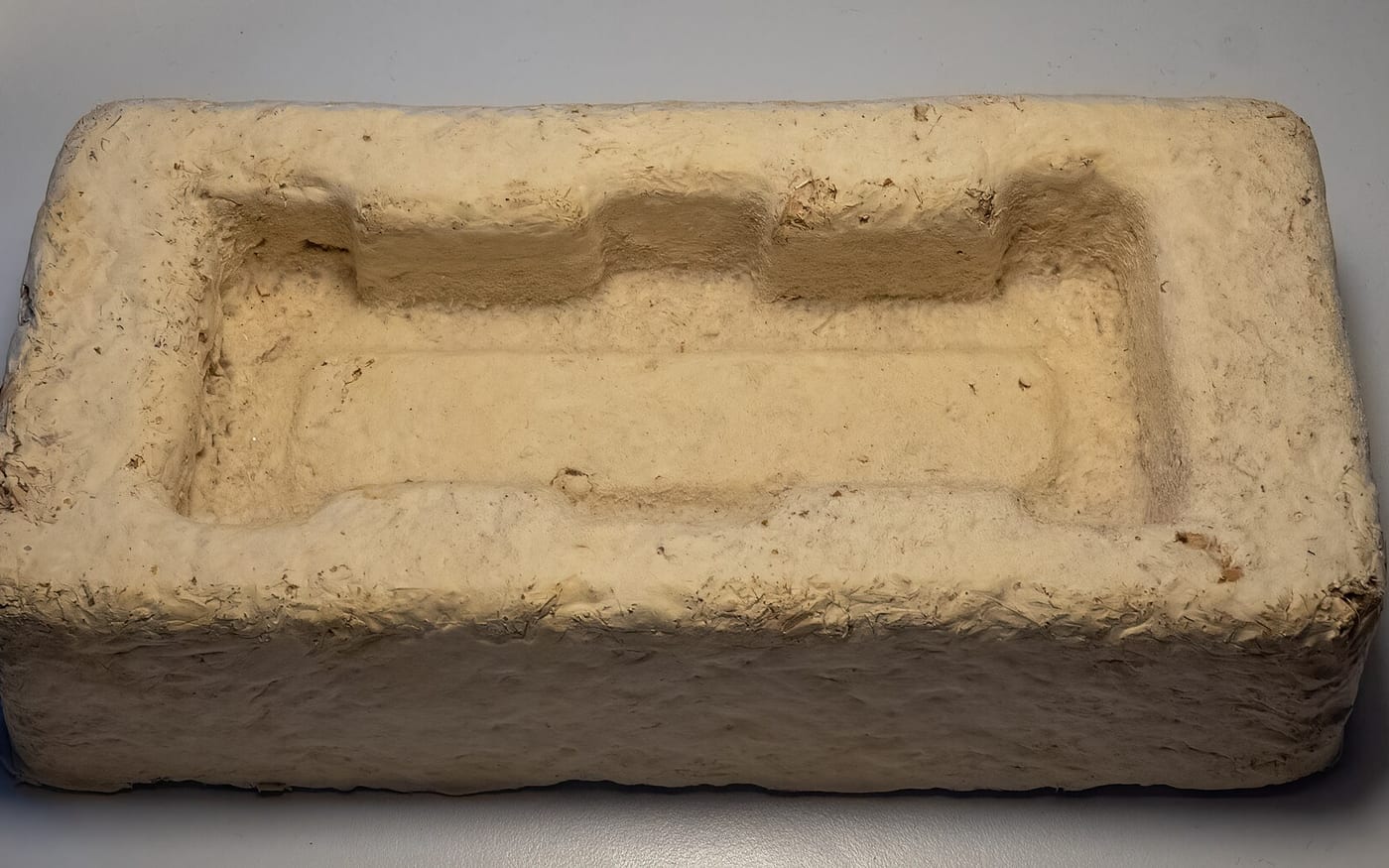
Panels and blocks grown, not manufactured. Agricultural waste is packed into a mould and inoculated with fungal mycelium — the root network of mushrooms — which binds the whole mass into a solid, lightweight material in days. Heat-dried to stop growth, it becomes a compostable insulation or acoustic panel.
Illustration · Grown, not manufactured — a panel felted together by fungal mycelium over farm waste.An object grown from mycelium, at Genspace, New York. Photograph: Rhododendrites, CC BY-SA 4.0, via Wikimedia Commons.
Seen in
The landmark proof-of-concept was 'Hy-Fi', a compostable tower of ~10,000 mycelium bricks built by The Living (David Benjamin) with Arup in MoMA PS1's courtyard, New York, in 2014. The company Ecovative pioneered the process. In India the clearest venture is Chennai's Roha Biotech (incubated at IIT Madras), turning farm residue into compostable packaging — materials, not yet buildings.
The promise
Grown near room temperature from agricultural waste — very low embodied energy, and fully home-compostable at end of life.
Good acoustic absorption and thermal insulation, a strong fit for panels and ceiling tiles.
Naturally light, with relative inherent fire resistance.
The catch
Moisture is the weakness — as an organic material it can absorb water and regrow or rot if not fully heat-killed and kept dry; it needs sealing.
Non-structural and low load capacity — suited to insulation, acoustics and partitions, not primary structure. Hy-Fi was a temporary pavilion.
Fire and durability data against building codes are still thin, and slow batch 'growing' cycles make construction-scale economics unproven.
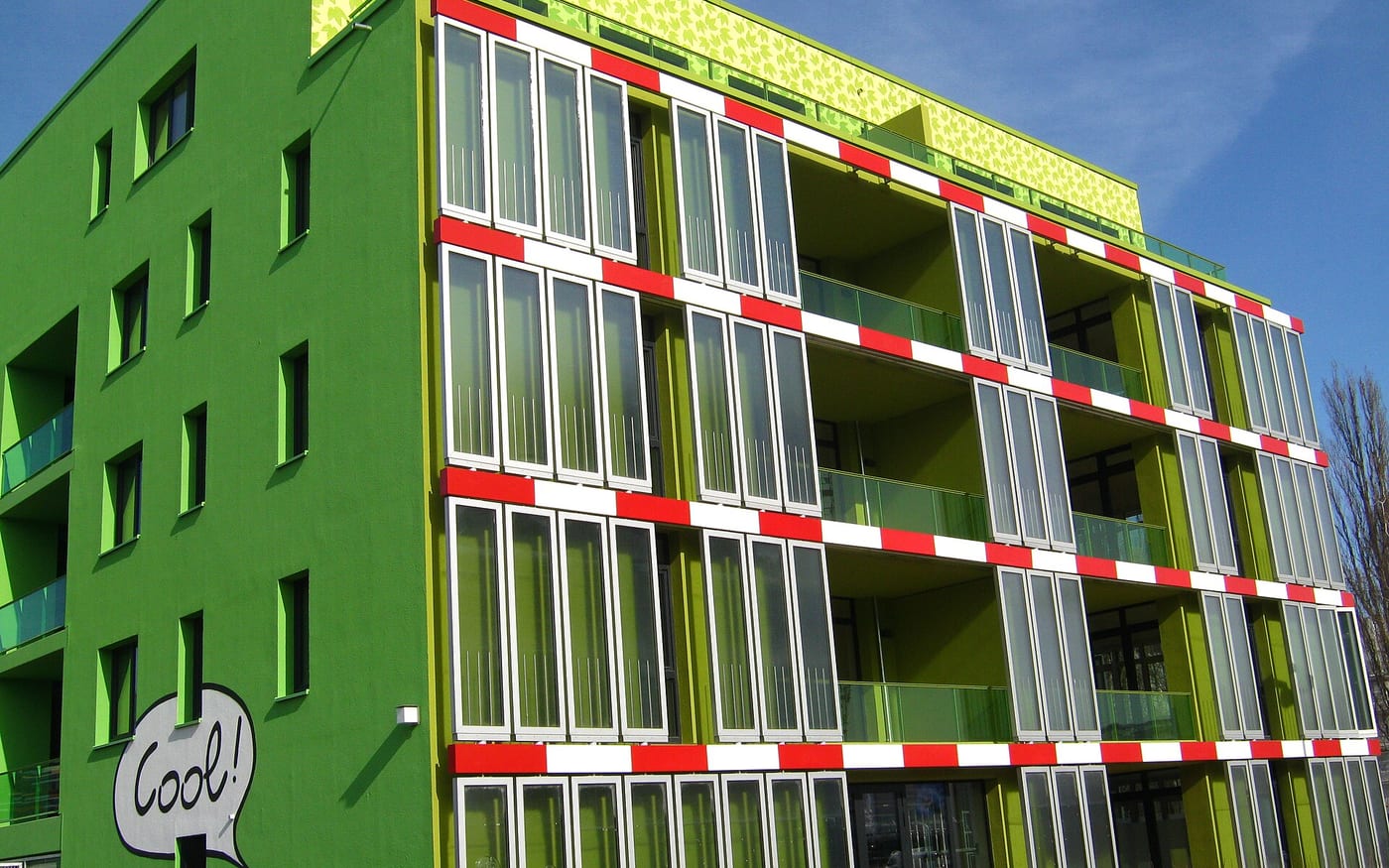
Polymers made from plant or algae feedstock instead of petroleum, used for cladding panels, screens and 3D-printed building components. Some formulations are biodegradable; algae versions also capture CO₂ as they grow.
Illustration · Polymers grown from plants and algae, shaped by a 3D printer.The BIQ ‘Algae House’, Hamburg — its facade panels are live-algae bioreactors. Photograph: Gerhard Kemme, CC0, via Wikimedia Commons.
Seen in
Dutch designers Studio Klarenbeek & Dros developed an algae-derived biopolymer for 3D printing; Hamburg's BIQ House (2013) wears a living-algae bioreactor façade. In India the activity is upstream, not yet a shipped building product: Balrampur Chini is building the country's first industrial-scale PLA plant, and Bengaluru's Sea6 Energy is developing seaweed biomaterials.
The promise
Renewable plant/algae feedstock; algae additionally sequesters CO₂ while growing.
Enables local, print-on-demand manufacture of components — cutting transport and freeing up complex geometry.
Many formulations are biodegradable or compostable, reducing end-of-life plastic waste.
The catch
Durability and weathering are the catch — many bioplastics soften at modest temperatures and are UV- and moisture-sensitive, with unproven multi-decade outdoor lifespans. It is ironic to ask a 'biodegradable' material to serve as long-life cladding.
Still costlier than petro-plastics; construction-grade volumes and code approvals are largely unproven.
'Bioplastic' spans very different chemistries with very different green credentials — some need industrial composting, not a home bin.
“We want to change the system so that people grow raw materials locally that they can use to produce things that comply with their needs.”
Eric Klarenbeek — Designer, Studio Klarenbeek & Dros source
07
Advanced surfaces & finishesLab-scale
Translucent wood
Timber you can see through.
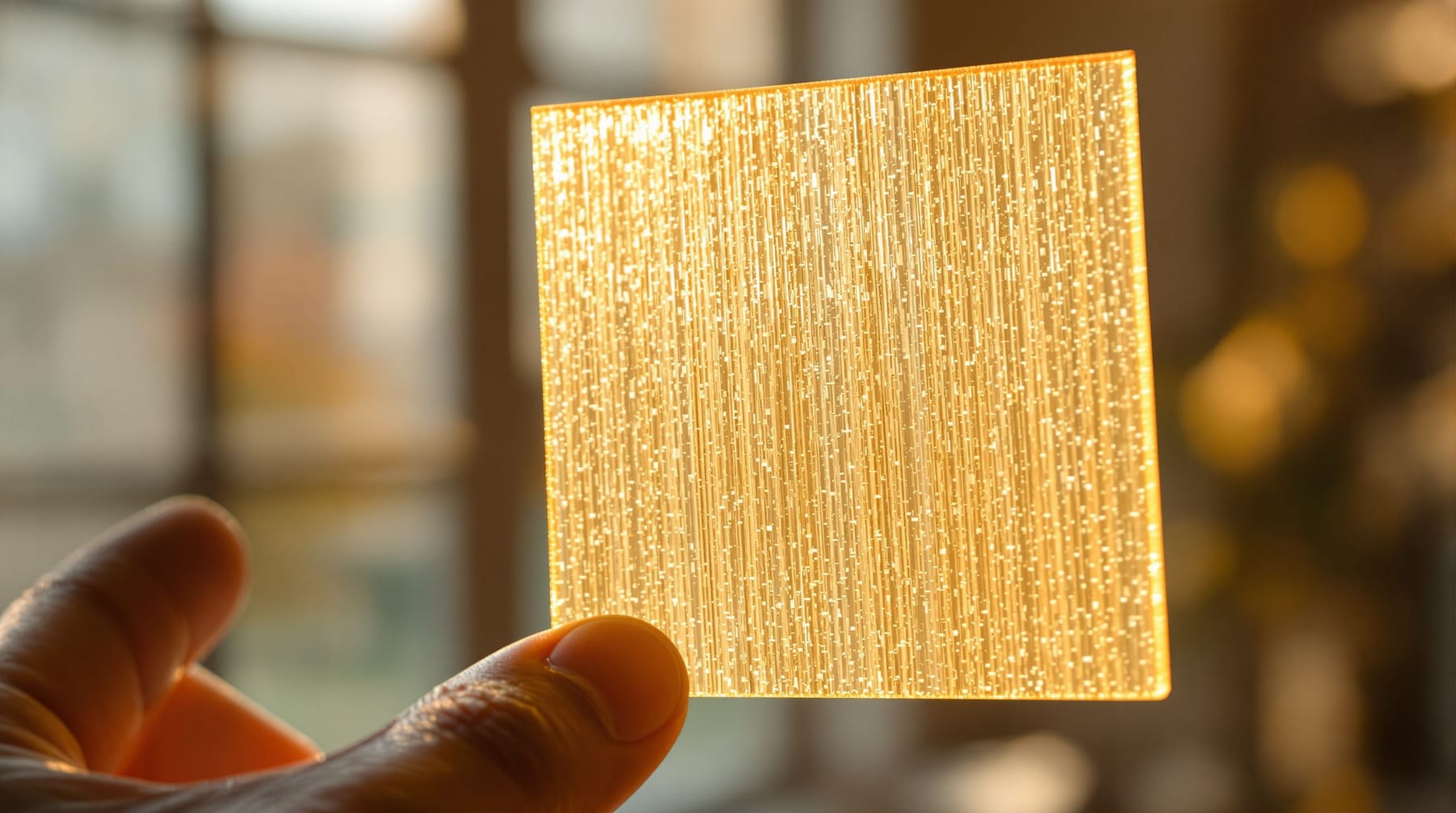
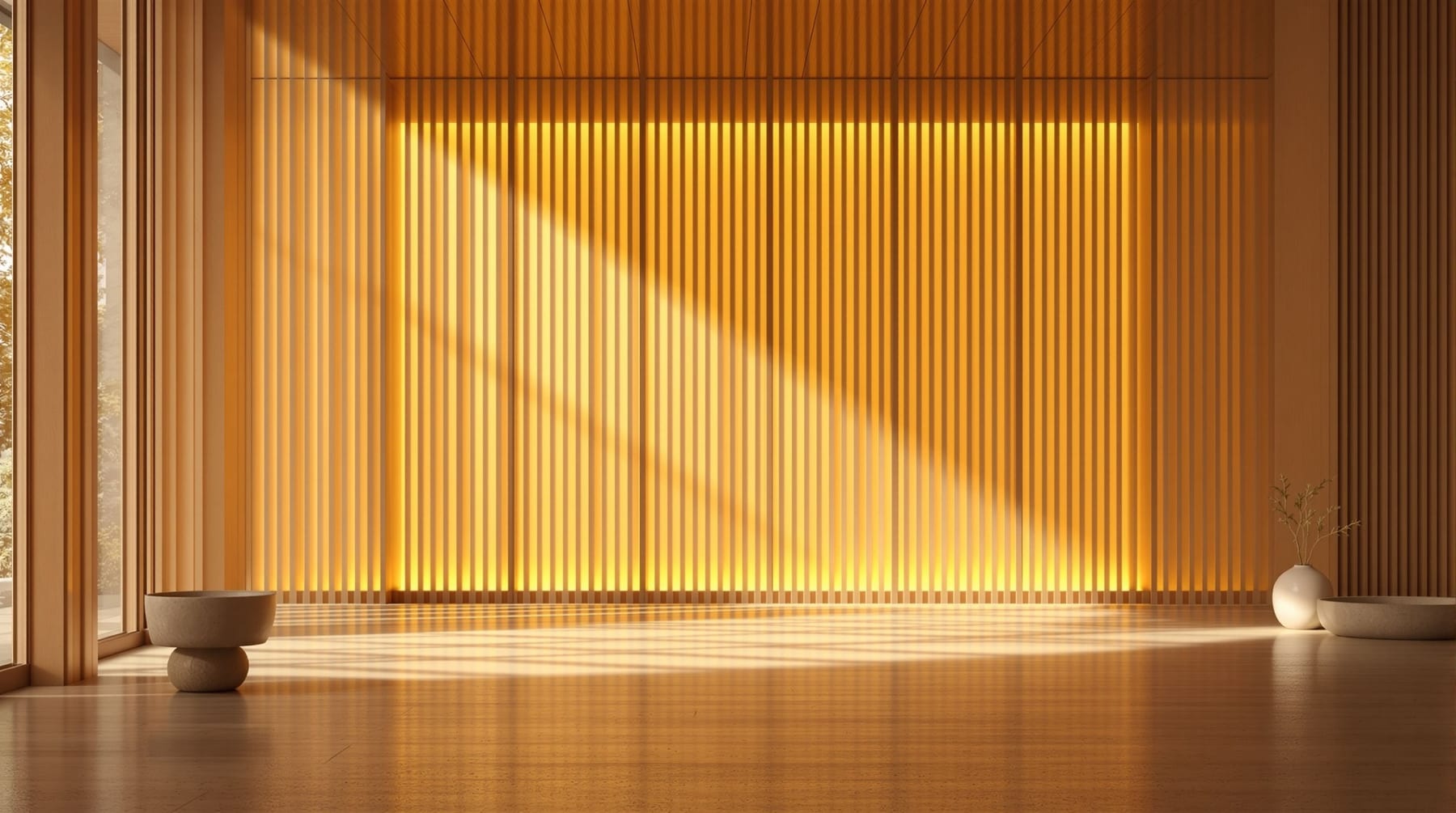
Wood with its lignin — the compound that gives it colour and stiffness — chemically stripped out, leaving a white, porous cellulose scaffold. That scaffold is then filled with a clear polymer tuned to the optics of the cell walls, producing a timber that still bears load but lets light pass through it.
Illustration · Lignin stripped out, a clear polymer in — timber that still carries load but lets the light through.Illustration · Indoors, it reads as a softly glowing wall of light.
Seen in
The pioneering work is at Sweden's KTH Royal Institute of Technology, led by Prof. Lars Berglund, with parallel research at the University of Maryland. It remains firmly in the laboratory — striking demonstrator panels, but no commercially built structure yet, and no Indian research programme of note.
The promise
Transmits light while remaining load-bearing — something glass cannot do — and gives a soft, diffuse, glare-free light.
Made from a renewable resource, and a better thermal insulator than glass.
Potentially a low-cost substrate for solar cells over large surfaces, and a privacy-preserving semitransparent façade.
The catch
Still experimental and not commercially scaled — the most immature material on this list.
The transparency long depended on a fossil-based polymer, undercutting the green case; renewable (citrus-derived) alternatives are only now emerging.
Cost, durability and manufacturing at building scale are all unproven.
“Replacing the fossil-based polymers has been one of the challenges we have had in making sustainable transparent wood.”
Lars Berglund — Professor, KTH Royal Institute of Technology source
08
Advanced surfaces & finishesCommercial
Sintered stone
Stone, densified by heat.
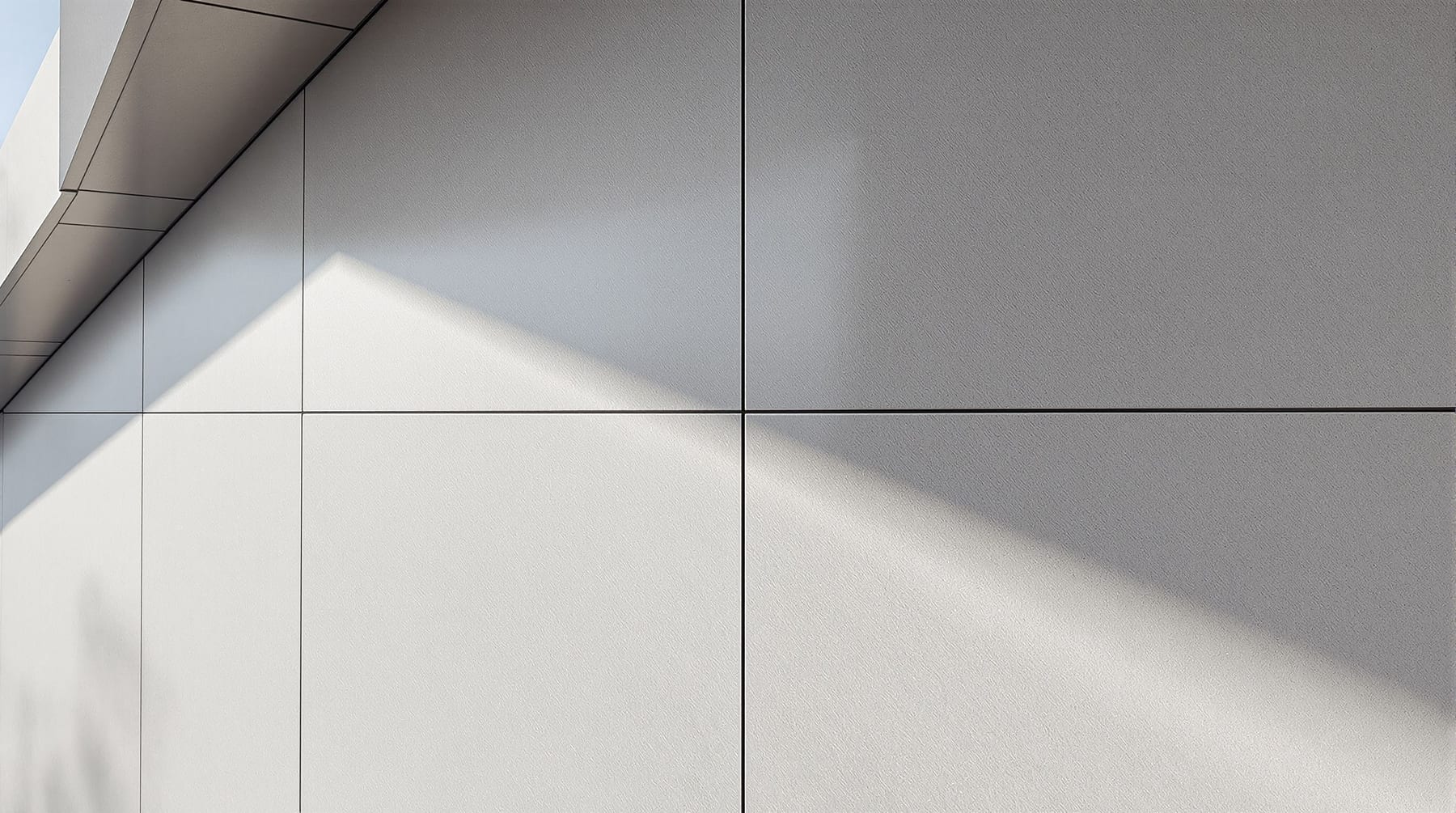
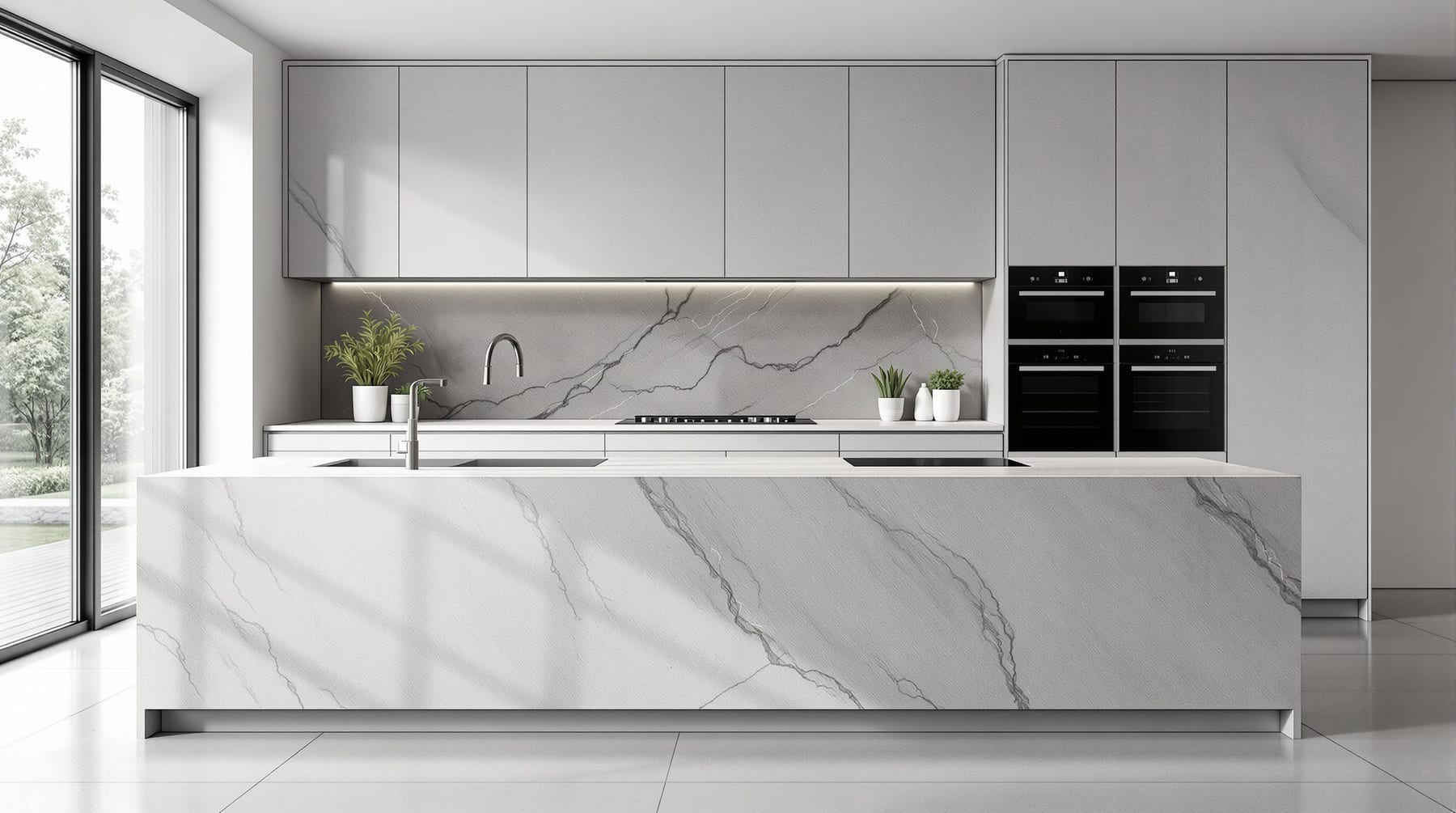
Mineral powders — clays, feldspar, silica — pressed under enormous force and fired at extreme heat until they fuse into an ultra-dense slab with near-zero porosity. It mimics natural stone but is harder, less porous and made in large formats.
Illustration · Big, near-seamless slabs — mineral powder fired until it out-performs the stone it imitates.Illustration · The same slabs indoors — near-seamless counters and splashbacks.
Seen in
This is the one genuinely mainstream material on the list. Commercial brands — Neolith, Cosentino's Dekton, Laminam — are sold worldwide, including a real and growing Indian market, in slabs up to roughly 3.2 × 1.6 metres, used for façades, countertops and floors.
The promise
Extremely durable with near-zero porosity — highly resistant to stains, scratches, heat and UV, and almost maintenance-free.
Large formats mean fewer, finer seams across big surfaces, and it is certified for ventilated rainscreen façades.
Colour and pattern run consistent, and it performs in high-traffic and outdoor settings where natural stone struggles.
The catch
Brittle — prone to edge chipping, and it demands careful handling and specialist cutting during fabrication.
A premium material, typically ₹6,000–13,000 per square metre for the slab alone.
High embodied energy: the very high-heat sintering that gives it its density is energy-intensive.
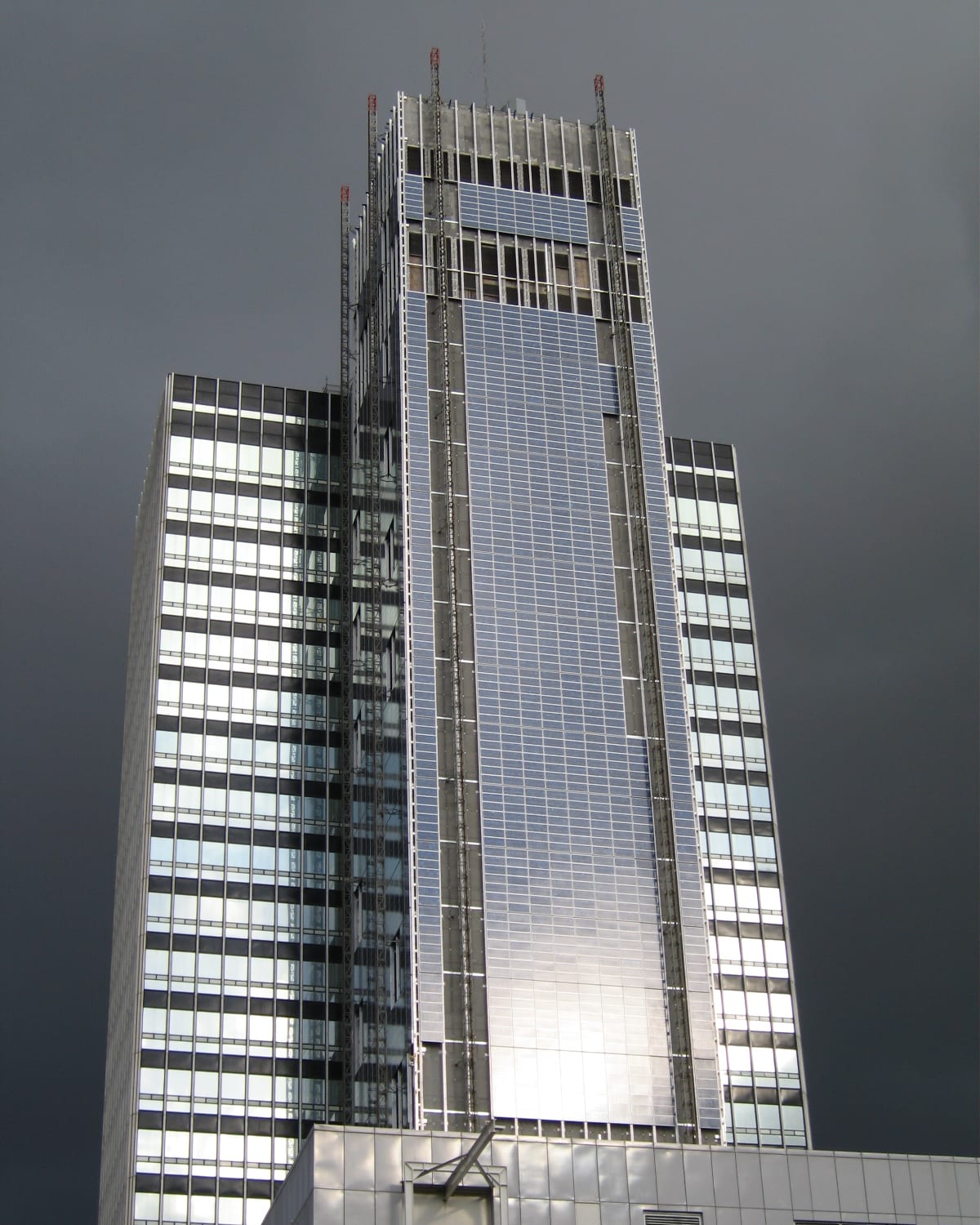
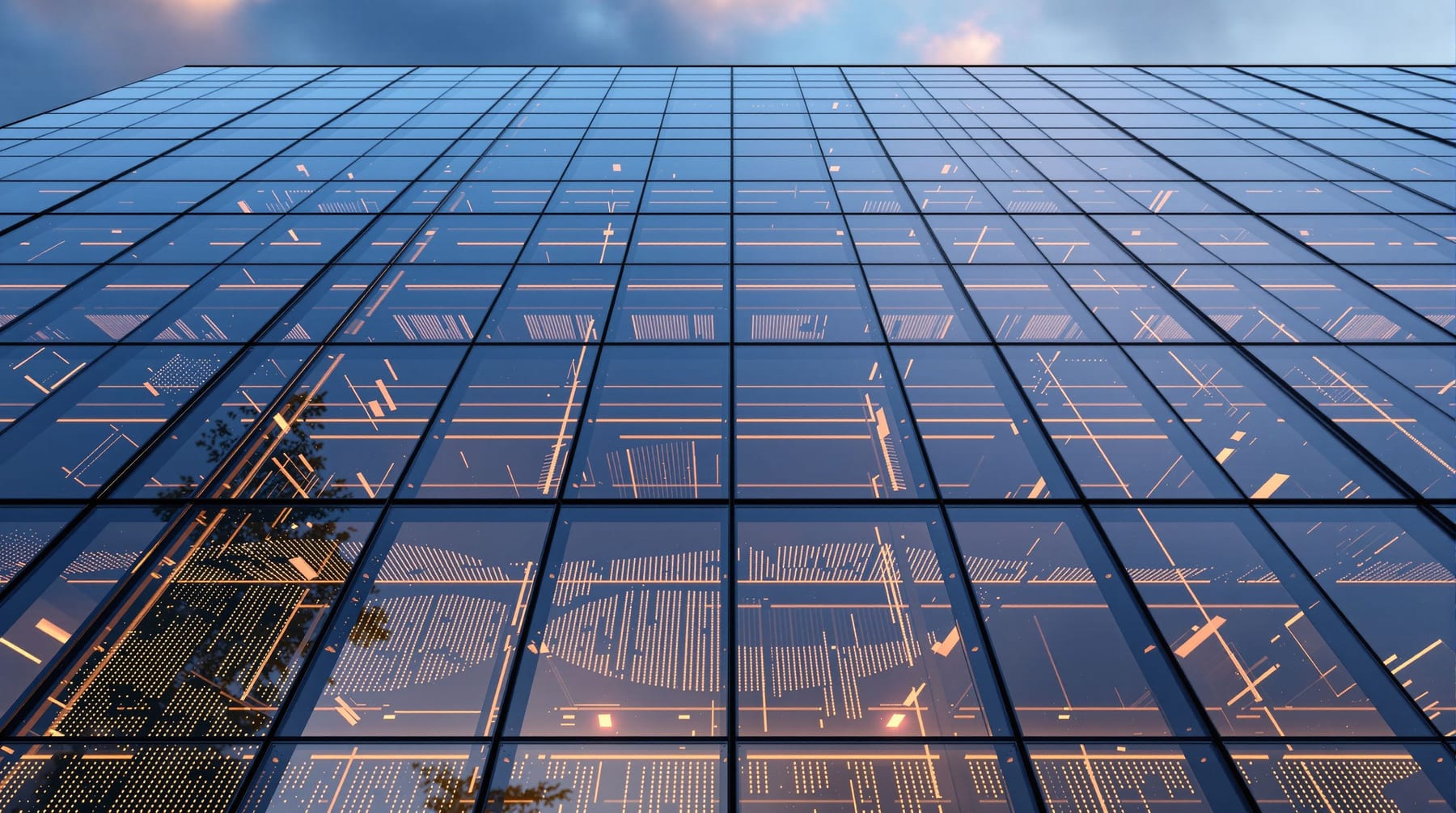
Glazing with photovoltaic cells laminated or deposited into it, so the same glass that forms the building envelope also generates power. Transparency is tunable — from near-clear vision glass to shaded spandrel — trading light for yield.
The CIS Tower, Manchester, being re-clad in photovoltaic tiles — one of Europe's earliest large solar façades. Photograph: Pete Birkinshaw, CC BY 2.0, via Wikimedia Commons.Illustration · The envelope as power plant — a fine grid of cells laminated into the glass.
Seen in
Internationally, Spain's Onyx Solar clad Sydney's 182-metre Atlassian Central tower in around 1,800 PV-glass modules. In India the technology is real but early: U-Solar built what is described as the country's largest building-integrated vertical solar system — an ~863 kWp façade across roughly 51,500 sq ft on the CtrlS data centre in Mumbai — and Suzlon's 'One Earth' campus in Pune uses building-integrated PV panels.
The promise
Dual function: it is the envelope and a generator at once — no extra land, no separate mounting.
Tunable transparency plus thermal and acoustic insulation, replacing conventional curtain-wall glass one-for-one.
Turns a tower's biggest 'dead' surface — its façade — into a power source, which matters most where roof area is tiny next to wall area.
The catch
Lower efficiency than opaque rooftop panels: transparency trades directly against yield, and even good PV glass lags standard modules.
Vertical façades catch less optimal sun than tilted roofs, so real output per square metre is modest.
A premium product whose economics work best when it replaces glazing already in the budget; in India, weak incentives make payback harder still.
“By replacing the glass used in the facade with photovoltaic modules we have created a solar power plant on the building structure while the inverter and other components are housed inside the building.”
K.R. Harinarayan — Founder & CEO, U-Solar Clean Energy Solutions source From the world
“Glass will no longer be just a component of construction but also a renewable energy resource.”
Victor Rosenberg — Founder, ClearVue Technologies source
10
Energy & reinforcementLab-scale
CABKOMA strand rods
Seismic reinforcement lighter than steel.
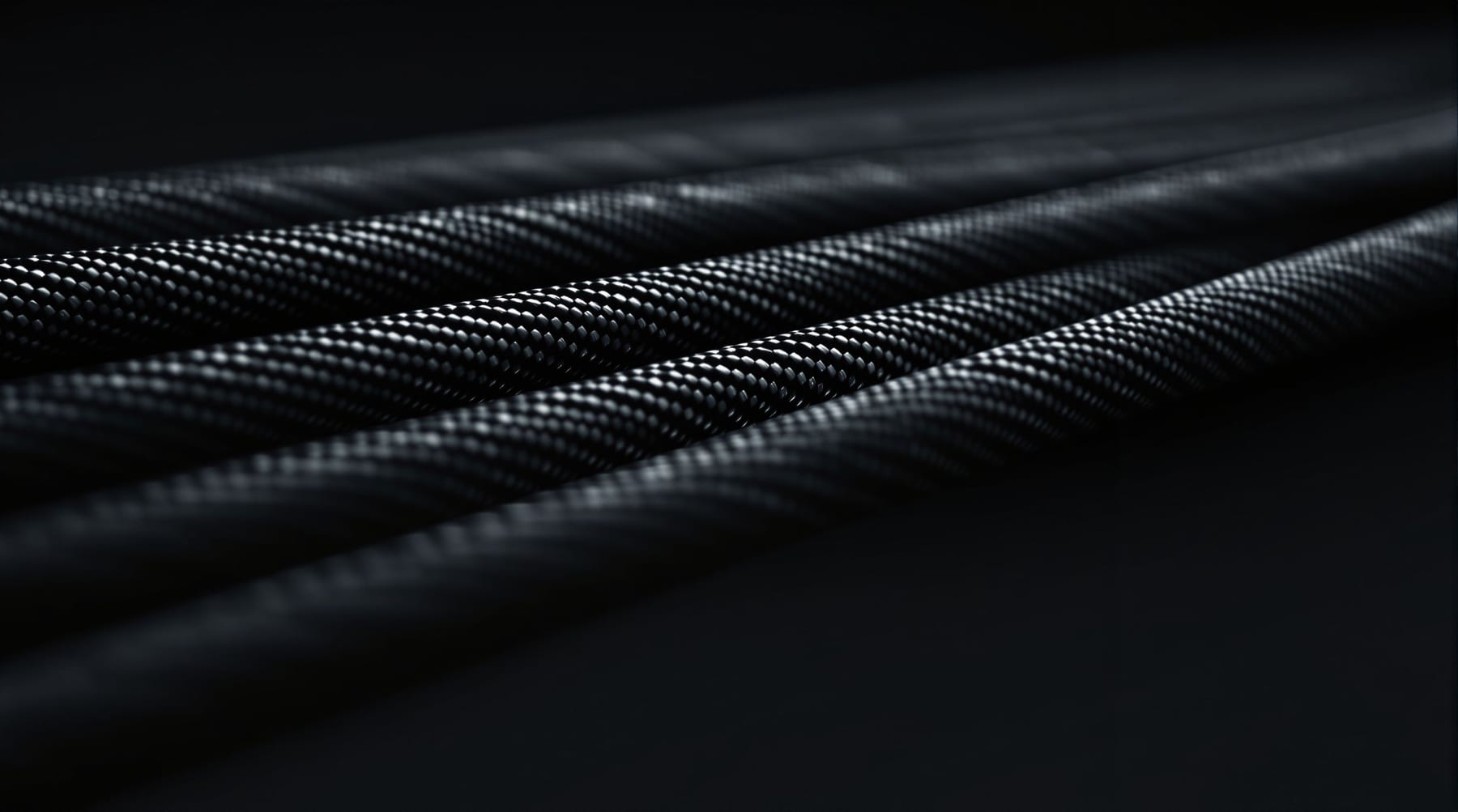
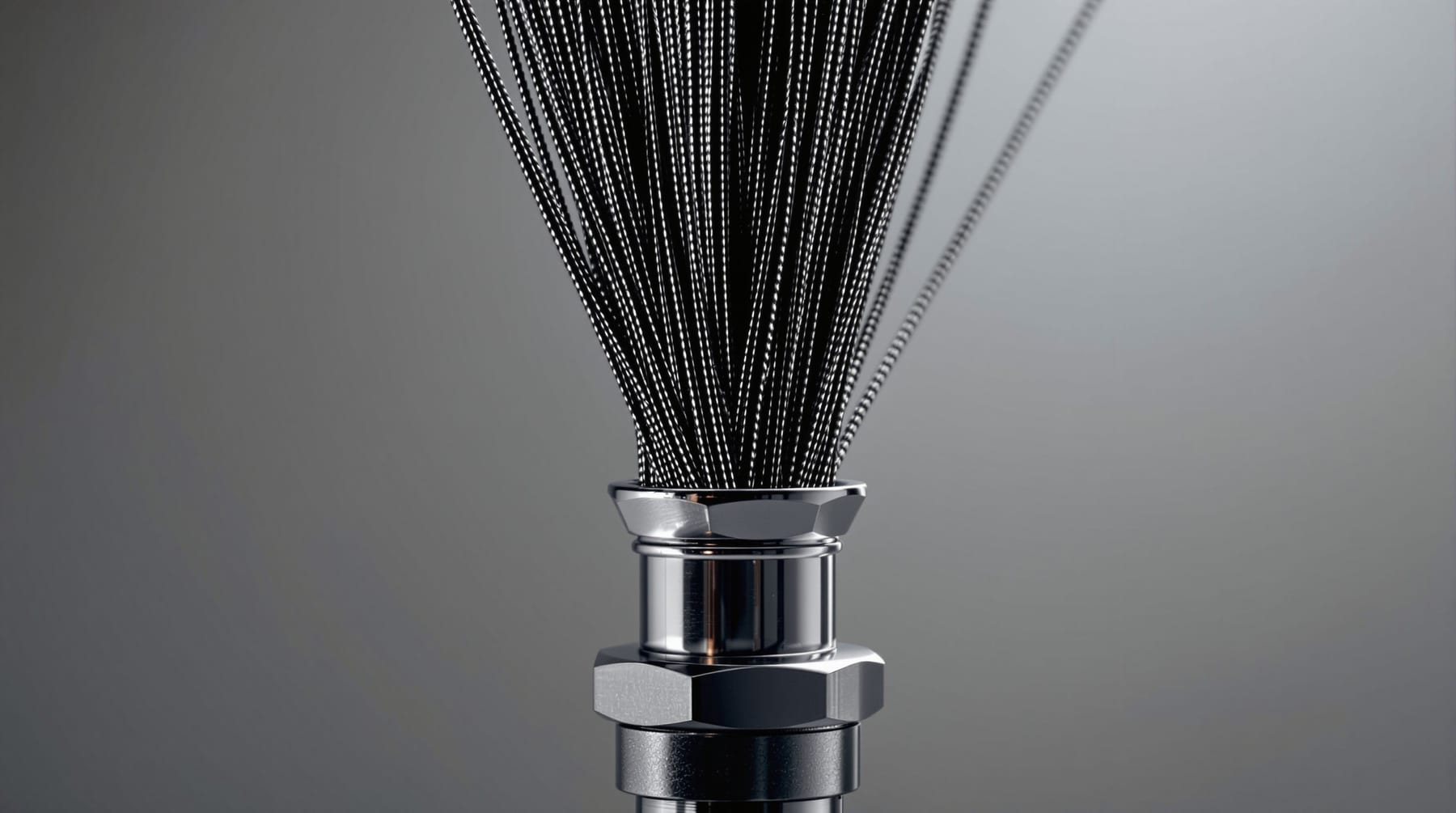
Ultra-light carbon-fibre composite rods, bound in a thermoplastic resin and braided using techniques borrowed from traditional rope-making. Anchored from a building to the ground like a fine curtain of strands, they brace it against earthquakes without bulky shear walls.
Illustration · Braided carbon-fibre strands — about a fifth the weight of steel, bracing a building against quakes.Illustration · Strands gathered into an anchor — the fixing that ties the curtain to the structure.
Seen in
The one flagship is the Komatsu Matere Fabric Laboratory 'fa-bo' in Ishikawa, Japan — the manufacturer's own head office, wrapped in CABKOMA strands by Kengo Kuma & Associates and unveiled in 2016 as the world's first structure seismically reinforced with a carbon-fibre composite strand. There is no Indian building using it; Indian relevance so far is academic interest, given the country's high seismic exposure.
The promise
Extraordinary lightness-to-strength: a 160-metre roll weighs about 12 kg, roughly a fifth the weight of equivalent steel — described as the world's lightest seismic reinforcement.
The thermoplastic resin can be re-heated and reshaped, and unlike steel rebar it does not corrode.
Architecturally expressive and minimally invasive — thin exterior strands allow an almost transparent seismic retrofit of an existing building.
The catch
Extremely niche — essentially one flagship building and a very limited track record a decade on.
A proprietary material needing specialist braiding, anchoring and structural engineering; not an off-the-shelf system.
Much of the 'lightest / strongest' framing traces to the manufacturer's own claims; independent long-term seismic-performance data across major quakes is thin.
In use
Exterior seismic retrofit of existing buildingsInterior structural reinforcementLong-life alternative to steel reinforcement
A pattern runs through all ten: the promise is real, and so is the catch. Self-healing concrete works — for narrow cracks, at twice the price. Hempcrete stores carbon — but cannot hold up a roof. Photovoltaic glass generates — less than the panel you could have put on the roof instead. Translucent wood is beautiful — and still in the lab. None of that is a reason to dismiss them; it is the reason to specify them with your eyes open.
And the honest India note recurs too. For several of these, the country's contribution is world-class research and a handful of pioneering pilots rather than a mature market — Gohemp's hempcrete homestay, U-Solar's Mumbai façade, the self-healing-concrete labs at the IITs. The materials are coming. Knowing their limits now is how you use them well when they arrive.