
Linen Curtains: Relaxed Luxury & Natural Texture (India 2026)
Why linen drapes the way nothing else does, the signature creasing that is a feature not a flaw, sheer versus heavy weights, the blends worth buying, honest costs and how to keep it alive in Indian sun.
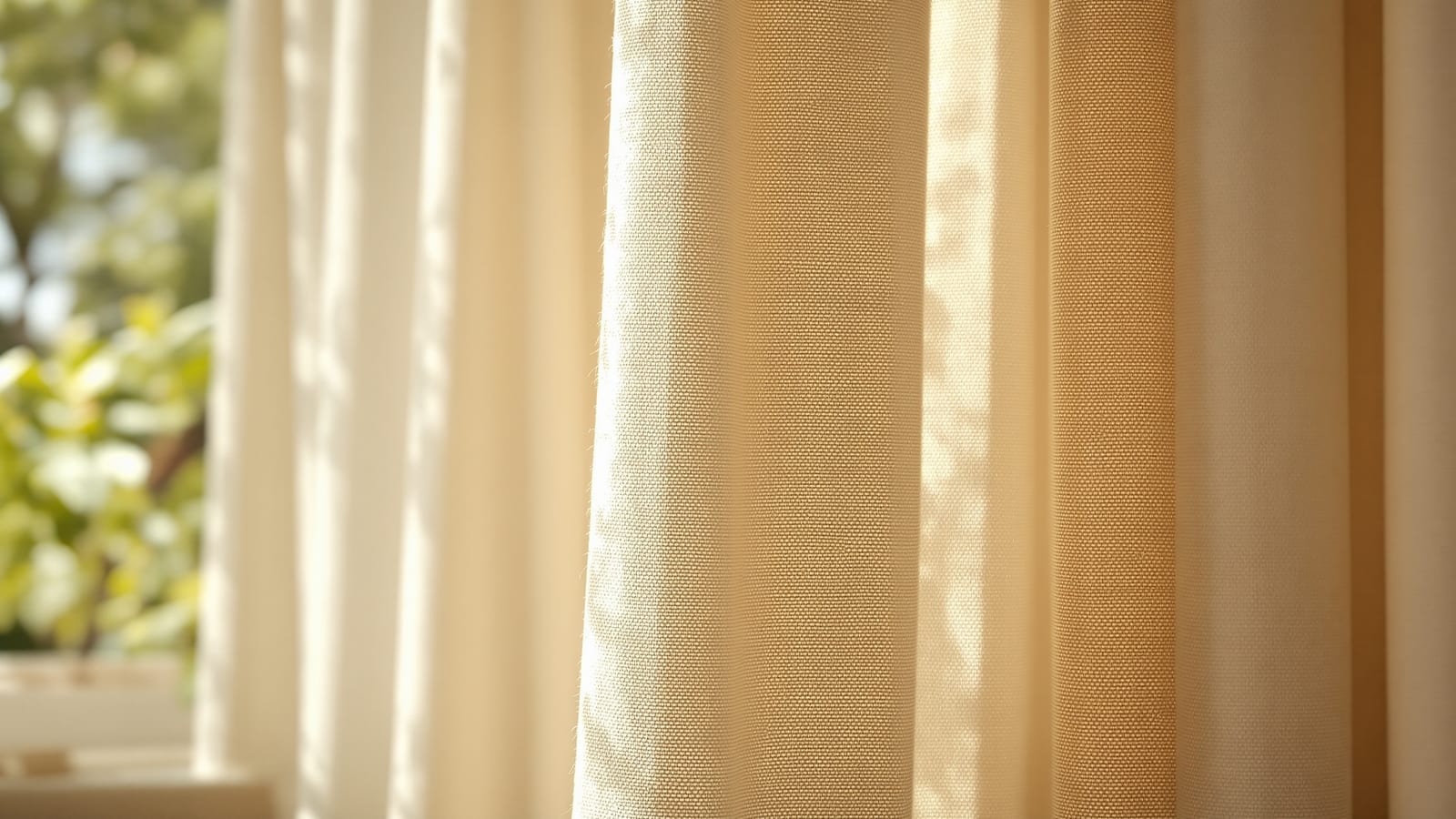
There is a particular way linen falls that no polyester, no rayon, no machine-perfect drape can copy. It hangs with a soft weight, breaks gently at the floor, and carries a faint, irregular texture that catches light like nothing else in the room. People call it "relaxed luxury", and the phrase is exact: linen looks expensive precisely because it looks a little undone. This guide explains what makes linen special, the famous creasing that turns half of buyers off and the other half into devotees, the difference between airy sheer linen and substantial heavy linen, the blends worth your money, what it honestly costs in India, and how to keep a natural fibre alive under a punishing sun.
Linen is the only curtain fabric that looks better lived-in than brand-new. If you need a crease-free, factory-flat panel, linen will fight you every day — choose it for the texture, or do not choose it at all.
Why linen drapes the way nothing else does
Linen is spun from flax, a bast fibre that is stiffer and more irregular than cotton. That irregularity is the whole point. Run through what it actually buys you:
- The drape. Linen has a heavier, more architectural fall than cotton — folds are deeper and hold their shape, so a linen panel reads as substantial even in a light weave.
- The texture. A visible slub (the gentle thick-and-thin of the yarn) gives the cloth depth. Light grazes across it instead of bouncing flat, which is why linen photographs so beautifully.
- Breathability. Flax is highly breathable and naturally moisture-wicking — a real comfort advantage in humid Indian rooms where synthetics feel stuffy.
- The light. Natural and lightly washed linens glow when backlit. A floor-length linen sheer turns harsh afternoon sun into a warm, even wash better than almost any other fabric.
- It ages well. Linen softens with every wash and only looks better over years. Most fabrics degrade; good linen matures.
The trade for all of this is honesty about wrinkles, which we will not dodge.
The signature creasing: feature, not flaw
Linen creases. This is not a defect, a quality problem, or something a better mill can fix — it is the inherent behaviour of the flax fibre, which lacks the elasticity to spring back the way cotton or polyester do. The relaxed, slightly rumpled look in every design magazine is creased linen. Embrace it and you have the easiest luxury fabric to live with; fight it and you will be miserable.
A few honest truths to set expectations:
- Hung curtains crease far less than you fear. Gravity is your friend — a floor-length linen panel under its own weight pulls most casual wrinkles out within a day or two of hanging.
- The crease is soft, not sharp. Linen wrinkles read as gentle waves, not the hard angular creases of a cheap shirt. They look intentional.
- You can soften it if you must. A light steam (never a hot dry iron pressed flat) relaxes the worst of it, and a linen-cotton or linen-poly blend resists creasing noticeably.
If a perfectly smooth, ironed window is your non-negotiable, buy cotton or a poly-blend and read the curtain fabric guide instead. Linen rewards a relaxed eye, not a perfectionist one.
Sheer linen versus heavy linen
"Linen curtains" covers two very different fabrics doing two different jobs. Pick by weight (measured in GSM — grams per square metre):
| Weight | What it does | Privacy | Best use |
|---|---|---|---|
| Sheer / lightweight linen (~120-180 GSM) | Diffuses light into a soft glow | Daytime only | Living rooms, layering, glow |
| Medium linen (~180-260 GSM) | Filters strongly, some darkening | Medium | All-rounder, single layer |
| Heavy / upholstery-weight linen (260+ GSM) | Substantial drape, real light reduction | High | Bedrooms (lined), formal rooms |
The classic mistake is buying sheer linen and expecting it to darken a bedroom — it never will. As with every fabric, the well-dressed Indian window is usually two layers: a sheer linen for daytime softness plus a lined heavy curtain (or blackout) behind it for night, sleep and heat. The sheer curtains guide covers the day-versus-night privacy trap in full.
The blends worth buying
Pure 100% linen is the connoisseur's choice — maximum texture, maximum glow, maximum creasing. For most Indian homes, a blend is the smarter buy, and not a compromise:
- Linen-cotton (often 55/45 or 70/30). The sweet spot. Keeps most of linen's texture and drape, creases noticeably less, washes more easily, and costs less than pure linen. If you buy one linen curtain, buy this.
- Linen-polyester / linen-viscose. More crease-resistant and dimensionally stable, holds colour better in sun, and cheaper still — but the texture flattens and the natural glow dulls. A sensible pick for bright, high-UV windows where pure linen would fade fast.
- Pure 100% linen. Buy this where it will be seen up close and you will love the slubby, lived-in character — a feature wall window, a formal living room, a layered sheer.
A practical rule: the brighter and more sun-blasted the window, the more you want a blend; the more sheltered and showcase the window, the more pure linen earns its premium.
What linen curtains cost in India
Linen sits at the premium end of natural curtain fabrics — expect to pay more than cotton or polyester, and treat these as honest ranges, not quotes, since fabric, fullness, lining, stitching and city all move the number:
- Linen-blend fabric typically runs roughly ₹500-1,200 per metre; pure imported linen climbs to ₹1,200-3,000+ per metre.
- A single custom linen window, made up with proper 2x fullness, lining and stitching, commonly lands in the mid-to-upper thousands of rupees per window, more for tall or wide glazing.
- Ready-made linen-look panels are the cheap entry point but are usually linen-blend or linen-texture polyester, not the real thing — read the label.
The cost drivers people underestimate are fullness and lining, not the colour. To turn your own window size, drop and pleat into a fabric-metre count and a per-window price, run the Curtain Cost Calculator — it does the arithmetic (fabric is roughly track width times fullness, plus hems) in seconds.
Best rooms for linen
Linen is not for every window. Where it shines:
- Living rooms. The relaxed-luxury fabric par excellence — floor-length, generously full, layered sheer plus heavier panel. This is linen's home turf.
- Bedrooms. Beautiful, but pair a heavier lined linen (or a blackout behind it) for sleep; sheer linen alone will not darken a room.
- Dining and formal rooms. Goblet or pinch pleats in a heavy linen read grand and tailored.
Where to think twice:
- Kitchens. Linen absorbs cooking grease and odour and creases with humidity — a wipeable blind or a poly-blend is more practical.
- Bathrooms and exposed balconies. Moisture and rain weaken natural flax; choose a synthetic or a blind instead.
- Harsh west-facing, all-day-sun windows. Pure linen will fade and weaken; specify a UV-tolerant linen-blend, or accept periodic replacement.
For a fully worked top-tier treatment, the luxury curtain design guide shows how designers detail linen with layering, headings and hardware.
Care, climate and the honest caveats
Indian conditions are hard on any natural fibre, and linen needs a little respect:
- Washing. Most loose-weave linens are machine-washable on a cool, gentle cycle — but they can shrink 3-5% on first wash, so buy a touch long, pre-wash before stitching, or have them dry-cleaned if precise drop matters. Always check the maker's label.
- Drying and steaming. Line-dry in shade (direct sun fades and weakens flax) and hang slightly damp so gravity pulls the wrinkles out. Steam, never a hard hot iron.
- UV. This is linen's real weakness in India. Direct, sustained sun fades natural and dyed linen and slowly degrades the fibre. On bright windows, choose UV-stable blends, line the curtains, or pair with a sheer that takes the worst of the glare.
- Dust. Linen's texture traps dust; vacuum on a low setting periodically and wash seasonally.
Two caveats stated plainly: creasing is permanent and inherent — if it will bother you daily, this is the wrong fabric; and every price and dimension here is indicative — measure your own windows and price fabric locally before committing.
How to choose linen, in four moves
1. Decide whether you love the relaxed, slightly creased look — if not, stop here and pick cotton or a blend.
2. Choose the weight: sheer linen for glow and layering, medium for an all-rounder, heavy (lined) for bedrooms and formal rooms.
3. Pick pure linen for showcase windows, a linen-cotton or linen-poly blend for bright, hard-working or budget-conscious ones.
4. Plan two layers, set 2x fullness, go floor-length, and size the fabric on a calculator before you buy.
Get those four right and linen gives you the one thing money usually cannot buy quickly: a room that looks quietly, effortlessly expensive.
Find the right fabric for your window with Studio Matrx. Match linen, cotton, sheer or blackout to each room with the Window Treatment Selector, size the fabric and price it with the Curtain Cost Calculator, and start from the complete curtain and window treatment guide — the front door to everything in the Window Treatments cluster. For the natural-fibre alternative, compare with cotton curtains.
Export this guide
Related Guides — Deep-dive reading
Polyester Curtains: The Durable, Affordable Workhorse (India 2026)
Why polyester and poly blends quietly dominate Indian windows — fade-resistance, easy care, low cost, every opacity from sheer to blackout, and the breathability caveats stated honestly.
Window TreatmentsBest Curtain Fabrics for Indian Homes (2026)
The verdict guide — the best curtain fabric for every goal: heat, blackout, budget, luxury, low-maintenance and humid coasts, picked for the Indian climate.
Window TreatmentsLayering Curtains Like a Designer: Sheer, Heavy & Blinds (India 2026)
The layered window done right — the sheer-plus-opaque base, a blind hidden behind, dress curtains that never close, and the exact order to specify the tracks, hardware and budget.
Window TreatmentsRelated Tools — Try Free
Curtain Cost Calculator
Get the fabric metres you need plus the total curtain cost by window size, fabric, pleat, lining and hardware.
Curtain CalculatorWindow Treatment Selector
Curtains, blinds or a layered system? Answer five questions about your room and get a specific recommendation.
SelectorCross-Ventilation Analyzer
Estimate airflow and air changes per hour (ACH) from room size, window areas, layout, and local wind — with NBC 2016 Part 8 compliance check.
Ventilation Calculator