
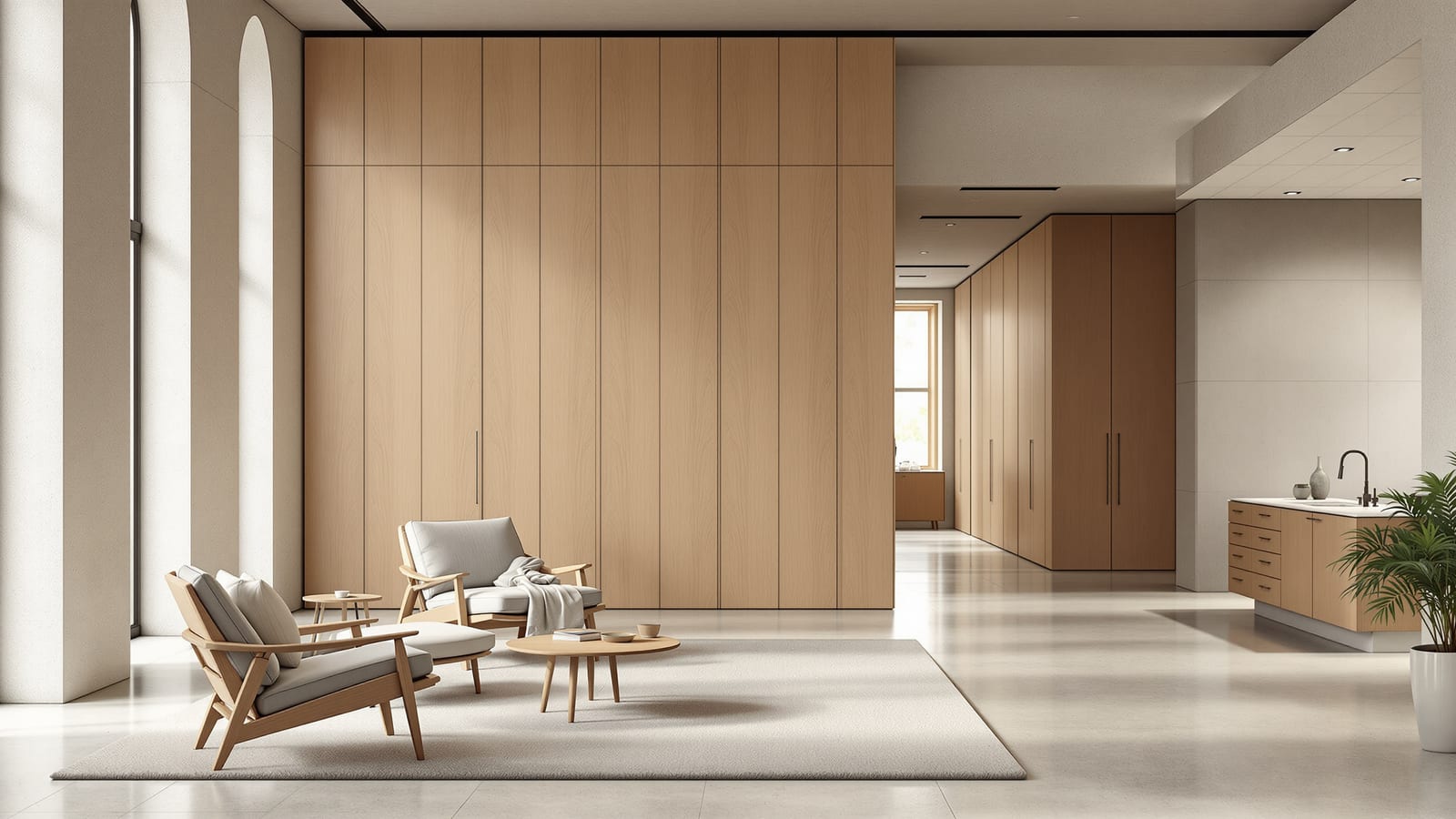
Furniture in Context
Furniture is the interior's working layer — it defines the zones, steers the circulation, and sets the character before a client notices the walls.
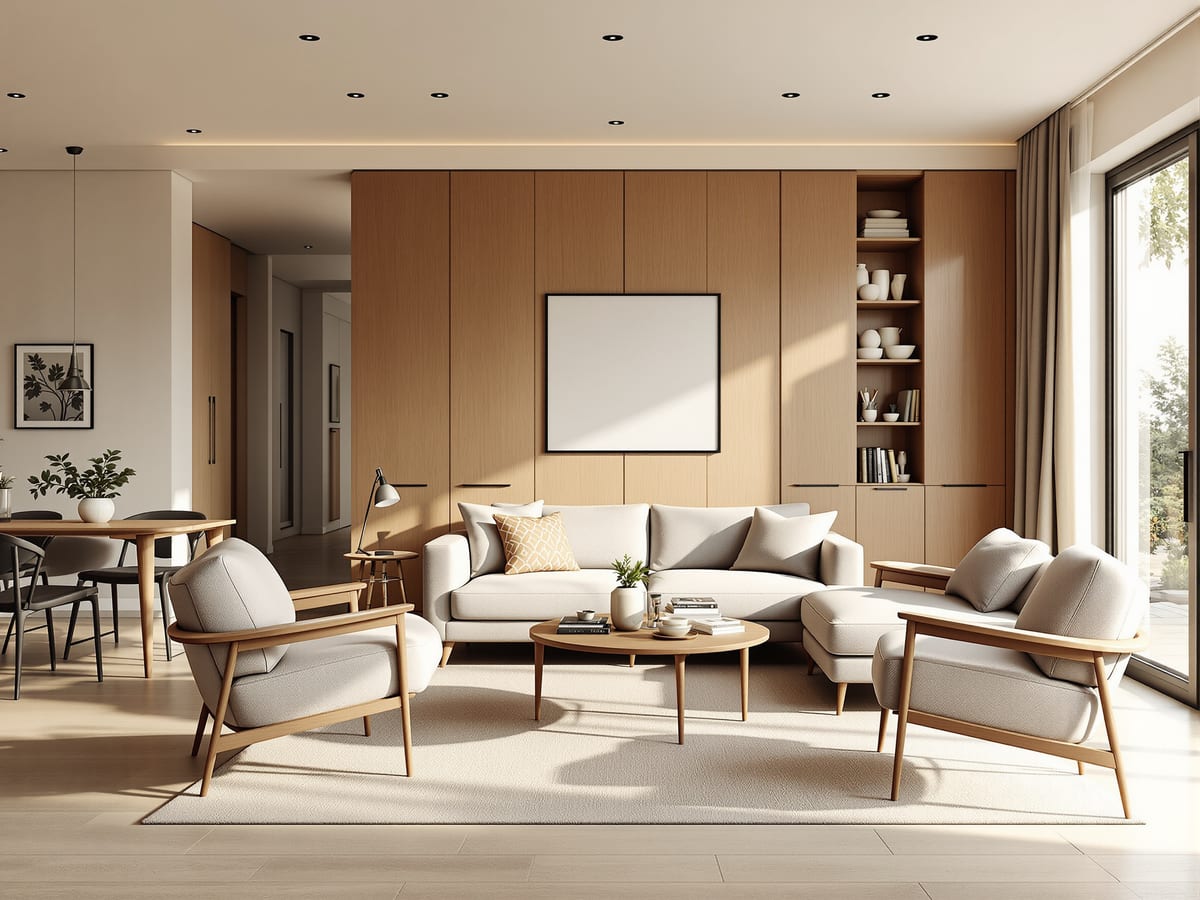
Before you choose a single chair, read the room. In most interiors the shell — floor, walls, ceiling — is a given, and it is the furniture that makes the space usable and gives it meaning. It is also the layer your client physically meets: they sit in your chairs, lean on your counters, open your drawers. So a professional treats furniture not as decoration added at the end, but as the working layer that carves the plan into zones, steers how people move, and tells them what a place is for.
What you'll be able to do
By the end of this module you will be able to — mapped to the course outcomes for Furniture for Interior Design:
Explain how furniture — not just walls — defines zones, circulation and the character of an interior.
Distinguish fixed (fitted / built-in) from loose (free-standing) furniture, and know when each is right.
Compare how furniture is used across retail, workspace, hospitality and residential contexts.
Use table and seating geometry, and circulation clearances, to make a layout that works.
The big ideas
Four ideas underpin everything that follows: furniture is the working layer; every piece is either fixed or loose; arrangement creates zones and circulation; and it all has to fit the human body.[1, 2]
Furniture does the spatial work
In most interiors the shell — floor, walls, ceiling — is a given, and it is the FURNITURE that makes the space usable and gives it meaning. Furniture is also the layer the client physically meets: they sit in your chairs, lean on your counters, and open your drawers. Get it wrong and the space fails at the exact point of contact, however beautiful the walls. So a professional reads the furniture first: what the space is for, who uses it, and how they move.[1, 2]
Furniture across the contexts
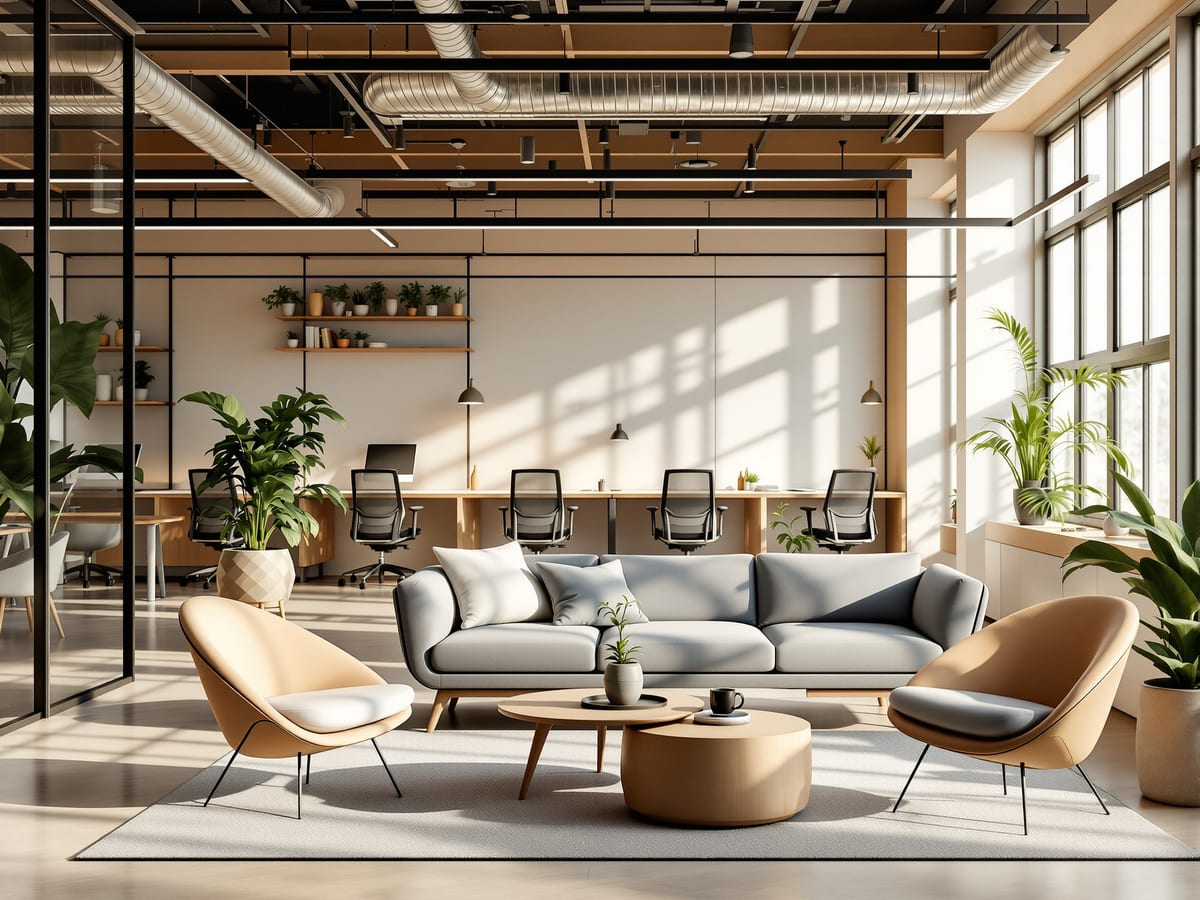
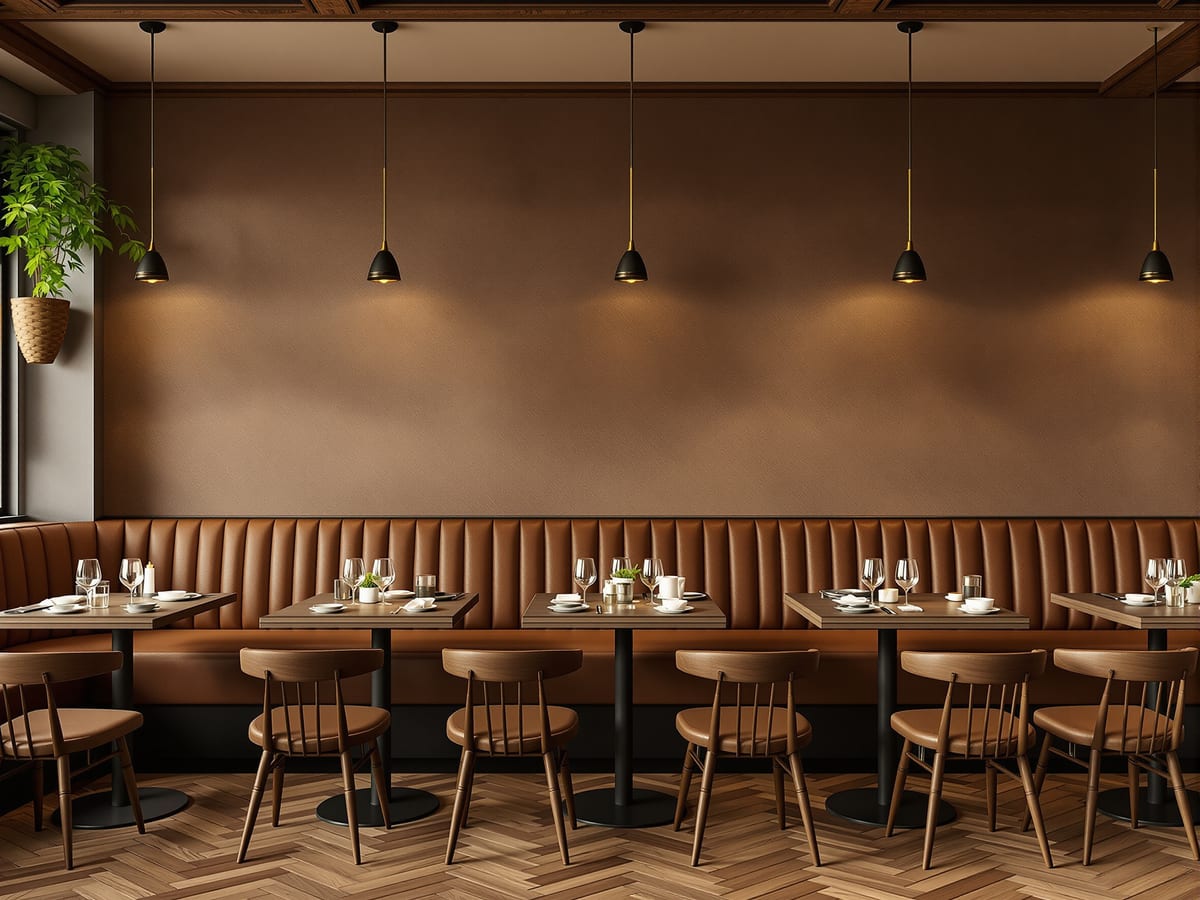
The same chair means different things in different rooms. Retail furniture sells and directs; workspace furniture must be ergonomic and flexible; hospitality furniture survives heavy contract use; residential furniture fits a real life over years; and exhibition furniture performs briefly, then packs away.[1, 5]
Furniture that sells
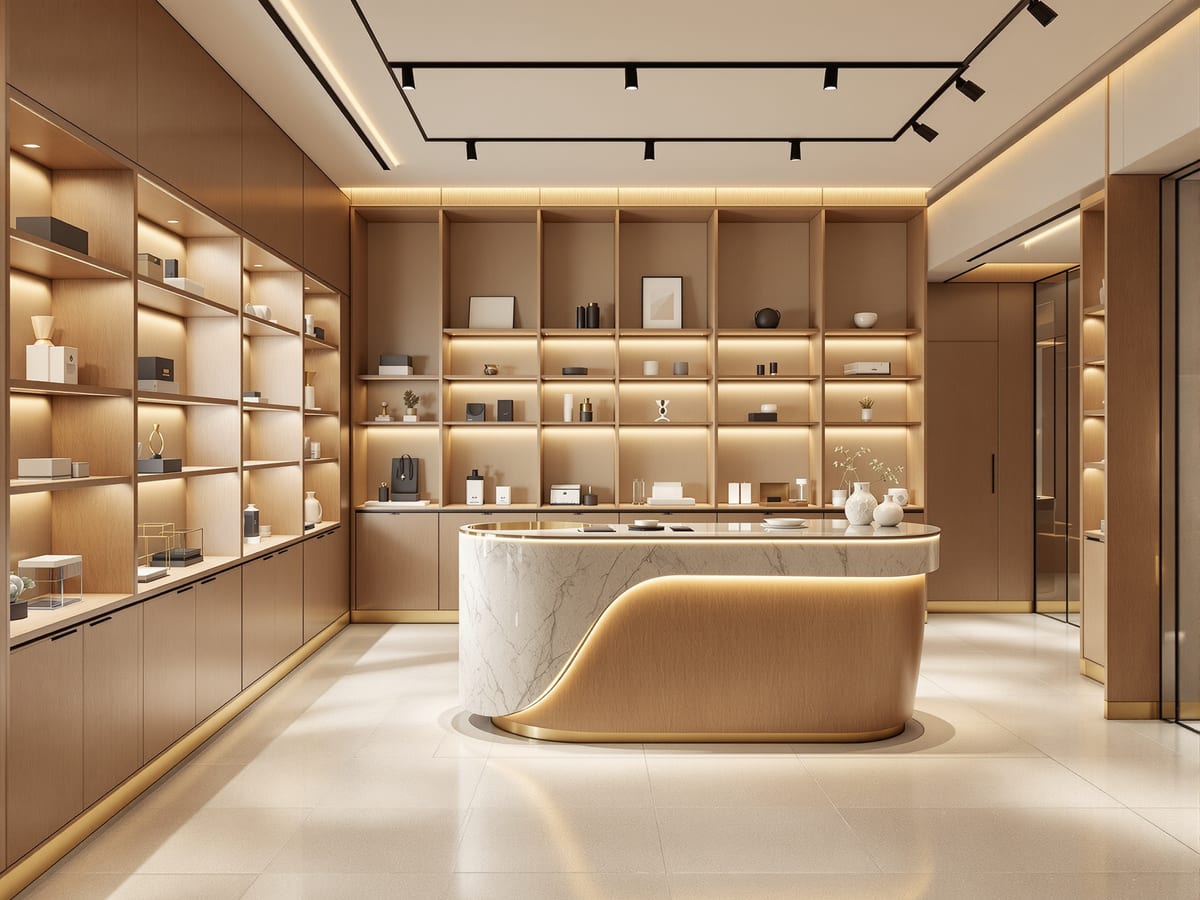
In shops, furniture is a selling tool. Display units, gondolas, counters and fitting-room seating are arranged to steer customers along a chosen path, slow them at key products, and present goods at the right height and light. Much is fixed and bespoke — wall systems, the cash desk, plinths — because it must integrate branding, security and lighting. The best retail furniture is quietly directive: it moves people and shows product without shouting.[1, 5]
Read it in real interiors
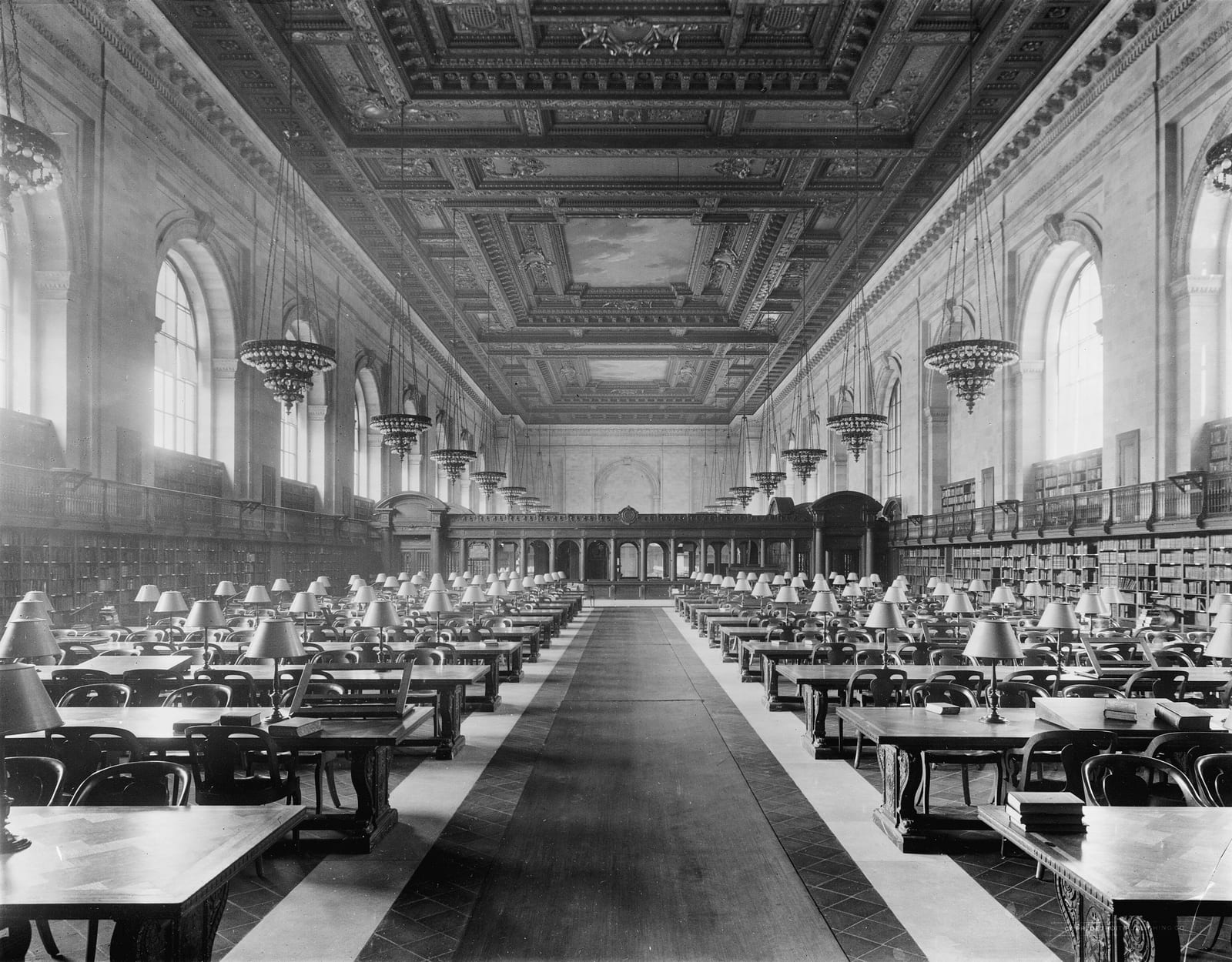
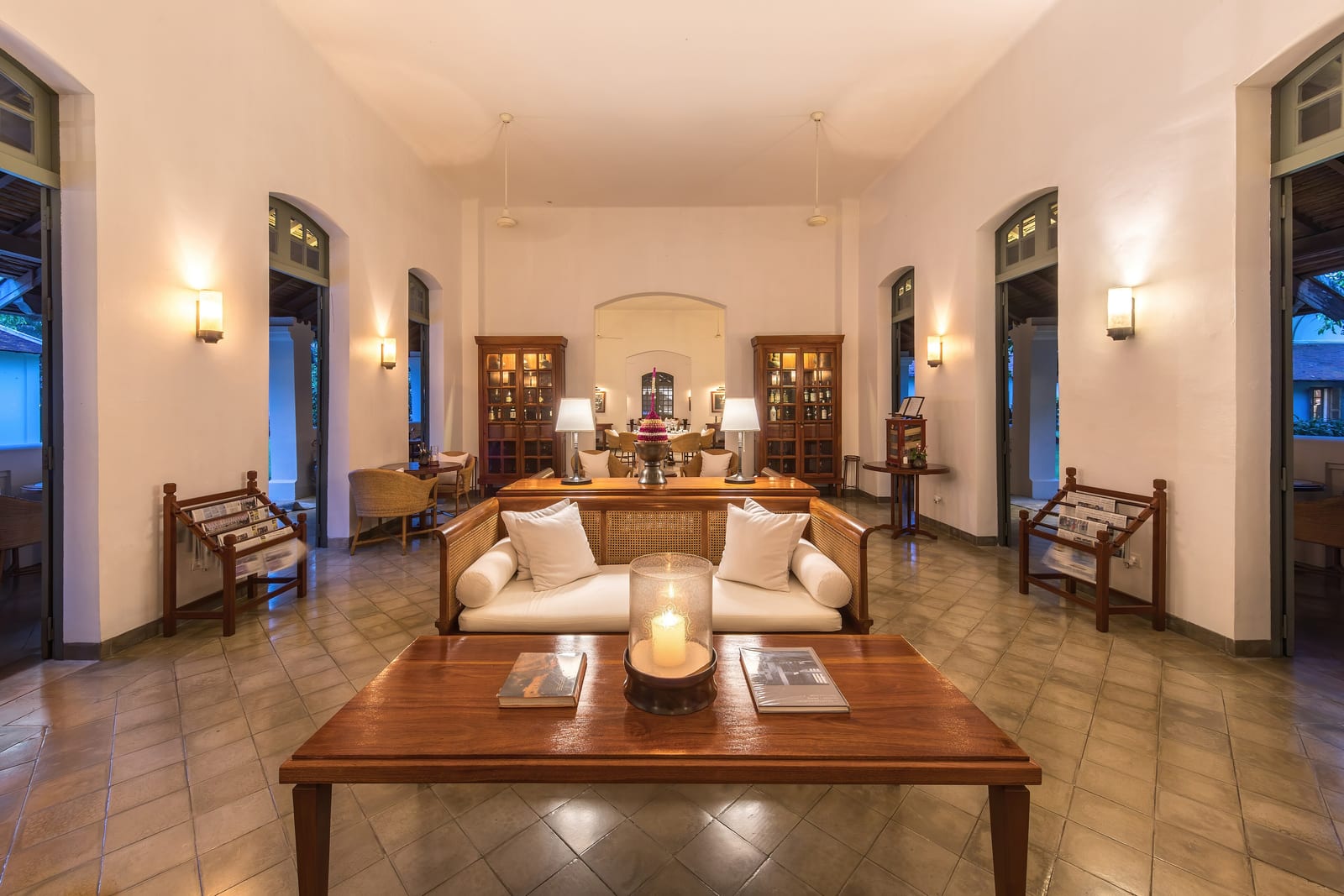
Two rooms make the point. In the New York Public Library's Rose Reading Room, it is the furniture — long oak tables, chairs and lamps in disciplined rows — that organises a space the size of a football pitch into a place you can actually work. In a hotel lounge, loose seating groups carve one open floor into intimate zones without a single wall.
Fixed vs loose, domestic vs contract
| Aspect | One | The other |
|---|---|---|
| Flexibility | Fixed furniture — permanent, shapes the architecture | Loose furniture — movable, re-plannable, replaceable |
| Cost & lead time | Fixed — usually bespoke, costlier, longer lead | Loose — often off-the-shelf, faster, cheaper |
| Use of space | Fixed — space-efficient, integrates services | Loose — flexible but eats floor area |
| Domestic vs contract | Domestic — comfort & personality over years | Contract — durability & cleanability under heavy use |
| What sets the zone | A wall — permanent, blocks sight and sound | Furniture / screen / rug — zones softly, keeps openness |
Key terms
Built-in, usually bespoke furniture fixed in place — reception desks, banquettes, fitted wardrobes, shop wall systems.
Free-standing, movable furniture — chairs, tables, sofas — often specified off-the-shelf.
Furniture built for heavy commercial ('contract') use — offices, hospitality, retail — to higher durability standards than domestic.
Furniture, Fixtures & Equipment — the schedule of all the loose and fitted items a designer specifies for a project.
Using furniture (and screens, rugs, level changes) to divide open floor into distinct functional areas without full walls.
The paths people move along through a space; furniture layout defines them by where it leaves gaps.
Fixed, upholstered bench seating — space-efficient and common in hospitality.
In hospitality, the number of diners a space seats; furniture layout is tuned to a target covers-per-square-metre.
Practice task
Take a plan of a space you know — a café, a small office, or a client's living-dining room. Mark every piece of furniture as fixed or loose; outline the zones the furniture creates; then draw the primary circulation path with a single line. Where does the route squeeze, or cut through a seated group? Note one change to the furniture layout that would fix it.
Self-check
1. Why is furniture often described as an interior's 'working layer'?
2. Which best describes the difference between fixed and loose furniture?
3. 'Contract' furniture refers to furniture that is —
Recap
References & further reading
- [1]Drew Plunkett & Sam Booth, Furniture for Interior Design. London: Laurence King Publishing, 2015.
- [2]Francis D.K. Ching & Corky Binggeli, Interior Design Illustrated (3rd ed.). Hoboken: John Wiley & Sons, 2012.
- [3]Julius Panero & Martin Zelnik, Human Dimension & Interior Space. New York: Whitney Library of Design, 1979.
- [4]Ernst Neufert, Architects' Data (4th ed.). Oxford: Wiley-Blackwell, 2012.
- [5]Contract & hospitality furniture standards — BIFMA and BS EN commercial furniture references (industry practice).
Further reading
- Drew Plunkett & Sam Booth, Furniture for Interior Design. Laurence King.
- Julius Panero & Martin Zelnik, Human Dimension & Interior Space. Whitney Library of Design.
- Francis D.K. Ching & Corky Binggeli, Interior Design Illustrated. Wiley.
Sources gathered and fact-checked June 2026. Published values vary by source, sample and method — treat as indicative and confirm against the cited standard before structural use.
Where this course goes next
You've read the room. Next comes the discipline that turns a layout into something that actually fits: Human Dimensions — the ergonomics and anthropometrics behind every seat height, table size, worktop and clearance you specify. Modules II–VI are in production; this Module I is the template for the rest.