
Composition is a strange word for a logic paper
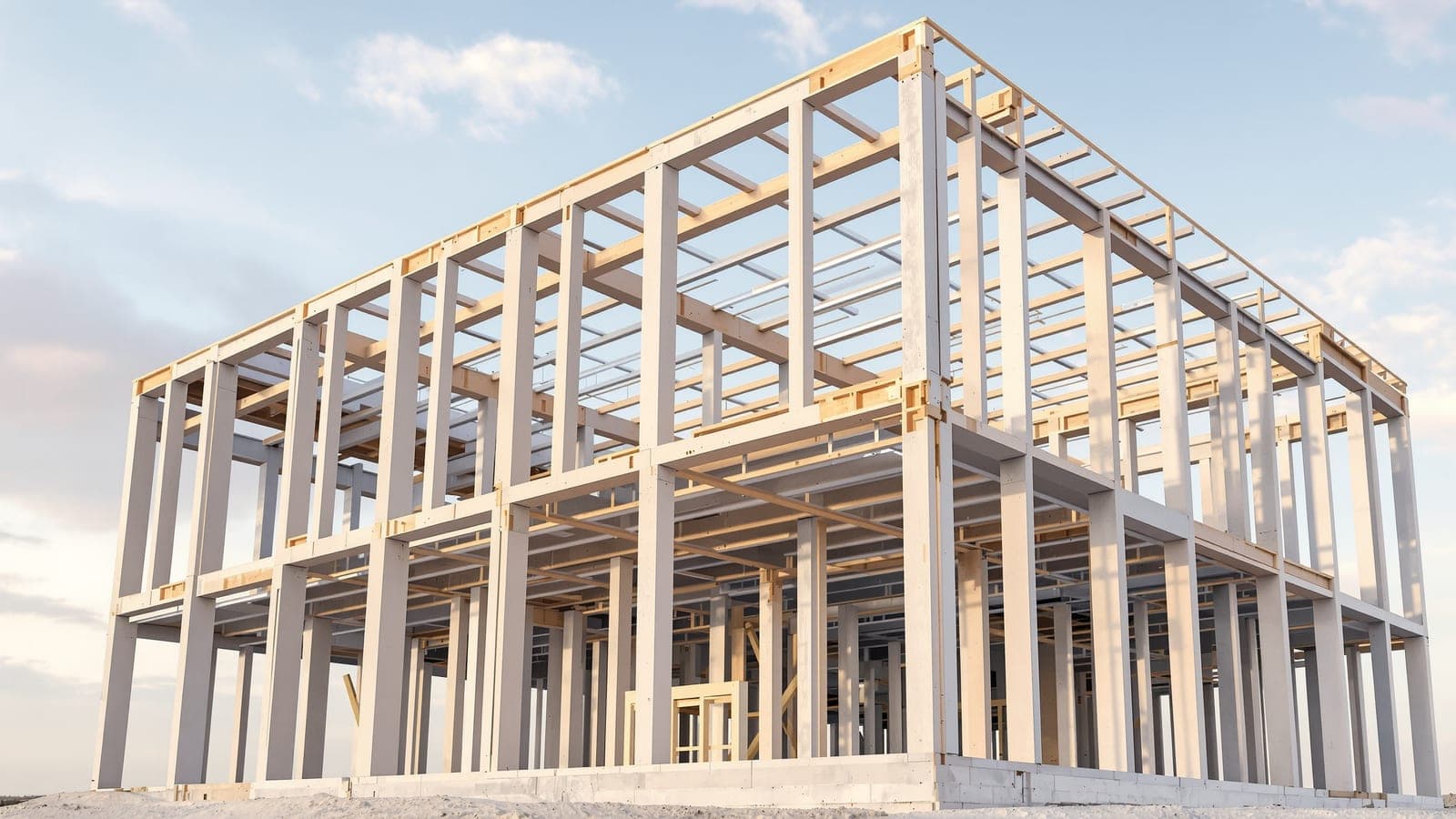
The bulletin describes this area as: _decode a situation/composition/context and draw conclusions_. Read that middle word again. **Composition.** Nobody puts composition in a reasoning syllabus by accident — and it tells you that the logic here is not abstract symbol-shuffling. It is reading an arrangement and working out what governs it, which is what an architect does to a building.
Find the most constrained thing first
Every constraint puzzle has a hierarchy, and candidates almost always start at the wrong end.
The instinct is to begin with the first fact you were given. The right move is to begin with the fact that pins something down. In any set of constraints, one or two are absolute — the canteen is on the top floor — while the rest are relative — the library is above the studio. Absolute facts are anchors. Relative facts are floating until an anchor arrives.
So the method: scan all the constraints before writing anything, find the one that fixes a position outright, place it, and let everything else fall against it. That order collapses most puzzles in a fraction of the time, because each placement you make turns other relative facts into absolute ones.
Starting with a relative fact means holding possibilities open in your head — and working memory, again, is the thing that runs out. Not logic.
The negative constraint is not decoration
Here is the one that catches strong candidates, and it is worth a habit of its own.
When a puzzle tells you P does not face north, that clause is not colour. It is there because without it the puzzle has two answers. Question-setters do not add negatives for atmosphere; they add them because the arrangement is otherwise ambiguous and the negative is what resolves it.
So if you have used every positive fact and arrived at an answer without ever touching the negative one, you have almost certainly made an error — usually by assuming a direction or an order the puzzle never gave you. Go back and check what the negative was protecting against.
The practical rule: account for every clause. If a constraint went unused, either the puzzle was over-specified (rare, in a well-set paper) or you have not actually solved it (common). Under a clock this is a two-second audit that catches a whole class of confident wrong answers.
Draw it. Always.
You have paper. Use it.
A constraint puzzle held in the head is an exercise in memory; the same puzzle on paper is an exercise in logic, which is the thing you are actually good at. Draw the five floors as a column. Draw the four sides of the courtyard as a square. Draw the row of seats as a row.
This sounds too obvious to state, and yet under time pressure candidates try to hold it mentally because writing feels like a delay. It is not a delay — it is the single biggest speed gain available in this area, because it moves the load off the part of you that is failing and onto the part that is not.
And it connects to the module's opening point. Decoding a composition — an arrangement in space — is easier when you can see the arrangement. The exam is asking you to be spatial about logic. Being literally spatial about it, on paper, is not a workaround. It is the intended method.
The rules behind this
Sourced to the official brochure rather than restated here, so there is one place to correct when the Council revises it.
Part B examines six named areas: Visual Reasoning, Logical Derivation, General Knowledge/Architecture and Design, Language Interpretation, Design Sensitivity and Thinking, and Numerical Ability.
Visual Reasoning — understanding and reconstructing 2D and 3D composition. Logical Derivation — decoding a situation or context and drawing conclusions. General Knowledge, Architecture and Design — current issues, important buildings, historical progression, innovation in materials and construction. Language Interpretation — meaning of words and sentences, English grammar. Design Sensitivity and Thinking — observing and analysing people, space, product, environment; semantics, metaphor, problem identification. Numerical Ability — basic mathematics and its association with creative thinking; unfolding space using geometry.
Source · verified 2026-07-16
Part B allows 108 seconds per question, presented one after another, on an adaptive engine.
90 minutes across 50 questions. The adaptive structure dates to NATA 2025 per the President's foreword in V2.0, which states that NATA 2026 continues it.
Source · verified 2026-07-16
What almost everyone believes
“Constraint clues like 'P does not face north' are just extra detail to make the puzzle read naturally.”
A negative constraint is almost always the clause that resolves an otherwise ambiguous arrangement. It is doing the load-bearing work.
Setters do not add negatives for atmosphere. They add them because without that clause the puzzle has more than one answer. So if you reach a confident conclusion having never used the negative, you have very likely assumed a direction or an order the puzzle never supplied — and the option matching your assumption will be sitting right there. Auditing that every clause was used costs two seconds and catches an entire class of confident wrong answers.
Depending on how long you have
Foundation
Understand the skill. Months out, or starting from zero.
Do puzzles for pleasure — seating arrangements, logic grids, anything with constraints. You are building the habit of scanning for the anchor before starting, which is what separates a thirty-second solve from a three-minute one. It responds to volume rather than to technique.
Drill
The practice protocol. What to repeat, how often, how to score it.
Two rules on every question. First: read ALL the constraints before writing anything, and start with the one that fixes a position outright. Second: audit at the end — did you use every clause? An unused negative almost always means an error, not a spare fact.
Exam-Day
What to actually do under the constraint — 108 seconds, no instruments, one pass.
Draw it, always, however tight the clock feels. Find the anchor, place it, work outward. Before committing, check that every clause earned its place — especially the negatives, which exist to kill an ambiguity you may have solved past without noticing.
Try it
Fifteen minutes. The discipline is scanning before writing.
- 01Take any constraint puzzle. Before writing a single thing, read every clue and mark which one fixes a position absolutely.
- 02Start there. Place it. Then let each relative clue attach to what is already fixed.
- 03When you reach an answer, list the clues you actually used.
- 04If any clue went unused — especially a negative — go back. You have probably assumed something.
- 05Do this ten times and notice how often the anchor was not the first clue given. Setters order clues to be readable, not to be solvable.
The short version
The bulletin says decode a situation, composition or context — and composition is not an accident: this is spatial logic, not symbol-shuffling. Scan every constraint before writing, start from the one that fixes a position outright, and let the relative facts fall against it. Treat negatives as load-bearing, because they exist to kill an ambiguity. And draw it — moving the load off memory and onto paper is not a delay, it is the intended method.
Next: sequences — and the one move that cracks most of them.
Questions people actually ask
- What does NATA mean by Logical Derivation?
- The bulletin describes it as decoding a situation, composition or context and drawing conclusions. The word composition is telling: this is not abstract symbol logic but reading an arrangement and working out what governs it — which is close to what an architect does with a building.
- How do I solve constraint puzzles quickly?
- Scan all the clues before writing anything, and start with the one that fixes a position absolutely rather than the one given first. Each placement then turns other relative clues into absolute ones. Starting from a relative clue means holding possibilities in your head, and working memory is what runs out — not logic.
- Why do puzzles include clues like 'P does not face north'?
- Because without them the puzzle has two answers. Negative constraints are load-bearing, not decorative. If you reach an answer without using one, you have probably assumed something the puzzle never gave you — and the matching wrong option will be waiting.