
 Lesson 1.3
Lesson 1.3 · Understanding the Guest & the Brand
The Experience Economy
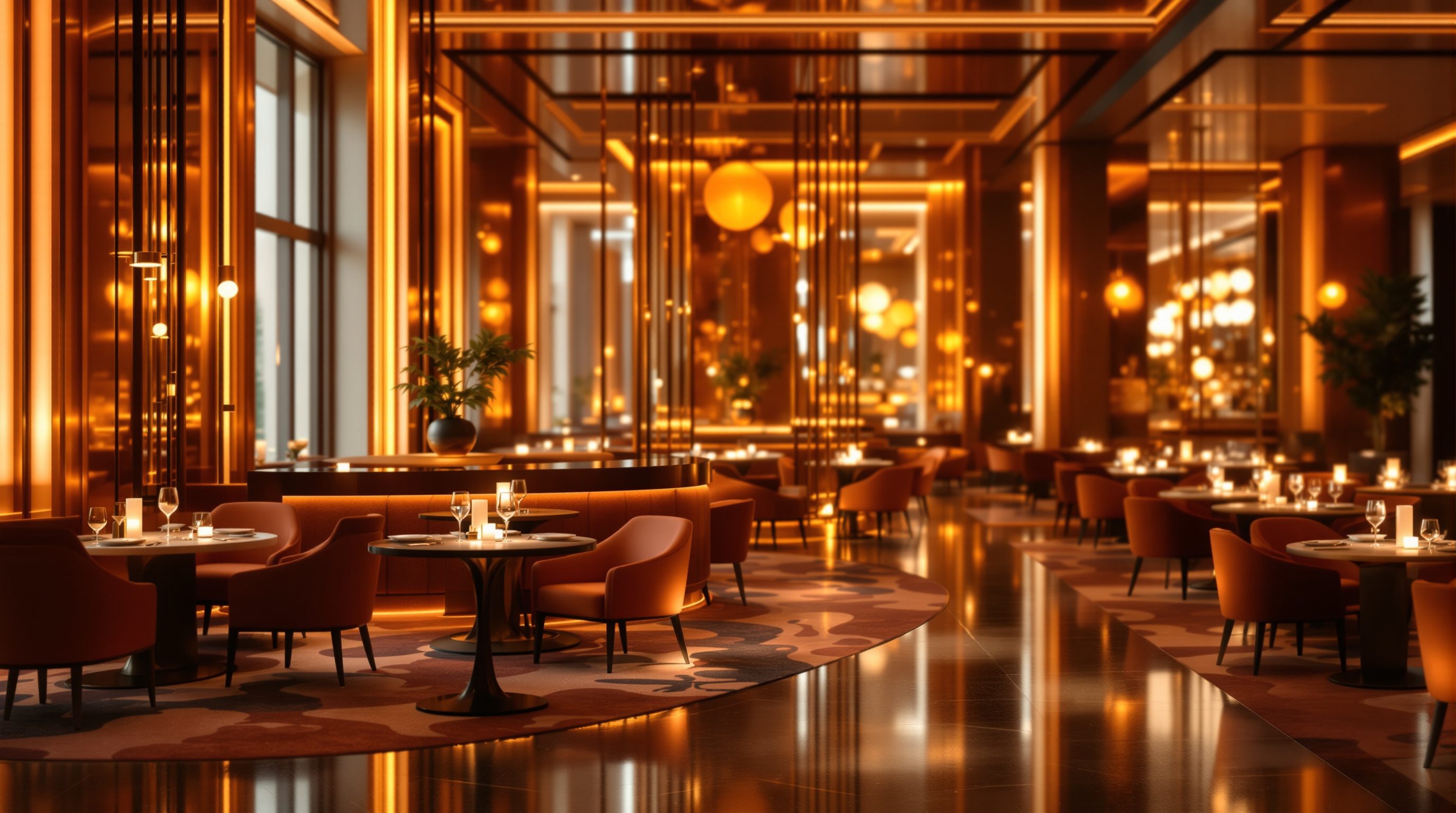
Guests no longer pay merely for a bed or a meal - they pay for how a place makes them feel and the memory they carry away - so the designer'''s job is to stage memorable experiences, which is both the great opportunity of hospitality and the honest truth behind its obsession with the photogenic
Nobody remembers the thread count. They remember the morning the mist lifted off the valley as the chai arrived - and that memory, not the bed, is what they actually paid for.
Two cafes sell the same coffee from the same beans at the same quality. One charges forty rupees and is forgotten the moment you leave; the other charges four hundred and people queue, linger, photograph it and come back - not for better coffee, but for how it feels to be there: the light, the music, the worn timber, the ritual, the sense that this hour is a small pleasure rather than a transaction. The difference between the two is not the product. It is the experience staged around the product, and the willingness of guests to pay, often handsomely, for that experience is the single biggest force shaping modern hospitality. People have stopped buying rooms and meals; they are buying feelings and memories, and the room and the meal are merely the stage.
This is what the economist's phrase "the experience economy" names, and it is the commercial engine beneath everything this course teaches about designing feeling. In this lesson we will look at why value has migrated from goods and services toward experiences; what it means, concretely, to stage a memorable experience rather than merely provide good service; how experience has become the main way hospitality places differentiate when the basics are everywhere commoditised; and then we will face, honestly, the part nobody likes to discuss in polite design circles - the rise of the photogenic, shareable, "Instagrammable" moment, which is a real and useful tool but also a trap that, misused, hollows out the very experiences it is meant to celebrate.
Guests forget the thread count; they remember the feeling. Design the memory, not the bed.
Why value moved to experience
There is a useful way to see where hospitality's value now lives, borrowed from the idea of a progression of economic value. At the bottom are commodities - coffee beans, rice, undifferentiated raw things sold on price. Above them are goods - a branded packet of coffee, worth more than the loose beans. Above goods are services - someone brews and serves you the coffee, more valuable again. And at the top are experiences - the cafe you travel across town for, linger in, photograph and pay far more for, not because the coffee is better but because being there is a pleasure in itself. At each step up, the offer becomes more differentiated, more valued, harder for a competitor to copy, and able to command a higher price. Hospitality's whole business has been climbing this ladder: the bed and the meal are the commodity and the good; the service is expected; the experience is where the real value, loyalty and margin now are.
The reason is partly that the basics have become commoditised. A clean, comfortable, well-connected room and a competent meal are now widely available and increasingly taken for granted; they are the price of entry, not a reason to choose you or to pay more. When everyone can deliver a good bed, a good bed no longer differentiates - so guests' decisions, and their willingness to pay, shift to what is scarcer: how the place makes them feel, what it lets them do, the memory they take home. A guest will forget the exact dimensions of a room within a day, but will remember for years the feeling of arriving somewhere magical, a moment of unexpected care, a meal that was an event - and it is those memories they paid for, recommend to friends, and return to buy again.
This is liberating and demanding in equal measure. Liberating, because it means design - the staging of feeling - is not a cost centre but the core of the value proposition; the designer is making the thing the guest actually buys. Demanding, because it raises the bar past competence: a place can be flawless on every functional measure and still fail commercially because it is forgettable, produces no feeling, gives the guest no story to tell. In the experience economy, "fine" is a kind of failure.
Staging a memorable experience
If experience is what you are selling, then a useful mental shift is from *providing* service to *staging* an experience - thinking a little like a theatre director, for whom the building is a set, the staff are a cast, the guest journey is a script, and the goal is to produce a sequence of feelings that add up to something memorable. Staging does not mean fakery; it means intentionality - deciding what you want the guest to feel at each moment and designing the space, light, sound, scent, service and timing to produce it, rather than leaving feeling to chance. A good arrival is staged: the compression and release, the first view, the greeting, the scent, the welcome drink are choreographed so the guest feels, within seconds, that they have arrived somewhere special. A memorable meal is staged: the pacing, the reveal of a dish, the view from the table, the moment the lights drop.
Research into experiences offers a helpful map: experiences vary along how much the guest participates (from passively watching to actively taking part) and how deeply they are connected (from merely absorbing something to being wholly immersed in it), giving four overlapping realms - entertainment (a live band, a view, a show), educational (a cooking class, a tasting, a heritage walk), esthetic (simply being in a beautiful, atmospheric place), and escapist (a retreat, a themed world, an immersive other-place you step fully into). The richest hospitality experiences usually blend several: a resort that is beautiful to be in (esthetic), lets you learn regional cooking (educational), entertains you in the evening (entertainment) and makes you feel you have escaped ordinary life entirely (escapist). Knowing these realms helps a designer consciously widen a too-thin experience - a hotel that is merely pretty can become far more memorable by adding a way for guests to *do* and to *learn*, not just to look.
Two principles make staged experiences stick. First, memory is shaped disproportionately by peaks and the ending - guests remember the most intense moment and the final one far more than the average - so a designer should invest in deliberate high points and a strong, warm farewell rather than spreading effort evenly and flatly. Second, the most powerful experiences feel personal and a little surprising - a small, unexpected act of care, a detail that seems meant just for you - because generic delight is quickly forgotten while a surprise that recognises the individual becomes the story they tell. Stage feeling on purpose, build in peaks, and end well.
Think like a theatre director: set, cast, script, feeling. Staging = intentionality, not fakery.
Differentiation - experience as the reason to choose you
Experience is not only what guests will pay more for; it is increasingly the only durable way to differentiate in a crowded, transparent market. A traveller choosing a hotel or a diner choosing a restaurant can, in seconds, compare dozens of options on price, location, photos and reviews, and on the functional basics most credible options look alike. What makes one the obvious choice - the place you *want* to go, not merely an adequate one - is a distinctive experience the others cannot match: a rooftop with the city's best sunset, a restaurant built around a single theatrical open kitchen, a heritage hotel that lets you live inside a story, a spa ritual found nowhere else. The experience is the answer to the guest's real question, which is never "where is an adequate bed?" but "where do I *want* to be?"
This is why so much hospitality strategy is now really experience strategy, and why the designer sits close to the centre of the business, not at its decorative edge. Deciding what the signature experiences of a place will be - the moments it will be known, photographed and recommended for - is a design and brand decision as much as a commercial one, and it should be made deliberately early, not discovered by accident after opening. A place with no signature experience, however competent, competes only on price and convenience, which is a race to the bottom; a place with one or two genuinely distinctive, hard-to-copy experiences has a reason to exist, a story that spreads, and the ability to command loyalty and a premium.
The Indian market shows this vividly. The country's great hospitality successes - palace hotels you can actually stay inside, resorts built around a backwater or a desert or a tea estate, restaurants that turn regional street food into theatre, the whole spectacle of the destination wedding - compete and win on experience and sense of place, not on commoditised comfort, and they draw guests from across the world precisely because the experience cannot be replicated in a generic box elsewhere. For the designer the lesson is direct: identify, early and on purpose, the one or two experiences this place will be unforgettable for, and design everything to deliver them - that is where differentiation, loyalty and value are won.
The selfie dimension - honestly
No honest discussion of the modern experience economy can skip the phone in the guest's hand. A huge share of how people now discover, choose, judge and remember hospitality happens through photographs shared on social media, which means the shareable, photogenic moment has become a real force in hospitality design - and pretending otherwise is naive. A striking visual moment that guests want to photograph and post is, in plain commercial terms, free and trusted marketing: it spreads the place to exactly the audience most likely to come, carries the credibility of a friend's recommendation, and has genuinely made the fortune of many a cafe, bar and boutique hotel. Designing a space with at least one strong, photograph-worthy moment is, today, a legitimate and often smart part of the brief, and there is no shame in it.
But it is a tool with a sharp edge, and the designer must hold it honestly. The trap is designing *for the photograph instead of for the guest* - creating a single dazzling backdrop that looks spectacular on a phone and is hollow, uncomfortable or incoherent to actually inhabit: the wall that exists only to be posed against, the dish engineered for the camera and unpleasant to eat, the lobby that photographs like a dream and functions like a nightmare. This is the Instagram trap the whole course warns against, and it corrodes the very thing the experience economy values, because a shallow moment makes a thinner memory, and guests increasingly see through and resent places that are all backdrop and no substance. The photo should be a *by-product* of a genuinely good experience, not a substitute for one.
The mature position is to treat shareability as one desirable outcome among several, integrated into real experience design rather than bolted on. A photogenic moment that is *also* a genuinely lovely place to be - the rooftop that frames the sunset and is a wonderful spot to sit for an hour, the open kitchen that is both theatre and the reason the food is fresh and fast - serves the guest and the feed at once, and ages well. Design first for the guest's real, felt, multi-sensory experience across the whole journey; let the shareable moments emerge from, and point back to, that substance. Get that order right and social media amplifies a place worth visiting; get it backwards and it briefly inflates a place not worth staying in.
The functional basics (baseline)
A clean, comfortable, safe, working room and competent service
Experience is built on top of the basics, never instead of them; a dazzling experience over a dirty or broken baseline still fails. These remain the non-negotiable price of entry.
Safety of "experiential" features
Rooftops, water features, fire and theatrical effects, crowding
Signature and photogenic features often add safety and egress risk; defer all binding specifics to the fire authority, NBC 2016 and the relevant specialists. Never trade safety for spectacle.
Honest marketing & guest trust
The experience as shown matching the experience delivered
Photogenic moments must reflect a real experience; a gap between the posted image and the lived place breaks trust. A judgement and ethics, not a code.
Workshop — stage a memorable experience
Experience design is a skill you build by making feeling intentional. In this workshop you will take a hospitality moment and deliberately stage it into something memorable, then stress-test it honestly against the selfie trap.
A notebook and, ideally, your earlier persona and concept. No software - experience design is reasoning about feeling, sequence and the senses.
Goal: turn an ordinary moment into a staged, memorable experience
Inputs: your concept and persona from 1.1 and 1.2 (or a real place) + this lesson
Time: ~50 minutes
- 1Pick ONE moment in a guest'''s journey (the arrival, a welcome drink, a signature meal, the farewell) and write what a guest currently feels there if it is left to chance - usually "fine", forgettable.
- 2Stage it on purpose: decide the exact feeling you want, then design the space, light, sound, scent, service and timing to produce it. Build in a deliberate PEAK and, if it is near the end of the journey, a strong warm ending.
- 3Widen the realm: using the four realms (entertainment, educational, esthetic, escapist), add at least one way for the guest to take part or to learn, so the moment is not merely something they passively look at.
- 4Differentiation check: state what makes this experience distinctive and hard for a nearby competitor to copy - why a guest would choose your place for this moment specifically.
- 5Selfie honesty test: identify the one shareable, photographable moment - then check it honestly. Is it also genuinely lovely to BE in, or is it a hollow backdrop? Adjust until the photo is a by-product of a real experience, not a substitute for one.
You’ll walk away with
A one-page experience design for a single staged moment: the feeling intended, the spatial and sensory means, the peak and ending, the realm(s) it blends, its point of differentiation, and an honest selfie test with any fix. Keep it - it is the core move you will repeat for every signature moment in a real project.
Three altitudes on the same idea
Read the band that fits you — or all three.
The biggest, most memorable experiences are often architectural, so the experience strategy should shape the building, not just its fit-out. The dramatic arrival and threshold, the section that frames a view or opens to the sky, the rooftop, the courtyard, the relationship to landscape, climate and light - these are the peaks guests remember and photograph, and they are set by the base building. Decide the signature spatial experiences early, with the brand and operator, and let them drive the big moves; a distinctive, hard-to-copy architectural experience is the most durable differentiator of all, far harder for a rival to replicate than an interior scheme.
The staging of feeling - moment by moment, sense by sense - is squarely your craft, and it is where most experiences are made or lost. The atmosphere, the lighting that drops at the right moment, the materials and textures, the scent, the sequence of reveals, the signature detail and the one strong photogenic moment all live in the interiors and the FF&E. Design deliberate peaks and a warm ending, blend the realms (add ways to do and learn, not just to look), and keep the shareable moment honest - a place that is genuinely lovely to be in, not a hollow backdrop. You are the director of the guest'''s felt, multi-sensory experience.
Internalise the shift from providing to staging - it changes how you judge and design every space. Practise asking of any place not "is it nice?" but "what experience is it staging, where are its peaks, how does it end, and what will I remember and tell others?" Learn the four realms and use them to enrich thin, merely-pretty designs with ways to take part and to learn. And form an honest early view of the selfie dimension: a photogenic moment is a legitimate tool, but designing for the camera instead of the guest is a trap that makes shallow places. Design for the real experience; let the photo be its by-product.
“The experience economy just means making places more Instagrammable - adding a striking feature wall, a neon sign or a dramatic backdrop that photographs well and goes viral. Nail the photogenic moment and you have delivered an experience.”
Do it yourself
No tools needed - reason it through.
- 1Explain the progression from commodities to experiences, and why value and price rise at each step.
- 2Why has delivering a good bed and a competent meal stopped being enough to differentiate or command a premium?
- 3What does it mean to "stage" an experience, and how do peaks and the ending shape what a guest remembers?
- 4Name the four realms of experience and give a hospitality example of each; why is blending them powerful?
- 5Make the honest case for and against designing a "photogenic moment", and state the mature position on the selfie dimension.
The one line to carry out
Peer-reviewed journals & authoritative standards
- 01The experience economy — Wikipedia — Experience economy, 2026.
- 02Customer experience — Wikipedia — Customer experience, 2026.
- 03Service design — Wikipedia — Service design, 2026.
- 04Placemaking and destinations worth travelling to — Wikipedia — Placemaking, 2026.
Staging experiences costs money and has to pay - which means everything in this module finally answers to the people who own and run the place. Next we meet the operator, the owner and the brief, and how their world turns all this into a buildable mandate.
The author
Amogh N P
Architect, interior designer, and creative polymath. Studio Matrx began in his notebooks — his vision of design made honest, useful, and open to everyone. Its Academy is written and taught in his memory, and free, forever.
More about Amogh →