
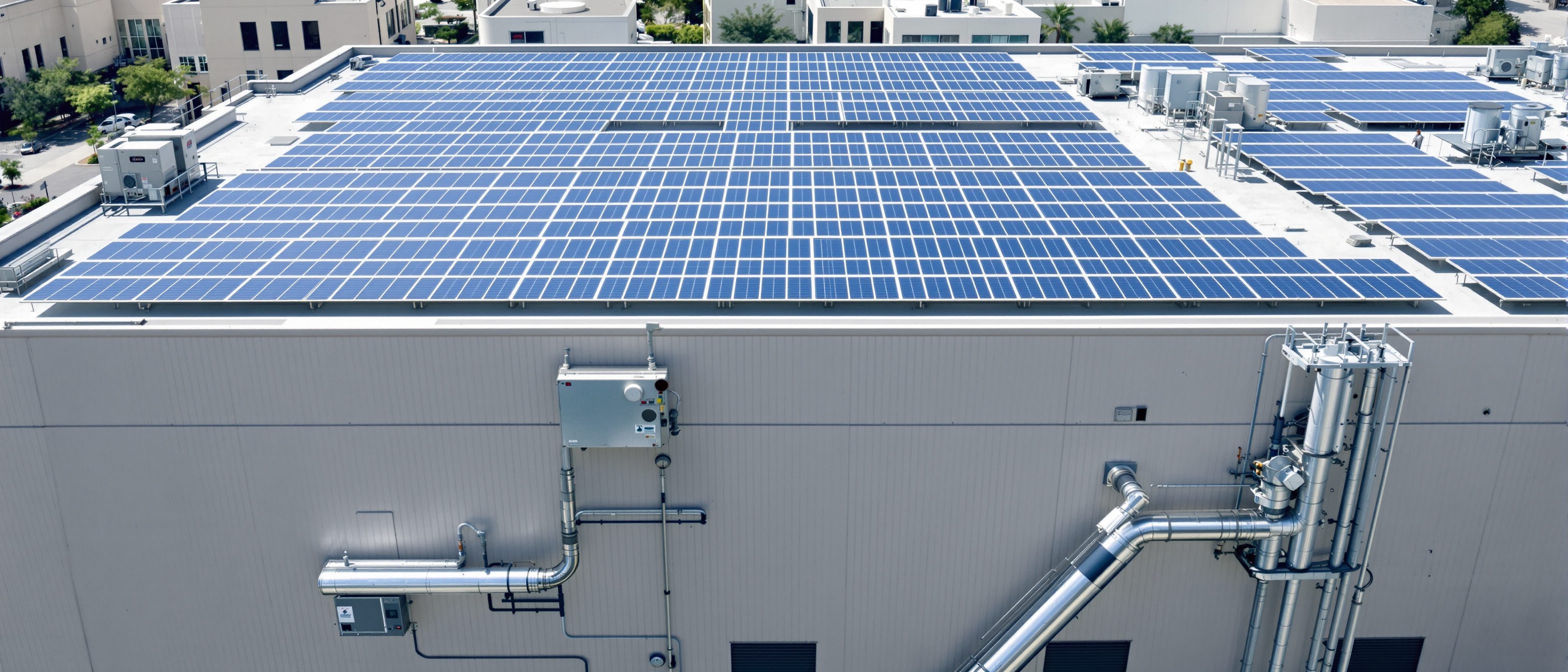
Energy Usage & Code Compliance
EPI, embodied energy, ECBC and the compliance paths.
Energy is where most of a building's impact lives. Learn operational versus embodied energy and the Energy Performance Index (EPI); India's mandatory codes — the ECBC (ECBC, ECBC+, Super-ECBC) for commercial buildings and the ECO-NIWAS Samhita (RETV ≤ 15) for homes; and the three ways to comply — the prescriptive path, the whole-building performance path, and the envelope trade-off in between.
Learning objectives
By the end of this lesson, you will be able to — mapped to the course outcomes for Green Buildings & Code Compliance:
Distinguish operational from embodied energy and explain the EPI.
Explain the ECBC tiers and the ECO-NIWAS Samhita's envelope requirements.
Compare the prescriptive, performance and trade-off compliance paths.
Read the difference between a mandatory code and a voluntary rating in energy terms.
Energy & the Indian codes
Operational energy runs a building and embodied energy makes it; the EPI measures annual use per m², and India's ECBC and ECO-NIWAS Samhita set mandatory floors for commercial and residential buildings.[1, 3, 4]
Running it vs making it
A building spends energy two ways. OPERATIONAL energy runs it over its life — HVAC, lighting, plug loads, hot water — and has long dominated. EMBODIED energy is spent making it — extracting, manufacturing and transporting materials and constructing — and is FRONT-LOADED, paid before anyone moves in. As operational efficiency improves, embodied energy becomes a LARGER share of lifetime impact. MISCONCEPTION→correct: 'only running energy matters' — embodied energy is significant, front-loaded and rising in relative importance; a true footprint counts both.[1]
The compliance paths
Comply by meeting every component limit (prescriptive), by simulating the whole building against a baseline (performance), or by trading envelope elements within an Envelope Performance Factor.[3]
Meet every limit
The PRESCRIPTIVE path is the simplest: meet each component's set requirement individually — this wall U-value, this roof U-value, this glazing SHGC and U-value, this lighting power density. No simulation, no trade-offs, least expertise — you 'tick every box'. It is rigid (you cannot compensate a weak element with a strong one) but it is the easy, certain route to compliance for a conventional building.[3]
At a glance
| Aspect | Prescriptive | Performance |
|---|---|---|
| Method | Prescriptive: meet each limit | Performance: simulate vs baseline |
| Flexibility | Prescriptive: rigid | Performance: maximum |
| Expertise | Prescriptive: low | Performance: needs simulation |
| Middle path | Envelope trade-off (EPF) | Barred above 40% WWR (ECBC) |
| Code vs rating | ECBC/ENS: mandatory floor | LEED/GRIHA: voluntary aspiration |
Key terms
Energy to run a building over its life / energy to make it (front-loaded).
Energy Performance Index — annual energy use per m² (kWh/m²/year); lower is better.
Energy Conservation Building Code (BEE) for commercial buildings; ECBC/ECBC+/Super-ECBC.
India's residential energy code; envelope RETV ≤ 15 W/m², roof U ≤ 1.2.
Meet each component limit / simulate the whole building against a baseline.
Window-to-wall ratio — high values drive cooling load and limit trade-offs.
Studio task
For a small commercial building, list the envelope, lighting and HVAC parameters the ECBC prescriptive path would set. Then explain in three sentences when a designer would instead use the whole-building performance path, and why a highly glazed (high-WWR) design might force that choice. Finally, state the ECO-NIWAS Samhita's RETV limit and what it controls.
Self-assessment
1. Embodied energy is —
2. The ECBC for commercial buildings has —
3. The ECO-NIWAS Samhita's key envelope metric is —
Recap
References & further reading
- [1]Nayak & Prajapati, Handbook on Energy Conscious Buildings (IIT-Bombay / Solar Energy Centre, MNRE) — energy concepts, EPI.
- [2]UNEP / IEA Buildings reports — global building energy and emissions.
- [3]Bureau of Energy Efficiency, ECBC 2017 + Users' Manual — tiers, prescriptive/performance/trade-off paths, WWR.
- [4]Bureau of Energy Efficiency, ECO-NIWAS Samhita 2018 (Part I) & 2021 (Part II) — RETV, roof U-value, residential code.
Further reading
- BEE — ECBC 2017 & Users' Manual.
- BEE — ECO-NIWAS Samhita 2018 / 2021.
- Nayak & Prajapati — Handbook on Energy Conscious Buildings.
Sources gathered and fact-checked June 2026. Published values vary by source, sample and method — treat as indicative and confirm against the cited standard before structural use.
The author
Amogh N P
Architect, interior designer, and creative polymath. Studio Matrx began in his notebooks — his vision of design made honest, useful, and open to everyone. Its Academy is written and taught in his memory, and free, forever.
More about Amogh →