
Construction Details
Detailing that holds — masonry, RC, steel, and the disaster coast.
Good configuration must be backed by good detailing — the connections and reinforcement that hold a building together when it shakes. This unit covers the seismic detailing of non-engineered construction (the masonry, wood and earthen buildings most Indians live in — bands, ties, corner reinforcement) and of engineered RC and steel; the restraint of non-structural elements; and the hard lessons of India's disasters — Bhuj (2001), Latur (1993), the 2004 tsunami — and the multi-hazard, disaster-resistant guidelines that came from them.
Learning objectives
By the end of this unit, you will be able to — mapped to the course outcomes for Earthquake Resistance Architecture:
Describe the seismic detailing of non-engineered masonry, wood and earthen construction.
Explain the principles of ductile detailing of RC and steel buildings.
Detail the restraint of non-structural elements and services against earthquakes.
Draw the lessons of Indian disasters and apply multi-hazard disaster-resistant guidelines.
Detailing that holds
Bands and ties turn brittle masonry into a safe box; ductile detailing (IS 13920) makes RC bend not break; and non-structural elements must be anchored.[4, 1, 2]
Tie the box together
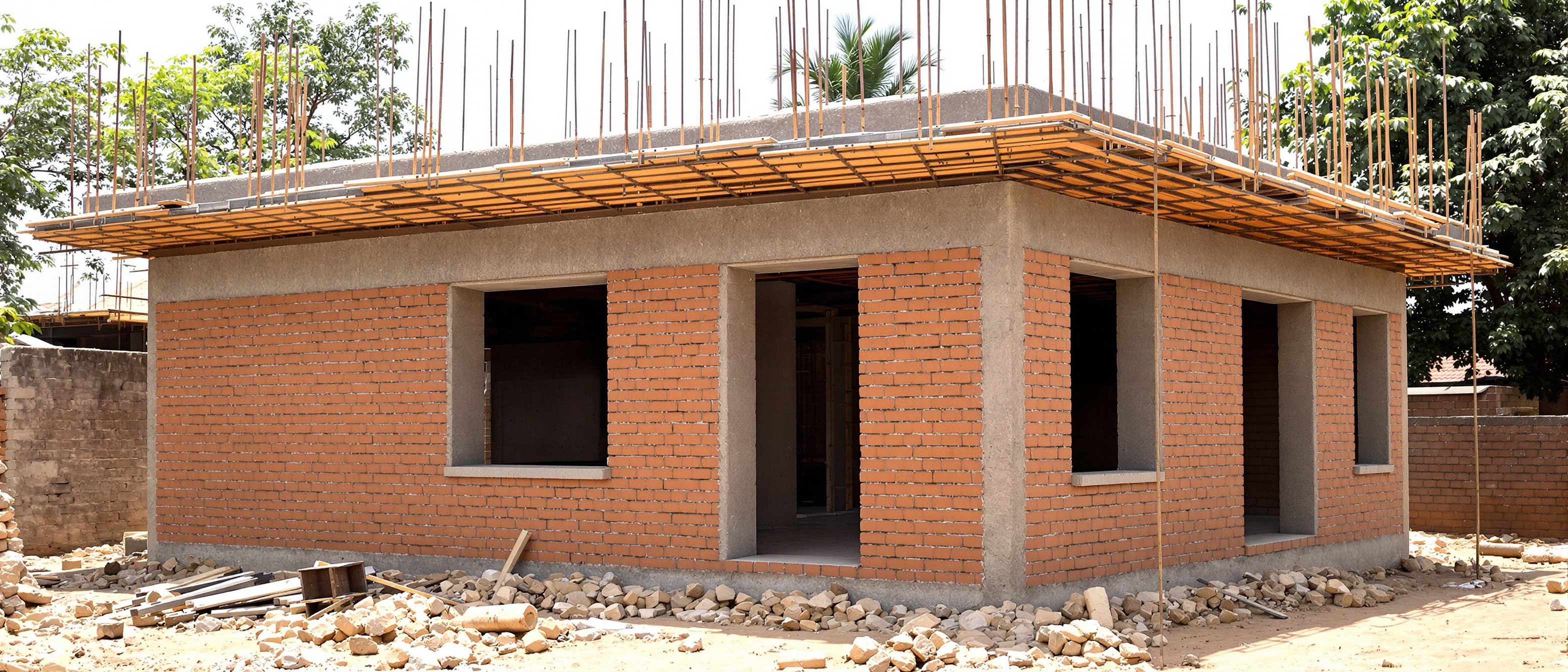
Most Indians live in NON-ENGINEERED masonry and earthen houses built without an engineer — and these are the most vulnerable. The fix is simple, cheap detailing (IS 4326, IS 13828): horizontal SEISMIC BANDS (a reinforced concrete/timber ring at plinth, lintel and roof levels) that tie the walls into a box, VERTICAL reinforcement at corners and openings, good corner connections, restraint of gable walls, and limits on opening size and wall slenderness. These 'bands and ties' turn a brittle pile of masonry into a connected, far safer box.[4, 1]
Lessons & multi-hazard
Bhuj and Latur proved even modern buildings fail without configuration and detailing; coastal and hill sites need multi-hazard design against quake, cyclone and tsunami.[2, 5, 3]
India's hard lessons
Two earthquakes reshaped Indian practice: LATUR (Killari, Maharashtra, 30 Sept 1993, ~Mw 6.2) killed thousands in heavy stone masonry houses in a previously-thought-safe area — proving non-engineered masonry's deadliness. BHUJ (Gujarat, 26 Jan 2001, ~Mw 7.7) killed tens of thousands and flattened modern RC buildings far from the epicentre, exposing soft-storey failures and poor detailing — and triggered a major tightening of codes, the NDMA and disaster management. The lesson: even 'modern' buildings fail without configuration and detailing.[2, 5]
At a glance
| Aspect | One | The other |
|---|---|---|
| Non-engineered masonry | Untied: brittle, deadly | Bands + ties: a connected, safe box |
| Vernacular materials | Myth: the problem | Reality: safe if tied/braced (dhajji, bhatar) |
| RC ductility | From the concrete grade | From IS 13920 detailing (stirrups, joints) |
| Bhuj lesson | Modern = safe | Modern fails without configuration & detailing |
| Coastal building | One hazard | Multi-hazard: quake + cyclone + tsunami |
Key terms
Buildings built without an engineer (most masonry/earthen housing) — the most vulnerable, made safe by simple detailing.
A reinforced ring beam at plinth, lintel and roof level that ties masonry walls into a box (IS 4326).
Horizontal bands plus vertical corner/opening reinforcement that connect a masonry building.
Traditional Himalayan timber-laced masonry that flexes — vernacular seismic wisdom.
Stirrups, anchorage and strong-column/weak-beam detailing that make RC ductile.
Detailing so beams yield before columns, preventing storey collapse.
India's defining earthquakes that exposed soft-storey and non-engineered-masonry failures.
Designing for the site's full hazard profile — earthquake, cyclone, tsunami, flood, landslide.
Studio task
Detail a single-storey masonry house for a Zone-IV village: draw where the plinth, lintel and roof seismic bands run and where the vertical corner reinforcement goes, and note the opening-size and wall-slenderness limits. Then, for a coastal site, list the multi-hazard moves (siting above surge, bioshield, raised plinth, anchored aerodynamic form) you would add against tsunami and cyclone.
Self-assessment
1. The cheapest, most effective way to make a non-engineered masonry house earthquake-resistant is —
2. The 'strong column–weak beam' detailing principle ensures that —
3. The Bhuj (2001) and Latur (1993) earthquakes taught Indian architects that —
Recap
References & further reading
- [1]BIS — IS 4326 (design & construction), IS 13828 (low-strength masonry), IS 13920 (RC ductile detailing), IS 1893.
- [2]Murty, C.V.R. — Earthquake Tips; NICEE/IIT Kanpur — Guidelines for Earthquake Resistant Non-Engineered Construction.
- [3]Davis, Ian — Shelter After Disaster; NDMA / post-tsunami coastal-construction guidelines (multi-hazard).
- [5]Learning from Practice — reviews of Indian earthquake disaster (Bhuj 2001, Latur 1993) architectural and construction experience.
Further reading
- NICEE/IIT Kanpur — Guidelines for Earthquake Resistant Non-Engineered Construction (free).
- C.V.R. Murty & Andrew Charleson — Earthquake Design Concepts.
- Ian Davis — Shelter After Disaster.
Sources gathered and fact-checked June 2026. Published values vary by source, sample and method — treat as indicative and confirm against the cited standard before structural use.
The author
Amogh N P
Architect, interior designer, and creative polymath. Studio Matrx began in his notebooks — his vision of design made honest, useful, and open to everyone. Its Academy is written and taught in his memory, and free, forever.
More about Amogh →