
 Lesson 4.4
Lesson 4.4
Material and light prototyping
Sample boards, mockup corners, and daylight studies
The hookA designer picks a grey-blue paint from a tiny chip in a bright showroom. It looks perfect. On the client's north-facing wall, under soft cool light, it turns cold, gloomy, almost institutional. Nothing was wrong with the colour — the mistake was judging it as a tiny chip, in the wrong light. A surface has no fixed appearance; it only exists in a particular light, at a particular size, next to particular neighbours.
Why surface and light need their own prototypes
The sensory qualities of a material are not properties of the material alone — they're a relationship between the surface, the light, the scale, and the neighbours. Screens and chips lie about surface: a screen emits its own light at low resolution and can't show how a real surface receives the room's actual light; a tiny chip is the wrong scale (small samples read more intense and less dominant than the same colour full-size); and both isolate the material from its neighbours. The governing rule: test it real, big, together, and in its true light.
The sample board — test materials together
Mount real samples of every material — flooring, wall finish, wood, stone, fabric, metal, paint — side by side, in roughly their real proportions. A material scheme succeeds or fails as a combination, not a collection of individually nice things. The board lets you see the conversation between the materials before you commit. Size samples to how much of each you'll use (a huge floor, a sliver of brass accent) — a material lovely as an accent can overwhelm as a field.
The mockup corner — full scale, in the real light
For the highest-stakes decisions, apply a small patch of the actual finish at full scale in the actual room under its actual light — the material equivalent of the 1:1 tape-on-the-floor prototype. Paint a square metre of the real wall and live with it for a few days, watching it change through the day and under the evening electric light (a completely different colour temperature). This catches what the chip and screen cannot. For any expensive, hard-to-reverse decision, the few days and few rupees are the cheapest insurance against a permanent wrong surface across a whole room.
The daylight study — prototype the light itself
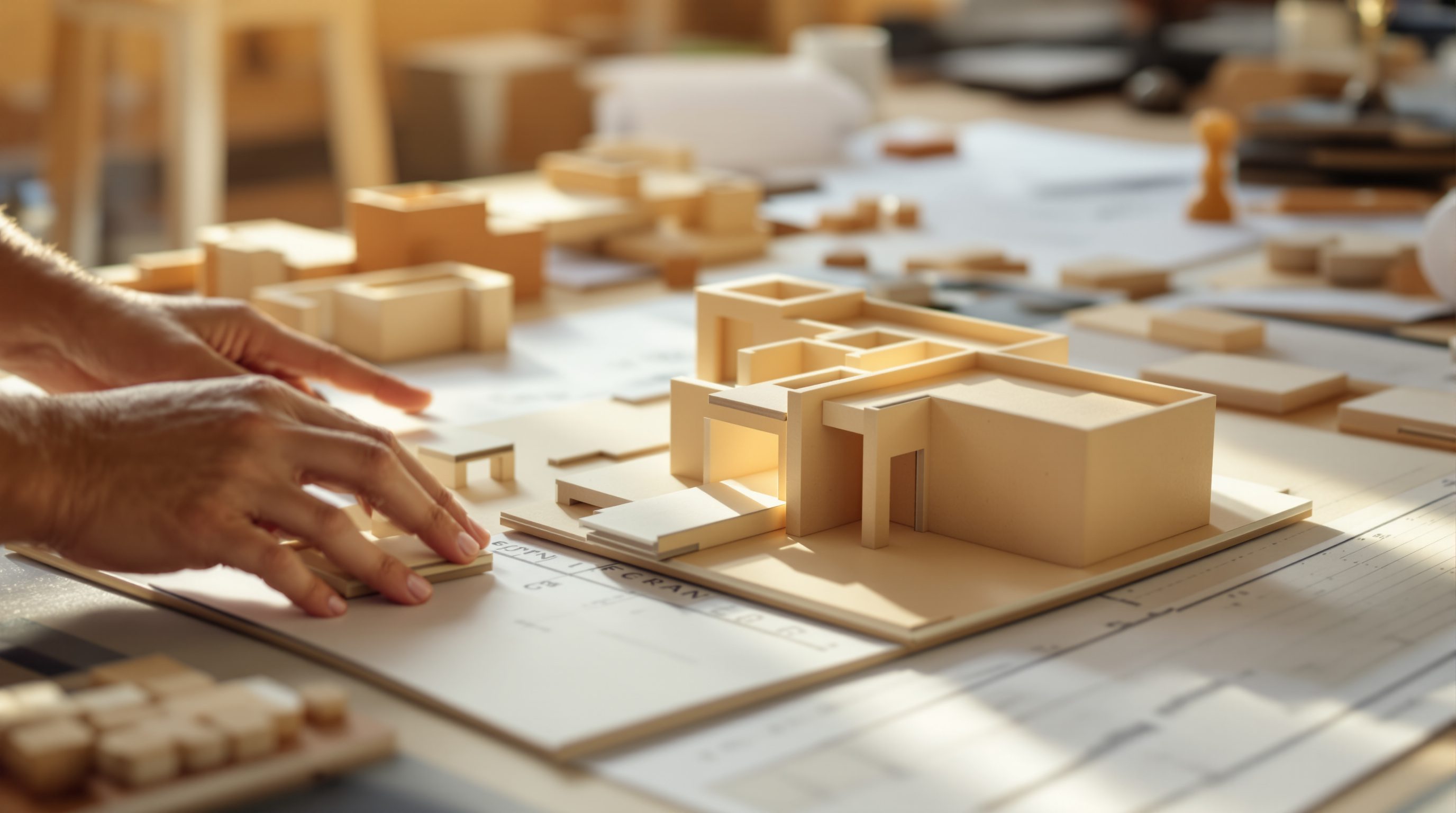
Examine how natural light moves through a space across the day and year — where it enters, how deep it penetrates, where glare strikes, where a room stays gloomy. Light is a functional, emotional, designable material: Lakshmi's dawn prayer corner wants gentle morning light, the evening zone wants no glare on the screen, the deep tight plan needs light from above (the stepwell). Prototype it three ways: physically (take the foam model outside or under a lamp and move the light to mimic the sun's path), digitally (simulate the sun for your location and date), or by observation (watch where light goes across a real day — the cheapest, most honest study).
Colour temperature is the silent variable that wrecks material decisions — showroom fluorescent, midday sun, soft north light, a warm evening bulb, and a phone screen are all different colours; judge every important surface under all the lights it'll live in, especially the family's evening electric light. Materials must pass the three-circle triangle too — a beautiful material can fail on feasibility (will it survive monsoon humidity, kitchen heat?) or viability (cost, and especially maintenance — the gorgeous surface that stains or scratches); abuse a sample a little (splash, scratch, wipe) to test maintenance, not just admire it. And light is a near-free material, the cheapest luxury on a tight Indian budget — a modest room full of well-controlled daylight feels richer than an expensive gloomy room, so perfecting the light is often the single highest-return move.
1. Build a proportioned sample board with real samples sized to their real proportions; judge the whole palette as one conversation. Look at it under daylight and under warm evening light and note how much it shifts. Run a daylight study (foam model in the sun, or observe a real room) and map where gentle morning, harsh noon, and evening light fall. Abuse your most important sample — splash, scratch, wipe — and note whether it passes the maintenance test for this climate.
Check yourself
3 quick questions — pick an answer to see why.
Q1Why does a material have no fixed appearance?
Q2The 'mockup corner' is the material equivalent of which rung?
Q3On a tight budget, why is good daylight the frugal designer's cheapest luxury?
Key terms
- Sample board
- Real samples of every material mounted side by side in roughly their real proportions, so the scheme is judged as a combination, not a collection.
- Mockup corner
- A patch of the actual finish applied at full scale in the actual room and lived with for a few days, catching what a chip or screen cannot.
- Daylight study
- An examination of how natural light moves through a space across the day and year, treating light as a functional, designable material.
Every prototype tests against one constraint we keep returning to: cost. The render shows marble; the budget says laminate. What if cost itself could be prototyped — tested, traded, and tuned like any other variable?
The author
Amogh N P
Architect, interior designer, and creative polymath. Studio Matrx began in his notebooks — his vision of design made honest, useful, and open to everyone. Its Academy is written and taught in his memory, and free, forever.
More about Amogh →