
 Lesson 1.2
Lesson 1.2
Getting below the waterline
Shadowing, the day-in-the-life map, and contextual interviews
The hookThe obvious move — 'what do you really need?' — fails every time. The client doesn't consciously know, and asking directly makes people perform. You get the truth by watching, walking, and asking sideways.
Why you can't just ask
People are unreliable narrators of their own lives — not dishonest, unreliable. They forget the frictions they've adapted to, describe the ideal routine, and the most important things have become invisible to them. You can't see your own wallpaper. So the toolkit gets as close as possible to what people actually do, in the actual place, rather than what they say across a desk.
Shadowing — watch what they do, not what they say
Quietly observe people in their actual space, hunting for workarounds — small clever adaptations they've stopped noticing. The stool by the high shelf, the hook by the door for keys with no home. Each workaround is a frozen complaint: a design brief the client will never speak. Record what you see without immediately explaining it; separate observation from interpretation.
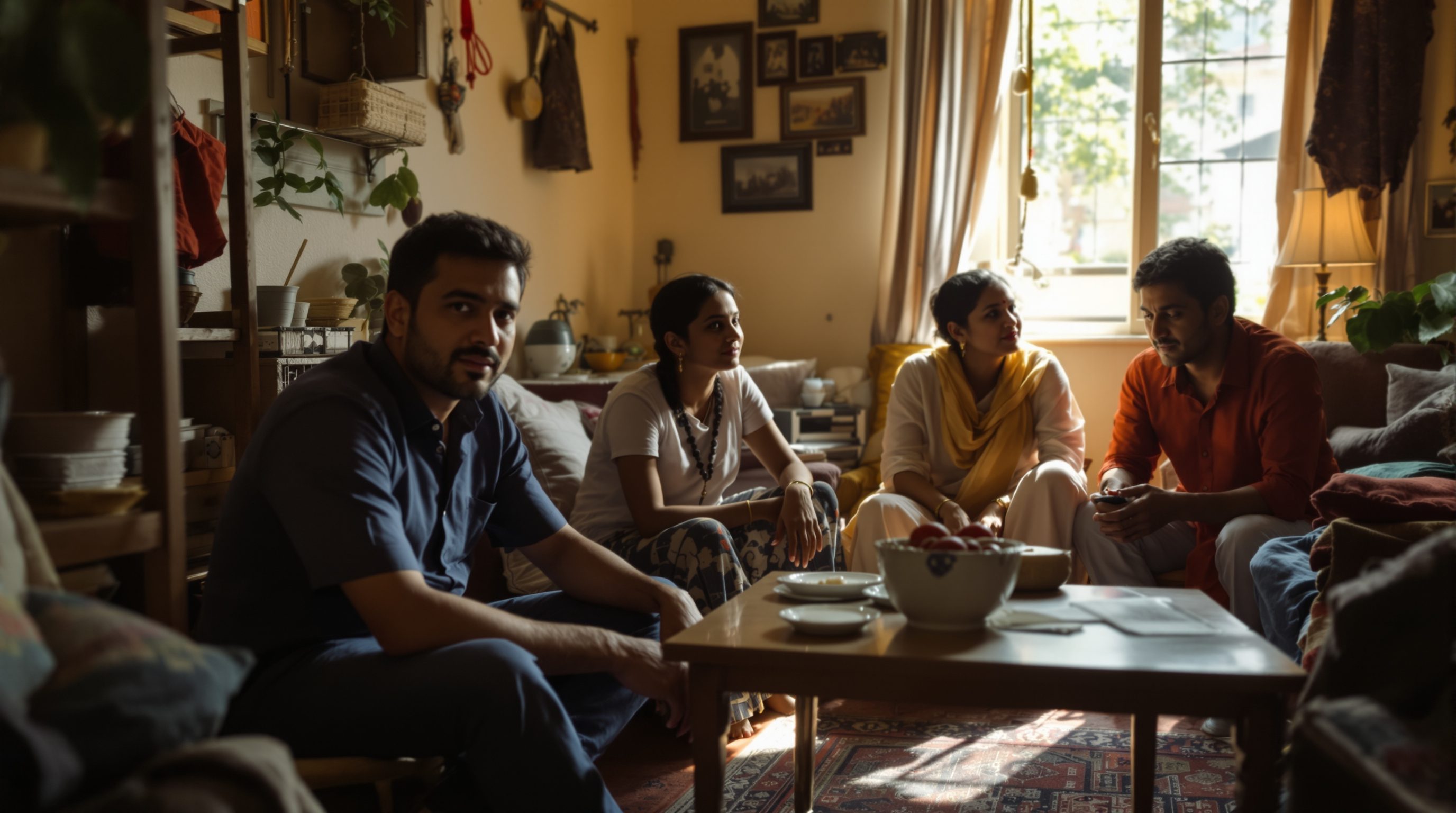
Worked example: shadowing an evening, you note the mother walks to the living-room doorway seven times an hour. You write 'why?' — not a conclusion. Later: she's checking the kids' homework because there's no sightline from kitchen to living room. You found the unstated need by watching.
The day-in-the-life map — stretch the routine across time
Reconstruct the inhabitant's whole day, hour by hour, capturing what the space needs to give them at each moment. The power is revealing conflicting demands on the same space at different times — the most common spatial problem in compact Indian homes. One living room asked to be a prayer corner, a daytime perch, a homework zone, a family-evening space, and an occasional bedroom — some conflicting. Every conflict is a design problem you now know before you draw.
The contextual interview — ask sideways, in the real place
A conversation held in the actual space, structured around the unreliable-narrator problem. Being in the space jogs the truth loose. The rules: ask about specifics not generalities ('show me how you made dinner last night', not 'what do you want?'); ask why gently and often; watch the space while they talk and ask about the workarounds; embrace silence (the most honest sentence comes after the pause you didn't fill); and ask who else and when ('when your in-laws visit, what changes?').
Worked example: 'Do you need more storage?' — 'Yes, always' (useless). 'Show me where your saris are kept' — three slide off an overstuffed shelf, 'see, every morning, I've just gotten used to it.' That's the brief: sari storage that doesn't avalanche, not 'more storage' in the abstract.
Beware observer effect — people tidy and perform when watched. Counter it by staying long enough that the performance fades, asking to see things in use, and reading the traces that survive tidying (wear patterns, the sun-faded patch where a chair sits). Separate the buyer from the user — in Indian homes the payer is often not the daily user (the wife, the mother, the help, the children); insist tactfully on hearing the daily users. The help is a user too — a cook or maid spends hours in the kitchen, their ergonomic needs almost never in the brief. The richest empathy work is done by listening hardest to the people the brief forgets.
1. Conduct a mini contextual interview in a real room. Open with 'show me,' not 'what do you want.' Catch one workaround and ask about it. Use one silence on purpose and note what they offered to fill it. Then sketch a quick day-in-the-life map and circle two needs that conflict.
Check yourself
3 quick questions — pick an answer to see why.
Q1Why does the direct question 'what do you really need?' fail?
Q2In shadowing, what is a 'workaround' and why does it matter?
Q3What is the main power of the day-in-the-life map for compact Indian homes?
Key terms
- Shadowing
- Quietly observing people in their actual space to hunt for workarounds — small adaptations they've stopped noticing — while separating observation from interpretation.
- Day-in-the-life map
- An hour-by-hour reconstruction of an inhabitant's whole day that captures what each space must provide at each moment, revealing conflicting demands.
- Contextual interview
- A conversation held in the actual space, structured to defeat the unreliable-narrator problem by asking 'show me' rather than 'what do you want.'
Some of the most important spatial truths are about bodies. How high is a comfortable shelf for a grandmother? How much room to squat, to pray, to pass in a kitchen? Empathy has a measurable, physical dimension.
The author
Amogh N P
Architect, interior designer, and creative polymath. Studio Matrx began in his notebooks — his vision of design made honest, useful, and open to everyone. Its Academy is written and taught in his memory, and free, forever.
More about Amogh →