
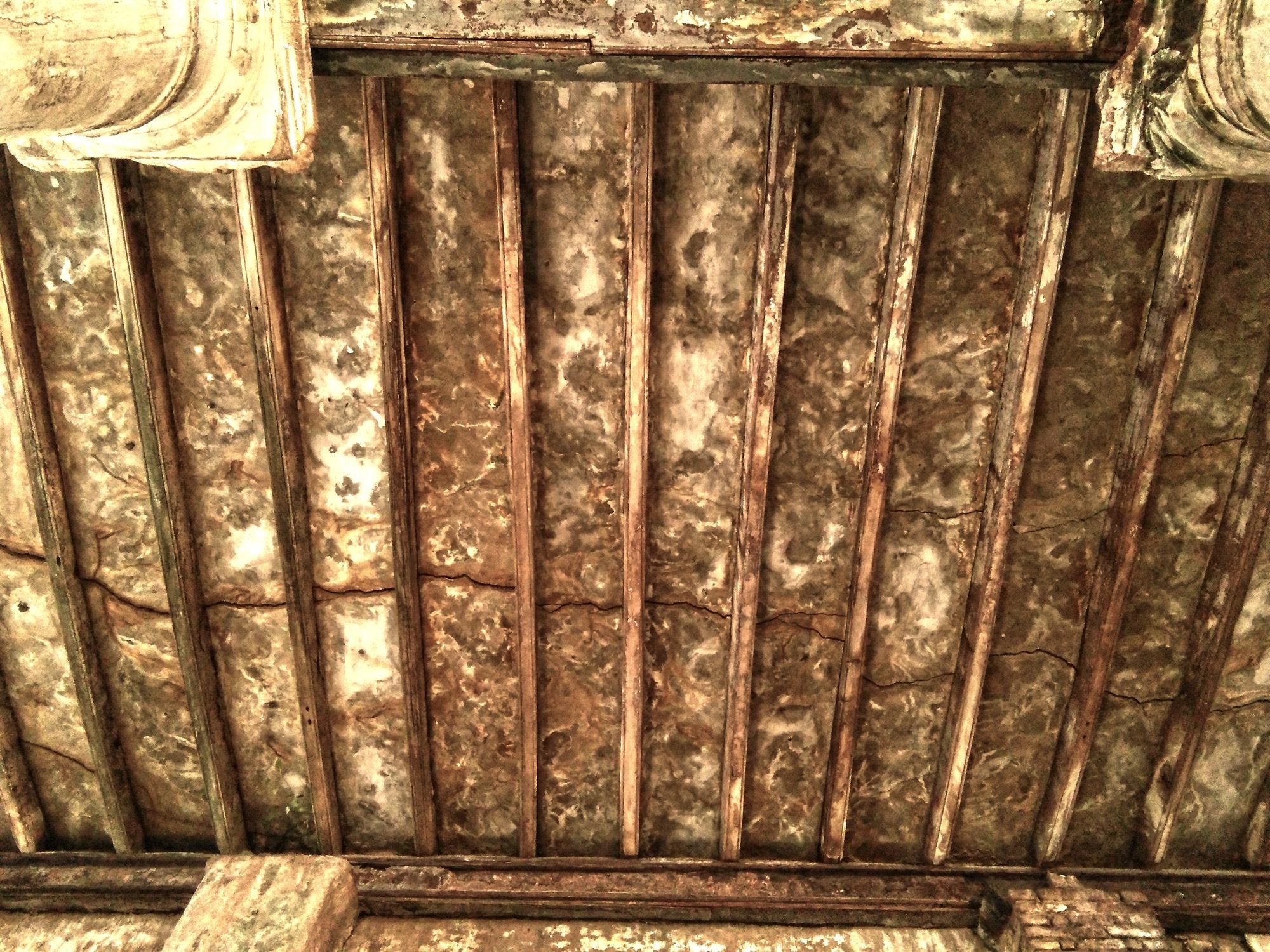
Timber Beams
A different code, a different philosophy — grade the wood, then keep the stress within bounds.
Timber switches the rules. Where steel uses the limit-state method with factored loads, IS 883 designs wood by the older working-stress method: grade the piece, look up its permissible stress, and keep the actual stress below it. You will grade the timber, set the permissible stress with its location and duration factors, size the beam — and check deflection, which timber's low stiffness so often makes the deciding limit.
Learning objectives
By the end of this lesson, you will be able to — mapped to the course outcomes for Design of Structures I:
Explain how IS 883 grades timber and why it uses working stress rather than limit state.
Describe the strength groups, the effect of defects and moisture, and the location and duration factors.
Size a simply-supported timber beam from the required section modulus Z = M/σ_permissible.
Check a timber beam for horizontal shear and for deflection.
Grading the wood
Indian timbers fall into strength groups (A/B/C) by stiffness and strength; each piece is then visually graded (Select, Grade I, Grade II) by its defects. Seasoning, location and the duration of load all modify the permissible stress.[1]
A different philosophy
IS 883 designs timber to PERMISSIBLE (working) stresses — unfactored loads kept below an allowable stress that already includes a factor of safety. This is fundamentally different from the limit-state method of IS 800: no separate load and material factors.[1]
Designing the beam
Size the beam from the required section modulus Z = M/σ (rectangle Z = bd²/6), then check the horizontal shear τ = 1.5V/(bd) and the deflection. With timber's low modulus, deflection frequently governs.[1]
Look it up, then modify
Read the permissible bending stress for the species, group, grade and location from IS 883 Table 1, then apply the duration-of-load factor (continuous 1.0; two months 1.15; wind/seismic 1.25; seven days 1.33; impact 2.0). The modified value is the σ you design to.[1]
Timber-beam calculator
Enter the span, load, permissible bending stress and a trial breadth; the tool returns the moment, the required section modulus and a depth, then the actual bending and shear stresses. A 3 m span at 4 kN/m needs about a 100×175 section.[1]
Timber beam · working stress (IS 883)
Simply supported UDL: M = wL²/8; required Z = M/σ; rectangle Z = bd²/6 → depth d (rounded up to 25 mm).
100 × 0 mm
Section (b × d)
0.00 kNm
Design moment M
0 ×10³ mm³
Required Z
0.00 N/mm²
Actual bending σ
0.00 N/mm²
Horizontal shear τ
Check τ and deflection against the species values — with timber's low stiffness, deflection often governs.
At a glance
| Aspect | One | The other |
|---|---|---|
| Design philosophy | Steel (IS 800): limit state, factored loads + γm | Timber (IS 883): working stress, unfactored loads ≤ permissible |
| Material condition | Seasoned: higher permissible stress, stable | Unseasoned/wet: reduced stress (outside/wet column) |
| Grade | Select (most stress, fewest defects) | Grade II (less stress, more defects allowed) |
| What governs | Strong short spans: bending or shear | Long spans: deflection (timber's low E) |
| Shear stress | Average = V/(b·d) | Maximum = 1.5·V/(b·d) — use this |
Key terms
Unfactored loads kept below a permissible stress that includes a safety factor (IS 883).
Species classification by modulus of elasticity and bending strength.
Select / Grade I / Grade II — quality class set by permitted defect limits.
Controlled drying to a target moisture content, which raises strength and stability.
Inside / outside / wet exposure category that selects the permissible-stress column.
Multiplier raising permissible stress for short-duration loads (wind 1.25, impact 2.0).
Longitudinal shear along the grain; maximum = 1.5·V/(b·d) for a rectangle.
The bending property of a rectangular section; required Z = M/σ_permissible.
Worked example
A simply supported timber beam, 3 m span, 4 kN/m, permissible bending stress 10 N/mm². M = wL²/8 = 4.5 kNm; required Z = 4.5×10⁶/10 = 450×10³ mm³; with b = 100, d = √(6×450e3/100) ≈ 164 mm → adopt 100×175. Then check shear τ = 1.5V/(bd) and the deflection against span/360 (or span/240).
Self-assessment
1. IS 883 designs timber by which method?
2. The maximum horizontal shear stress in a rectangular timber beam is —
3. Timber-beam deflection for a member carrying brittle finishes is limited to —
Recap
References & further reading
- [1]IS 883:1994 — Design of Structural Timber in Building, Code of Practice (cl. 5, 6, 7; Table 1). Bureau of Indian Standards, New Delhi.
- [2]B.C. Punmia, Ashok Kumar Jain & Arun Kumar Jain, Comprehensive Design of Steel Structures / timber design notes. Laxmi Publications.
- [3]N. Krishna Raju, Design of Timber Structures. CBS Publishers.
- [4]IS 1141:1993 — Code of Practice for Seasoning of Timber. Bureau of Indian Standards.
Further reading
- IS 883:1994 — the governing code for timber design (with worked examples in the texts below).
- N. Krishna Raju, Design of Timber Structures.
- B.C. Punmia et al., timber-design chapters.
Sources gathered and fact-checked June 2026. Published values vary by source, sample and method — treat as indicative and confirm against the cited standard before structural use.
The author
Amogh N P
Architect, interior designer, and creative polymath. Studio Matrx began in his notebooks — his vision of design made honest, useful, and open to everyone. Its Academy is written and taught in his memory, and free, forever.
More about Amogh →