
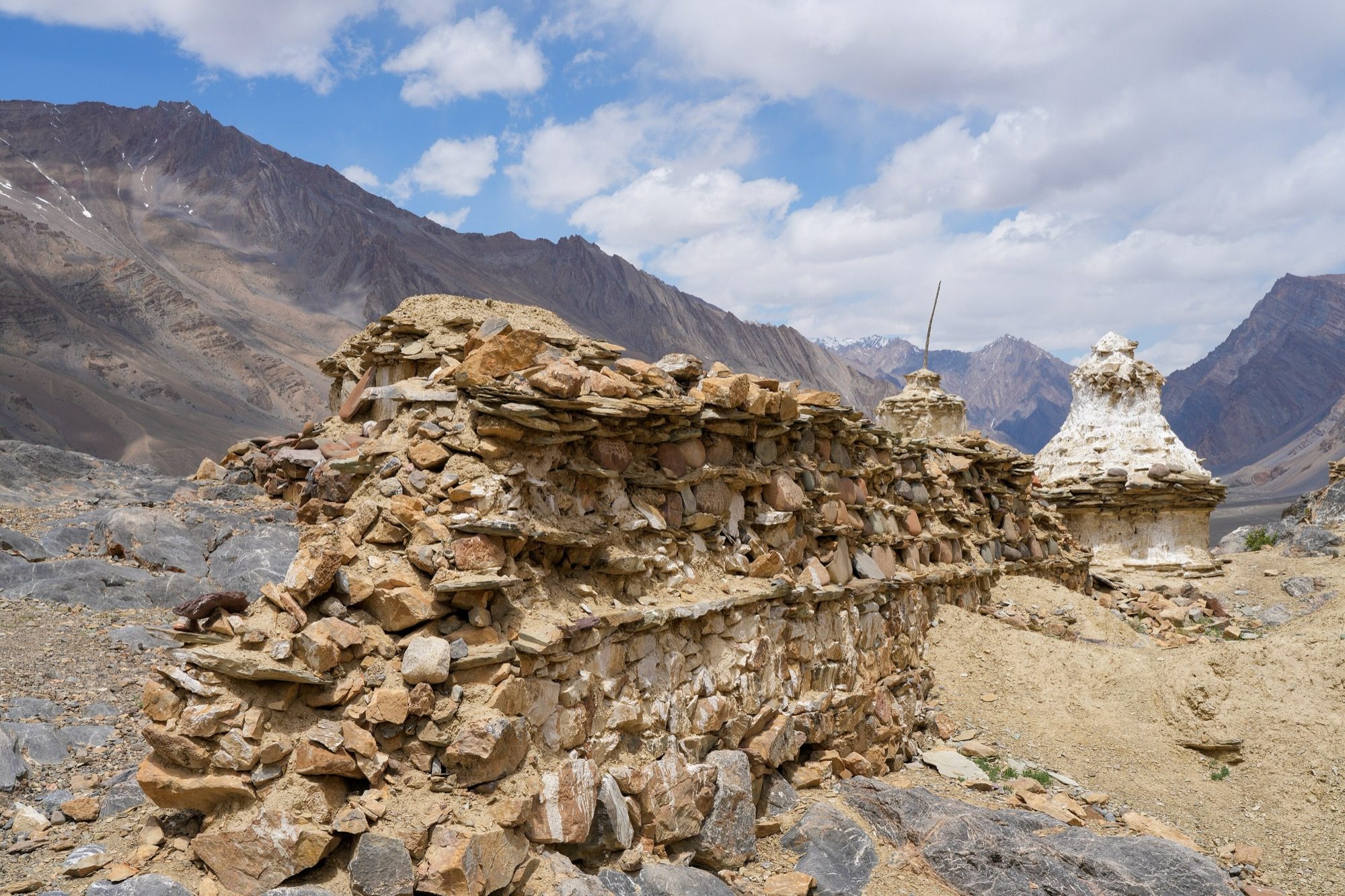
Heat Flow Through Buildings
How heat crosses the envelope — and how to slow it.
Heat is always trying to cross the envelope — in through a sunlit wall in summer, out through it on a cold night. How fast it crosses is the U-value, and how long it takes is the time lag. Get these right and the building does much of the climate control for free.
Learning objectives
By the end of this lesson, you will be able to — mapped to the course outcomes for Climatology & Building Physics:
Identify where conduction, convection and radiation act in an envelope.
Compute a U-value from layer thicknesses and conductivities.
Explain thermal mass, time lag and the decrement factor.
Describe the sol-air temperature and where mass helps or hurts.
How heat crosses the envelope
Conduction through the solid, convection at the air films, radiation at the surfaces. Each layer's resistance R = thickness ÷ k; add them with the surface films and the U-value = 1 ÷ ΣR. Lower U insulates better.[7, 8]
Conduction, convection, radiation
Through the solid material heat moves by conduction; at the inner and outer air films and in any cavity, by convection; and as solar (shortwave) and longwave radiation at the surfaces. A wall is a series of resistances: outside film → material → cavity → inside film.[7, 8]
Compute a U-value
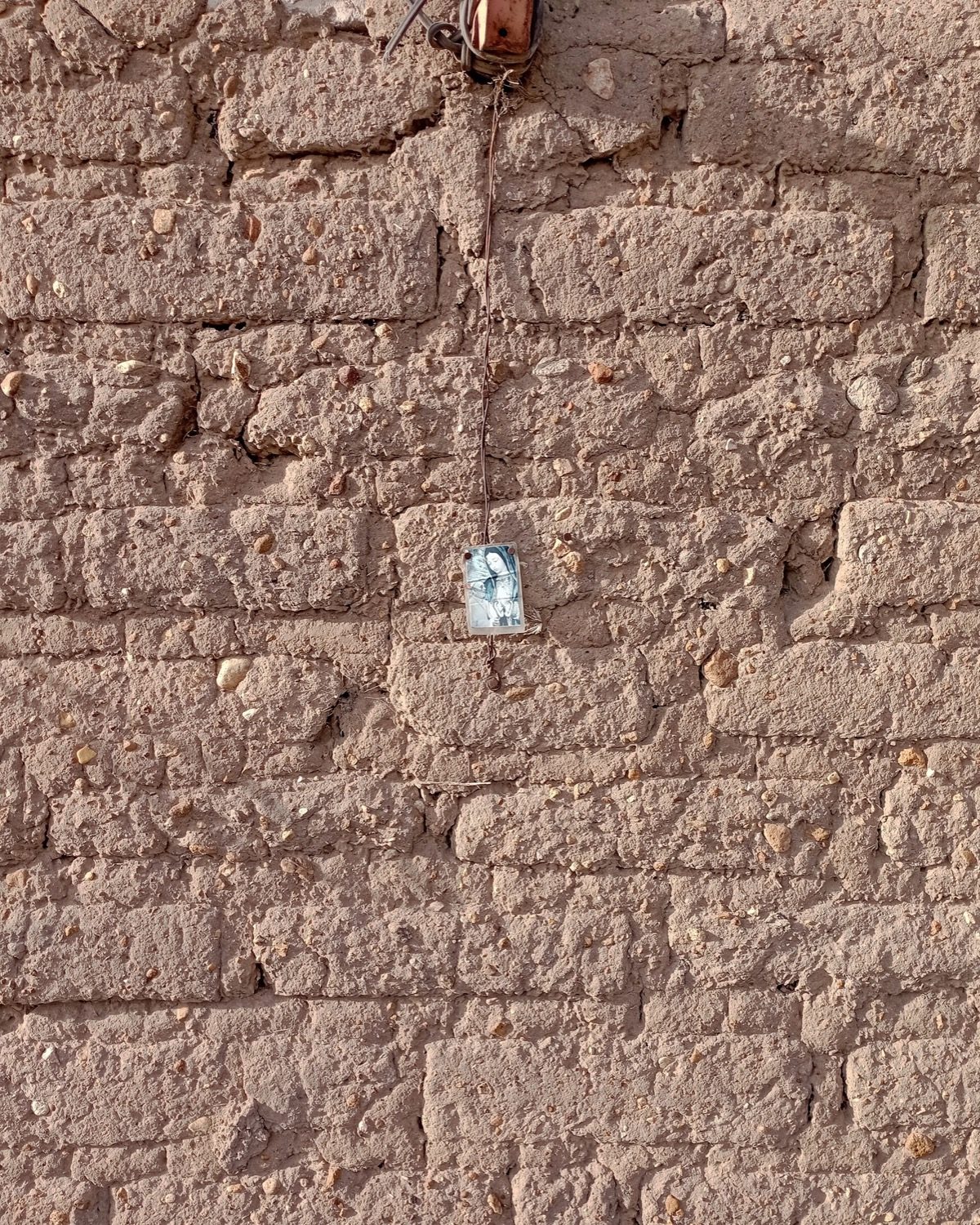
Edit the layer thicknesses and conductivities to see the wall's resistance and U-value update. The default 230 mm plastered brick wall comes out at about 2.0 W/m²·K.[8]
U-value calculator
Enter each layer's thickness and conductivity (k). Surface films Rsi 0.13 + Rso 0.04 are included. Lower U = better.
Thermal mass & time lag
At a glance
| Aspect | One | The other |
|---|---|---|
| U-value | High U: poor insulation, much heat flow | Low U: good insulation (the goal) |
| k vs U | k: a material property (per metre) | U: a whole assembly (thickness + films) |
| Thermal mass | High mass: long time lag, damps swings (hot-dry) | Low mass: fast response (warm-humid nights) |
| Mode in a wall | Conduction: through the solid material | Convection/radiation: at the surfaces & cavity |
| Surface films | Rsi ≈ 0.13 (inside, still air) | Rso ≈ 0.04 (outside, wind strips the film) |
Key terms
Heat through a solid by molecular contact — the only mode inside an opaque wall.
Heat between a surface and moving air — at the air films and in cavities.
Heat by electromagnetic waves needing no medium — solar and longwave.
A material's heat-conducting ability (W/m·K); brick ≈ 0.81, insulation ≈ 0.04.
Opposition to heat flow, R = thickness ÷ k (m²·K/W).
Thermal transmittance U = 1 ÷ ΣR (W/m²·K); lower is better.
The air-film resistance at a surface: Rsi ≈ 0.13 inside, Rso ≈ 0.04 outside.
A material's capacity to store heat (density × specific heat × thickness).
The hours between the outdoor and indoor temperature peaks.
The ratio of indoor to outdoor temperature swing (0–1); lower = more damping.
A fictitious outdoor temp combining air temp, absorbed solar and longwave radiation.
Think it through
In the calculator, swap the 230 mm brick for 150 mm AAC block (k ≈ 0.21) and watch the U-value fall. Then explain why a heavy stone wall suits Jaisalmer but a light, ventilated wall suits Chennai.
Self-assessment
1. A wall with U = 0.4 versus one with U = 2.0 W/m²·K —
2. The resistance of a single material layer is —
3. Thermal mass can WORSEN comfort in —
Recap
References & further reading
- [1]O.H. Koenigsberger et al., Manual of Tropical Housing and Building. Orient Longman.
- [7]B. Givoni, Man, Climate and Architecture. Elsevier.
- [8]ISO 6946 — Building components: thermal resistance and transmittance; ECBC 2017, Bureau of Energy Efficiency.
Further reading
- S.V. Szokolay, Introduction to Architectural Science. Routledge.
- O.H. Koenigsberger et al., Manual of Tropical Housing and Building.
- ECBC User Guide. Bureau of Energy Efficiency.
Sources gathered and fact-checked June 2026. Published values vary by source, sample and method — treat as indicative and confirm against the cited standard before structural use.
The author
Amogh N P
Architect, interior designer, and creative polymath. Studio Matrx began in his notebooks — his vision of design made honest, useful, and open to everyone. Its Academy is written and taught in his memory, and free, forever.
More about Amogh →