
 Lesson 3.3
Lesson 3.3 · The Model & Its Objects
Level of Development, Not Detail
The field's most-confused idea — and getting it right changes how you model
A photorealistic model can be worthless. A grey box can be gospel. That is the whole lesson.
Here is a scene that happens constantly. A gorgeous, highly detailed model — every bolt, every texture, every shadow — is handed over as 'high LOD'. And it is nearly useless, because none of that detail can be *relied on*: the dimensions are approximate, the data is placeholder, half of it is design intent dressed up as fact.
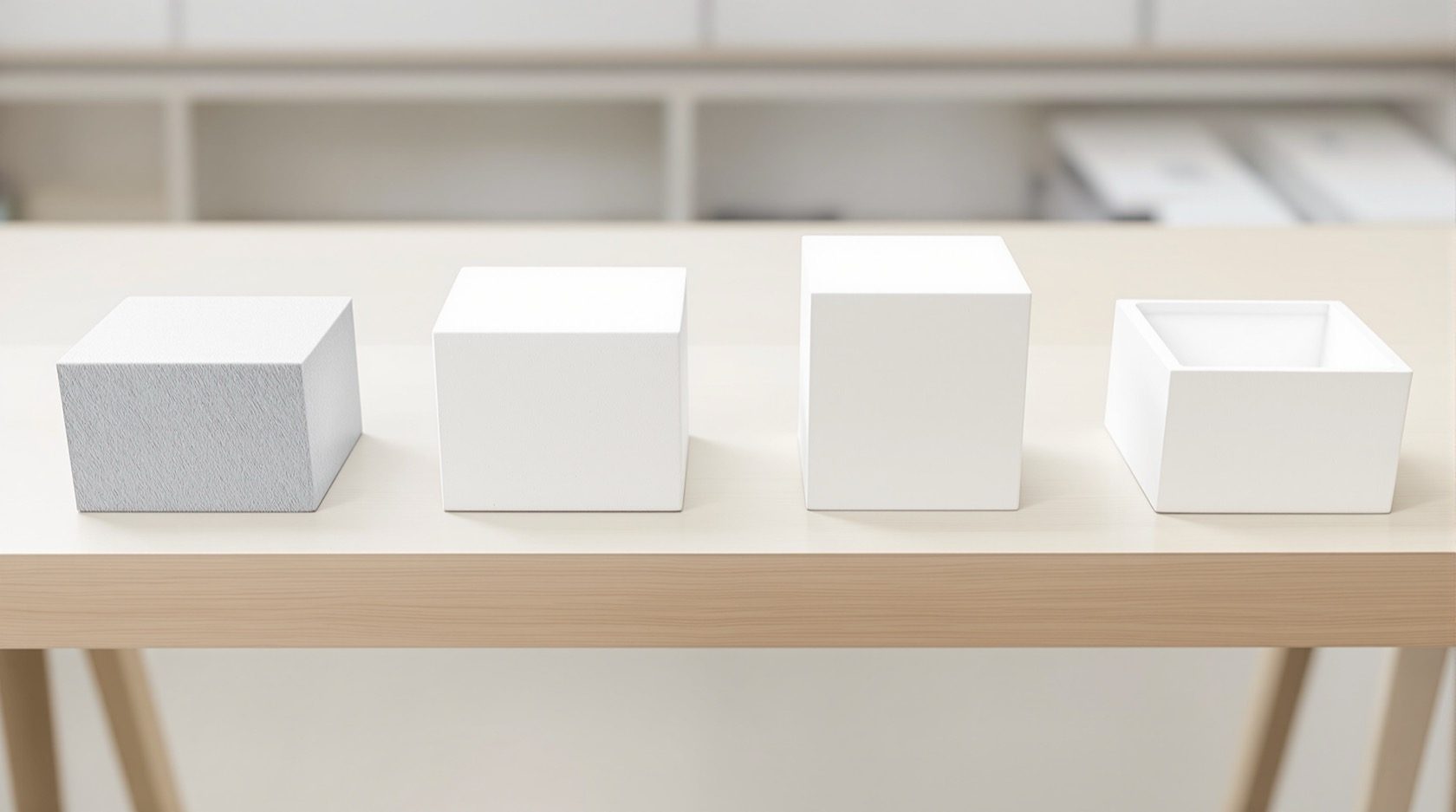
Meanwhile a plain grey box, with almost no visual detail, is completely trustworthy: its size is exact, its clearances are guaranteed, its key data is verified. LOD is not Level of *Detail*. It is Level of *Development* — a measure of how much you can trust an object, not how much you can see. This single, endlessly-confused distinction decides whether a model helps you or quietly lies to you, and once it clicks, the way you model changes for good.
The grey box you can trust beats the photoreal model you can't. Development, not detail.
Development, not detail: reliability is the real axis
The word people hear is 'detail', and it sends them the wrong way — toward visual richness, toward modelling every screw. The word that matters is development: how far an object's geometry *and* its information have progressed toward being reliable enough to act on.
Detail is about appearance. Development is about *trust*. A pretty, detailed object can be low development if its geometry is approximate and its data is placeholder — you cannot yet build from it or count on it. A visually crude object can be high development if its size, position and key data are confirmed and specific — you can rely on it completely. The whole point of an LOD is to answer one question honestly: how far can I trust this object right now? Not 'how good does it look?' Confusing the two is the field's most common and most expensive mistake, because a model that looks finished but is not *developed* invites decisions the model cannot actually support.
The ladder: LOD 100 to 500, in plain terms
The widely used scale — codified in the BIMForum LOD Specification, which is refreshed regularly — runs in bands, and it is worth knowing in plain language rather than by number alone.
LOD 100 is symbolic: the object is a placeholder standing for 'something is here' — a mass, an area, an early idea; take no dimensions from it. LOD 200 is generic and approximate: recognisably a wall or a pump, with approximate size and position — good enough for coordination in principle, but not for ordering. LOD 300 is specific and reliable: accurate size, shape, location and orientation, with real data — the level at which drawings and quantities can be trusted (and, tellingly, the level India's CPWD guidelines require at coordination milestones). LOD 350 adds the interfaces between systems — connections, supports, the details that make clash detection between trades meaningful. LOD 400 is fabrication-ready: detailed enough to manufacture and install from. LOD 500 is the verified as-built record — confirmed against the real, constructed thing, the basis for operation.
Notice what climbs as you go up the ladder: not prettiness, but *reliability and specificity*. Each rung is a promise about how much you can trust the object — which is why a low-rung object should look provisional, and a high-rung object should be believed.
LOD is not 'how finished does it look'. It is 'how much of my reputation would I stake on this being right'.
Two honest complications — and why they matter
First, geometry and information can develop at *different rates*, and pretending they move together causes real errors. An object can have precise geometry but placeholder data, or verified data on rough geometry. This is exactly why modern practice increasingly separates the two — talking about the reliability of the geometry and the reliability of the information as distinct measures, rather than one blunt 'LOD' number. When someone says 'LOD 300', the honest question is: developed to 300 in geometry, in data, or both?
Second, higher LOD is not better — it is only appropriate. Developing an object beyond what a decision needs is waste: slow, expensive, and falsely reassuring. A design-option study needs LOD 200, not 400; forcing fabrication-level development onto every object early burns time modelling detail nobody will use and can even *hide* the design intent under premature specificity. The right LOD is the one the current purpose requires — which is precisely the subject of the next lesson. LOD is a language for stating *how much to trust*, and its discipline is matching development to need, never maximising it.
Climb the LOD ladder — trust, not detail
Drag the level — watch reliability climb, not detail
LOD 300
Specific & reliable
Trust · Accurate size, shape, location and real data — you can trust it.
Use · Trust the drawings and quantities.
India's CPWD commonly requires LOD 300 at coordination.
Notice what grows: reliability, not visual detail. LOD is Level of Development — how much you can trust the object — not Level of Detail.
Three altitudes on the same idea
Read the band that fits you — or all three.
Learn the one distinction. LOD = Level of Development, not Detail. It measures how much you can trust an object — its geometry and its data — not how detailed it looks. A photorealistic object can be low LOD (approximate, placeholder data); a plain grey box can be high LOD (exact size, verified data). The ladder LOD 100→500 climbs in *reliability*: 100 symbolic placeholder, 200 generic/approximate, 300 specific and reliable (India's CPWD requires this at coordination), 350 adds connections, 400 fabrication-ready, 500 verified as-built.
Model to be trusted, and say so. Do not chase visual detail; develop each object to the reliability the current stage needs, and be honest about where it is (a provisional object should *look* provisional). Know that LOD 300 is the usual 'now you can trust the drawings and quantities' threshold, and that geometry and data can be at different levels — so state which you mean. Resist the urge to over-develop early: it wastes time and disguises design intent as fixed fact. Your credibility rests on others being able to trust your model exactly as far as its LOD promises — no further, no less.
Specify LOD by purpose, and police the difference from detail. In the BEP, set the LOD each object type must reach at each milestone, driven by what the model is *for* at that point — not by a blanket 'model everything to the max'. Insist that development, not appearance, is the acceptance test: a slick render is not evidence of LOD. Recognise that geometry and information develop separately and require both to be stated. On Indian public work, LOD 300 at coordination is a common contractual bar (CPWD), so tie your milestones to real, checkable development levels. The costliest LOD failure is a model that looks finished being trusted as if it were developed — govern against exactly that.
“LOD means Level of Detail — a higher LOD is a more detailed, more finished model.”
Do it yourself
Sort real modelling situations by trust, not by looks — the point is to feel development as a separate axis from detail.
- 1Write the five plain-language rungs: 100 placeholder · 200 generic/approximate · 300 specific/reliable · 400 fabrication-ready · 500 verified as-built.
- 2Now place three objects. (a) A stunning, textured 3D sofa whose dimensions are 'about right' and whose fabric/cost fields are empty. (b) A grey box whose size, clearances and key data are all confirmed. (c) A steel connection modelled with every bolt and plate, checked against the fabricator's drawings. Which rung is each — and notice how badly 'how detailed does it look' predicts the answer.
- 3Take object (a) and ask: what decision would it be *dangerous* to make from it, precisely because it looks more finished than it is developed?
- 4Finally, pick a real early-stage decision (say, testing three massing options). Write the lowest LOD that would answer it honestly — and one line on why developing further would be waste, not virtue.
The one line to carry out
If the right LOD is the one the purpose needs, then everything turns on naming those purposes. Next: model uses and the right level of effort — deciding, before you model, exactly how far to develop and why.
The author
Amogh N P
Architect, interior designer, and creative polymath. Studio Matrx began in his notebooks — his vision of design made honest, useful, and open to everyone. Its Academy is written and taught in his memory, and free, forever.
More about Amogh →