Studio Matrx Monthly · Volume 1 · Issue 5 · October 2026
Loading…
Tips on interior design, AI in home styling, and inspiration for Indian homes.
 02
02Discover how the front door shapes our psychological sense of home. From thresholds, prospect and refuge to privacy, territoriality, nature and personal identity, this article explores the environmental psychology and architectural science behind designing entrances that transform a dwelling into a place of belonging.
 03
03Why do corner windows feel so appealing? By expanding views, dissolving visual boundaries and bringing daylight from multiple directions, corner windows can transform how we perceive interior space. Explore their architectural appeal through prospect–refuge theory, environmental psychology, spatial perception and biophilic design.
 04
04Balcony doors are more than functional openings. In modern urban apartments, they act as emotional thresholds connecting private interiors with daylight, fresh air, views, weather and city life. Thoughtful balcony-door design can balance privacy, openness, sensory connection and environmental choice.
 05
05Explore how doors, thresholds, porches, privacy, and visual openness shape the psychology of a home. Discover why some houses instantly feel warm and welcoming while others feel defensive—and how architects can design entrances that balance hospitality, security, privacy, and social connection.
 06
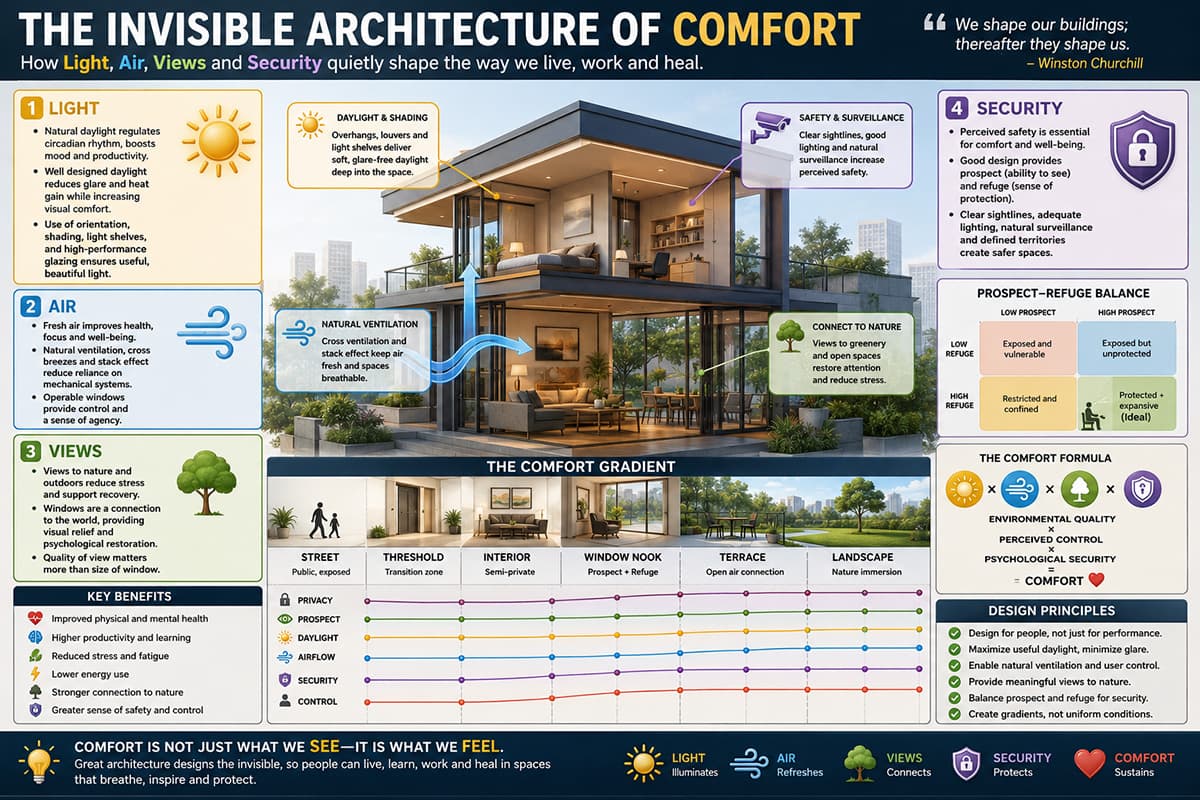
06Discover how doors, windows, thresholds, screens, and spatial transitions shape privacy and emotional security at home. This architecture-focused guide explores how thoughtful design can balance openness, daylight, views, family interaction, personal retreat, and safety to create homes that feel both connected and protected.
 07
07Privacy and openness are two fundamental architectural needs that shape how people live, interact, and experience space. Discover how architects balance visual connection, social interaction, personal retreat, and spatial freedom through thoughtful design strategies that enhance wellbeing, comfort, and human relationships.