
Starting an Architecture & Interior Design Firm in India
Complete Business Guide — Registration, Structure, Finance, Contracts, Hiring & Marketing
India has over 1,30,000 registered architects (COA) and an estimated 2,00,000+ interior designers. Most dream of running their own practice. Few are prepared for the business side of it.
Architecture and interior design education in India focuses almost entirely on design skills — drafting, rendering, building science, design theory. Business skills — registration, taxation, contracts, pricing, marketing, hiring, cash flow management — are rarely taught. The result: talented designers who can create beautiful spaces but struggle to run a profitable, sustainable practice.
This guide is the complete business manual for starting and running an architecture or interior design firm in India — from legal registration to your first client to scaling your team. It covers everything your college didn't teach you.
Before You Start — The Readiness Check
Minimum Requirements
| Requirement | Architecture Firm | Interior Design Firm |
|---|---|---|
| Professional qualification | B.Arch (5 years) from COA-recognised institution | B.Des / Diploma / No formal requirement (unregulated) |
| Registration | COA registration mandatory to practice and sign drawings | No mandatory registration (IIID membership recommended) |
| Experience | COA allows practice immediately after registration; 2-5 years recommended | No minimum, but 3-5 years at established firms recommended |
| Financial runway | 6-12 months of personal expenses saved | 6-12 months of personal expenses saved |
| Portfolio | 5-10 projects (academic + professional) | 5-10 projects (academic + professional) |
| Network | 10-20 potential referral contacts | 10-20 potential referral contacts |
When to Start Your Own Firm
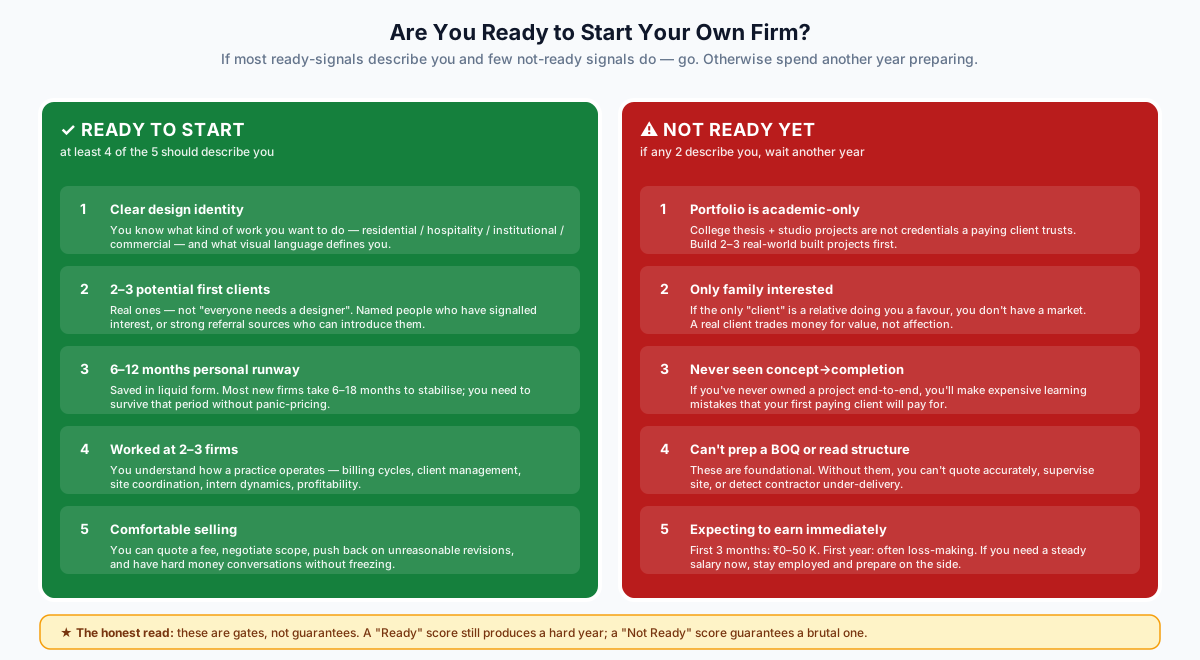
Ready signals:
- You have a clear design identity — you know what kind of work you want to do
- You have at least 2-3 potential first clients (or strong referral sources)
- You have saved 6-12 months of personal living expenses
- You have worked at 2-3 different firms and understand how a practice operates
- You are comfortable selling, negotiating, and managing client expectations
Not ready yet:
- You only have academic projects in your portfolio
- Your only potential client is a family member
- You haven't managed a project from concept to completion
- You don't know how to prepare a BOQ or read a structural drawing
- You expect to earn immediately — most new firms take 6-18 months to stabilise
Step 1: Professional Registration
For Architects — COA Registration
The Council of Architecture (COA) is the statutory body that regulates architecture practice in India under the Architects Act, 1972.
Registration process:
1. Complete B.Arch from a COA-recognised institution
2. Apply at coa.gov.in — Form A
3. Submit: degree certificate, mark sheets, passport photos, ID proof, address proof
4. Pay registration fee: ₹5,000 (one-time) + ₹500 annual renewal
5. Receive Certificate of Registration and registration number
6. Renew annually by paying ₹500
What COA registration allows:
- Use the title "Architect"
- Sign building plans for approval
- Certify structural stability and stage completion
- Practice independently or as a firm
- Be named in RERA project registrations
What happens without COA registration:
- Using the title "Architect" is a criminal offence (fine + imprisonment)
- Building plans signed by non-registered persons will be rejected by authorities
- Professional indemnity insurance will not cover you
For Interior Designers — IIID Membership
Interior design is not regulated by law in India — there is no mandatory registration requirement. However, joining the Institute of Indian Interior Designers (IIID) is recommended:
| IIID Membership | Fee | Benefits |
|---|---|---|
| Professional member | ₹5,000/year | Professional credibility, networking, events, directory listing |
| Associate member | ₹3,000/year | For those with <5 years experience |
| Student member | ₹1,000/year | College students |
Step 2: Business Structure
Choosing the Right Entity
| Structure | Best For | Pros | Cons |
|---|---|---|---|
| Sole Proprietorship | Solo practitioners starting out | Simplest to set up, lowest compliance, direct control | Unlimited personal liability, limited credibility for large clients |
| Partnership Firm | 2-3 partners with shared vision | Simple setup, shared resources, flexible profit sharing | Unlimited liability, disputes can be messy |
| LLP (Limited Liability Partnership) | Growing firms wanting liability protection | Limited liability, professional image, flexible structure | More compliance than proprietorship, annual filing required |
| Private Limited Company | Large firms planning to scale | Limited liability, easy to raise capital, highest credibility | Most compliance, double taxation, expensive to maintain |
Recommended Path
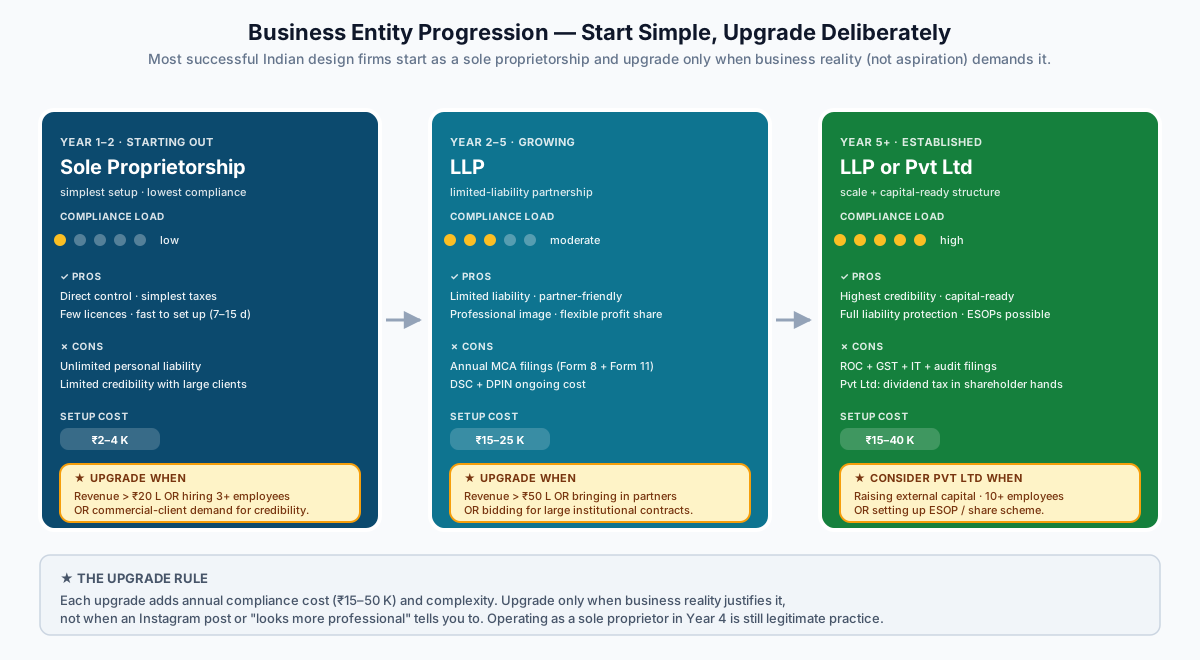
| Stage | Structure | When to Upgrade |
|---|---|---|
| Starting out (Year 1-2) | Sole Proprietorship | When you hire 3+ employees or revenue exceeds ₹20 lakh |
| Growing (Year 2-5) | LLP | When you want to bring in partners or revenue exceeds ₹50 lakh |
| Established (Year 5+) | LLP or Pvt Ltd | When you want to raise capital or have 10+ employees |
Registration Process — Sole Proprietorship
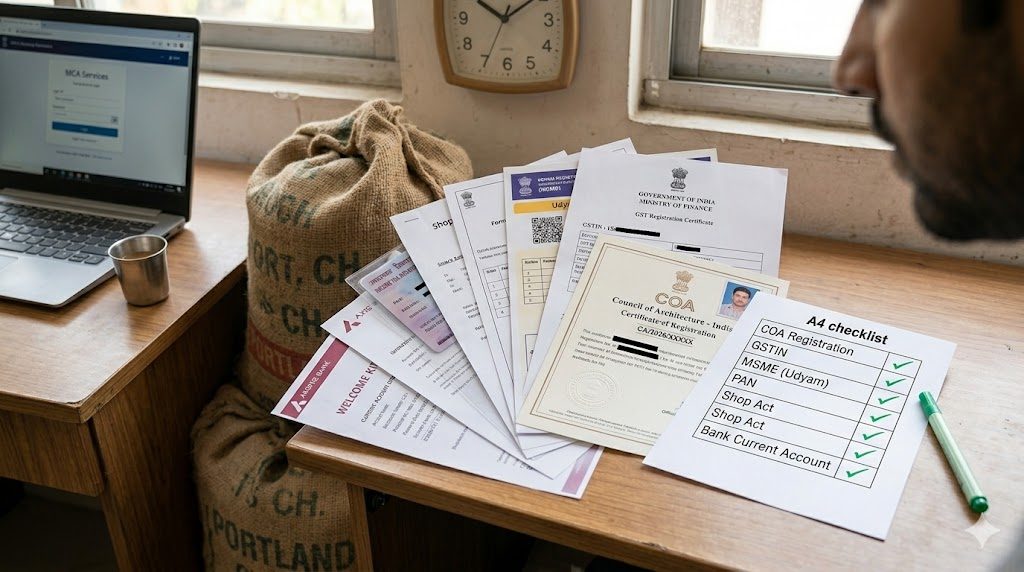
| Step | Action | Cost | Time |
|---|---|---|---|
| 1 | Get PAN card (if not already) | Free | 7-15 days |
| 2 | Open current bank account in firm name | Free | 1-2 days |
| 3 | Register under Shop and Establishment Act | ₹500-2,000 | 7-15 days |
| 4 | Register for GST (if turnover >₹20 lakh or if you want to claim input credit) | Free | 3-7 days |
| 5 | Get Udyam registration (MSME) | Free | Instant online |
| 6 | Professional tax registration (state-specific) | ₹200-2,500/year | 7 days |
Registration Process — LLP
| Step | Action | Cost | Time |
|---|---|---|---|
| 1 | Get DSC (Digital Signature Certificate) for all partners | ₹1,500/partner | 1-2 days |
| 2 | Apply for DPIN (Designated Partner Identification Number) | ₹500/partner | 7 days |
| 3 | Name reservation (RUN-LLP form on MCA portal) | ₹200 | 3-5 days |
| 4 | File incorporation form (FiLLiP) | ₹3,500-5,500 | 7-15 days |
| 5 | Draft LLP Agreement | ₹5,000-15,000 (lawyer) | 7 days |
| 6 | File LLP Agreement (Form 3) within 30 days | ₹1,500 | 3-5 days |
| 7 | Get PAN, TAN, bank account, GST, Udyam | Varies | 7-15 days |
Step 3: Office Setup
Home Office vs Rented Office
| Factor | Home Office | Rented Office |
|---|---|---|
| Cost | ₹0 rent | ₹8,000-50,000/month (depends on city and location) |
| Credibility | Lower (some clients prefer visiting an office) | Higher (professional address, meeting room) |
| Commute | Zero | Daily travel |
| Client meetings | Awkward for some clients | Professional setting |
| Tax benefit | Partial rent deduction for home office | Full rent deduction |
Recommendation: Start from home. Move to a rented office when:
- You hire your first full-time employee
- You need a space for client meetings regularly
- Revenue supports the rent comfortably (rent < 15% of monthly revenue)
Essential Equipment — Minimum Setup
| Item | Cost (approx.) | Priority |
|---|---|---|
| Laptop/Desktop (i7/M1+, 16GB RAM, dedicated GPU) | ₹70,000-1,50,000 | Essential |
| Monitor (24-27", for dual screen) | ₹15,000-30,000 | Essential |
| Printer/Scanner (A3 capable) | ₹25,000-50,000 | High |
| Internet (fibre, 100+ Mbps) | ₹1,000-2,000/month | Essential |
| Office furniture (desk, chair, storage) | ₹15,000-40,000 | Essential |
| Software licenses (AutoCAD, SketchUp, Adobe) | ₹50,000-1,50,000/year | Essential |
| Mobile phone (for site photos, WhatsApp) | Already owned | Essential |
| Material sample library | ₹5,000-15,000 | Medium |
| Measuring tools (laser measure, tape) | ₹3,000-8,000 | Essential |
Total minimum investment: ₹2-4 lakh (home office) or ₹5-8 lakh (rented office including security deposit)
Step 4: Taxation & Finance
GST for Design Firms
| Parameter | Details |
|---|---|
| Registration threshold | ₹20 lakh annual turnover (₹10 lakh for NE states) |
| Rate | 18% on architectural and interior design services |
| HSN/SAC code | 9983 (Architectural services), 9831 (Interior design) |
| Input tax credit | Can claim GST paid on software, equipment, rent, materials purchased for client |
| Filing | GSTR-1 (monthly/quarterly), GSTR-3B (monthly), GSTR-9 (annual) |
| Composition scheme | Not available for service providers with turnover >₹50 lakh |
Practical tip: Register for GST even if below threshold — it allows you to claim input credit on expensive software, equipment, and office expenses.
Income Tax for Design Firms
| Structure | Tax Treatment |
|---|---|
| Sole Proprietorship | Income added to personal income, taxed at slab rates (5%-30% + cess) |
| Partnership | Firm taxed at 30% flat. Partners' salary and interest deductible. |
| LLP | Taxed at 30% flat + surcharge. Partners' salary deductible up to prescribed limits. |
| Pvt Ltd | 25% (turnover <₹400 crore) or 30%. Dividend taxed separately in partners' hands. |
Tax-saving strategies for design firms:
- Section 44AD/44ADA: Presumptive taxation — if turnover < ₹50 lakh (services), declare 50% as profit and pay tax on that. No need to maintain detailed books.
- Depreciation: Claim depreciation on laptop, printer, furniture, software (60% on computers).
- Section 80C: Up to ₹1.5 lakh deduction (PF, insurance, ELSS, etc.)
- Professional tax: Deductible from income
- Office rent: Fully deductible business expense
- Vehicle expenses: If used for site visits, proportional deduction allowed
- Software subscriptions: Fully deductible
Cash Flow Management
The biggest financial challenge for design firms is irregular cash flow. Projects come in waves. Payments are milestone-based and often delayed.
Cash flow rules:
1. Collect 30-50% upfront before starting any design work
2. Invoice on milestones, not monthly. Tie invoices to deliverables.
3. Maintain 3 months' operating expenses in the bank at all times
4. Track receivables weekly. Follow up on unpaid invoices within 7 days of due date.
5. Separate personal and business accounts. Never mix.
6. Pay yourself a fixed salary. Don't take ad-hoc withdrawals.
Invoicing Template
Every invoice should include:
- Firm name, logo, address, GSTIN
- Invoice number (sequential)
- Date and due date (typically Net 15 or Net 30)
- Client name, address, GSTIN (if registered)
- Description of services (e.g., "Concept design — 3BHK residence, Phase 1")
- Amount (base + GST breakup — CGST 9% + SGST 9% or IGST 18%)
- Bank details for transfer
- Terms and conditions
Step 5: Fee Structure & Pricing
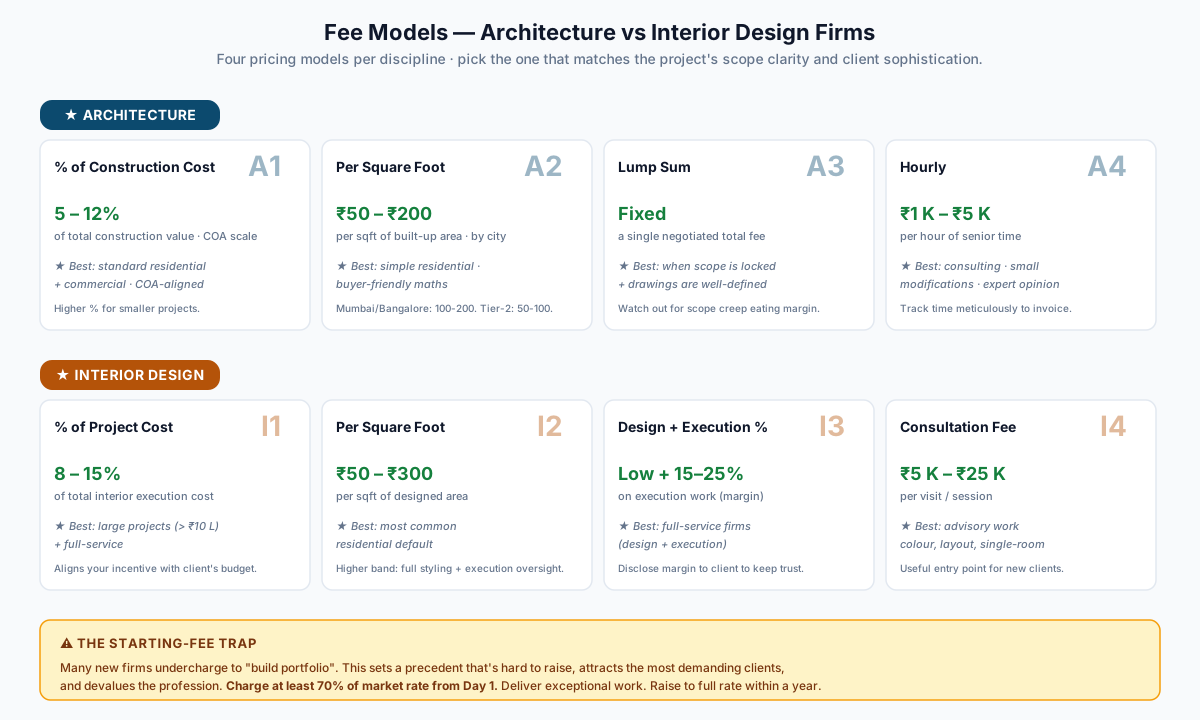
Architecture Fee Models
| Model | How It Works | Best For | COA Guideline |
|---|---|---|---|
| Percentage of construction cost | Fee = X% of total construction cost | Standard projects | 5-12% depending on project size |
| Per square foot | Fee = ₹X per sqft of built-up area | Simple residential | ₹50-200/sqft (varies by city) |
| Lump sum | Fixed total fee for defined scope | When scope is clear | Negotiate based on effort |
| Hourly | Fee = ₹X per hour of work | Consulting, small modifications | ₹1,000-5,000/hour |
Interior Design Fee Models
| Model | How It Works | Typical Range |
|---|---|---|
| Percentage of project cost | 8-15% of total interior cost | Large projects (>₹10 lakh) |
| Per square foot | ₹50-300/sqft of designed area | Most common for residential |
| Design fee + execution margin | Lower design fee + 15-25% margin on execution | Full-service firms (design + execution) |
| Consultation fee | ₹5,000-25,000 per visit/session | Advisory, colour consultation |
How to Set Your Fee
| Factor | Higher Fee | Lower Fee |
|---|---|---|
| Experience | 10+ years, strong portfolio | Just starting out |
| City | Mumbai, Bangalore, Delhi | Tier 2-3 cities |
| Project type | Luxury residential, commercial | Budget residential |
| Services included | Full service (design + execution + supervision) | Design only |
| Reputation | Award-winning, published work | Unknown firm |
The starting fee trap: Many new firms undercharge to "build portfolio." This is a mistake because:
- It sets a precedent that's hard to raise later
- Clients who pay less are often the most demanding
- You cannot sustain a business at below-cost pricing
- It devalues the entire profession
Charge at least 70% of the market rate from Day 1. If you're in Bangalore and established firms charge ₹100/sqft, don't start at ₹30. Start at ₹70, deliver exceptional quality, and raise to market rate within a year.
Step 6: Client Contracts
Why Contracts Are Non-Negotiable
Without a written contract:
- You have no legal proof of agreed scope, fee, or timeline
- The client can demand unlimited revisions at no cost
- You cannot enforce payment
- Scope creep goes unchecked
- In disputes, it's your word against theirs
Essential Contract Clauses

| Clause | What It Should Say |
|---|---|
| Parties | Full legal names, addresses, GST numbers |
| Scope of work | Detailed list of deliverables (concept, DD, working drawings, site visits, etc.) |
| Fee and payment schedule | Total fee, milestone-based payment schedule, advance amount |
| Timeline | Start date, milestone dates, completion date |
| Revisions | Number of revision rounds included (typically 2-3); additional revisions at ₹X/hour |
| Client responsibilities | Timely decisions, access to site, timely payments |
| Intellectual property | Designs remain your IP until full payment; client gets usage rights upon payment |
| Termination | Either party can terminate with 30 days' notice; fee for work completed is payable |
| Confidentiality | Client information is confidential; you can use project images for portfolio (with consent) |
| Liability | Professional indemnity coverage; limitation of liability to fee amount |
| Dispute resolution | Arbitration (faster and cheaper than litigation) in your city |
| Force majeure | Provisions for unforeseeable events (pandemic, natural disaster) |
| Defect liability | Scope of your liability vs contractor's liability (critical for architects under RERA) |
Step 7: Hiring & Team Building
When to Hire
| Hire When | Role | Type |
|---|---|---|
| 2-3 projects simultaneously | Junior architect/designer | Full-time or intern |
| Regular site supervision needed | Site architect | Full-time |
| Admin work exceeds 2 hours/day | Office coordinator | Full-time or part-time |
| 3D renders needed regularly | Visualiser | Freelance or full-time |
| 5+ active projects | Project architect | Full-time |
| Revenue crosses ₹25 lakh/year | Accountant/CA | Retainer |
Salary Benchmarks (2025-26)
| Role | Tier 1 City (Monthly) | Tier 2 City (Monthly) |
|---|---|---|
| Intern (B.Arch student) | ₹8,000-15,000 | ₹5,000-10,000 |
| Junior architect (0-2 years) | ₹18,000-30,000 | ₹12,000-20,000 |
| Mid-level architect (3-5 years) | ₹35,000-55,000 | ₹25,000-40,000 |
| Senior architect (5-10 years) | ₹55,000-90,000 | ₹40,000-65,000 |
| Project architect (10+ years) | ₹80,000-1,50,000 | ₹55,000-1,00,000 |
| 3D visualiser | ₹25,000-50,000 | ₹15,000-35,000 |
| Interior designer (0-3 years) | ₹15,000-30,000 | ₹10,000-20,000 |
| Office coordinator | ₹12,000-20,000 | ₹8,000-15,000 |
Intern Management
Architecture interns are your talent pipeline. Treat them well:
- Pay them. Unpaid internships are exploitative and illegal in most states.
- Teach them. Assign meaningful work, not just printing and tracing.
- Give feedback. Weekly 1-on-1 reviews accelerate their growth.
- Don't overwork them. Interns learning from 8-hour days is better than interns burning out from 14-hour days.
- Offer PPO. The best interns should be offered pre-placement offers.
Step 8: Insurance
Professional Indemnity (PI) Insurance
| Parameter | Details |
|---|---|
| What it covers | Claims arising from professional negligence, errors, or omissions in design |
| Why you need it | RERA imposes 5-year structural defect liability on architects. One claim can bankrupt a small firm. |
| Coverage amount | ₹25 lakh - ₹2 crore (based on project value and risk) |
| Premium | ₹15,000 - ₹60,000/year (based on coverage and turnover) |
| Providers | New India Assurance, ICICI Lombard, HDFC Ergo, Bajaj Allianz |
Other Insurance
| Type | What It Covers | Cost |
|---|---|---|
| Office insurance | Fire, theft, natural disaster damage to office and equipment | ₹5,000-15,000/year |
| Employee insurance | Group health insurance for team | ₹3,000-8,000/person/year |
| Contractor's All Risk | Construction phase risks (fire, collapse, theft) | 0.3-0.5% of construction cost |
Step 9: Marketing & Client Acquisition
The Marketing Funnel for Design Firms
| Stage | Channel | Action |
|---|---|---|
| Awareness | Instagram, Google, word-of-mouth | Post 3-5 times/week, Google Business Profile, deliver great work |
| Interest | Website, portfolio, blog | Professional website with projects, write about design topics |
| Consideration | Referrals, reviews, credentials | Ask past clients for Google reviews, showcase awards/publications |
| Conversion | Meeting, proposal, contract | Professional proposals, transparent pricing, clear scope |
| Referral | Post-project relationship | Stay in touch, send festival wishes, ask for referrals explicitly |
Where Indian Design Firms Get Clients
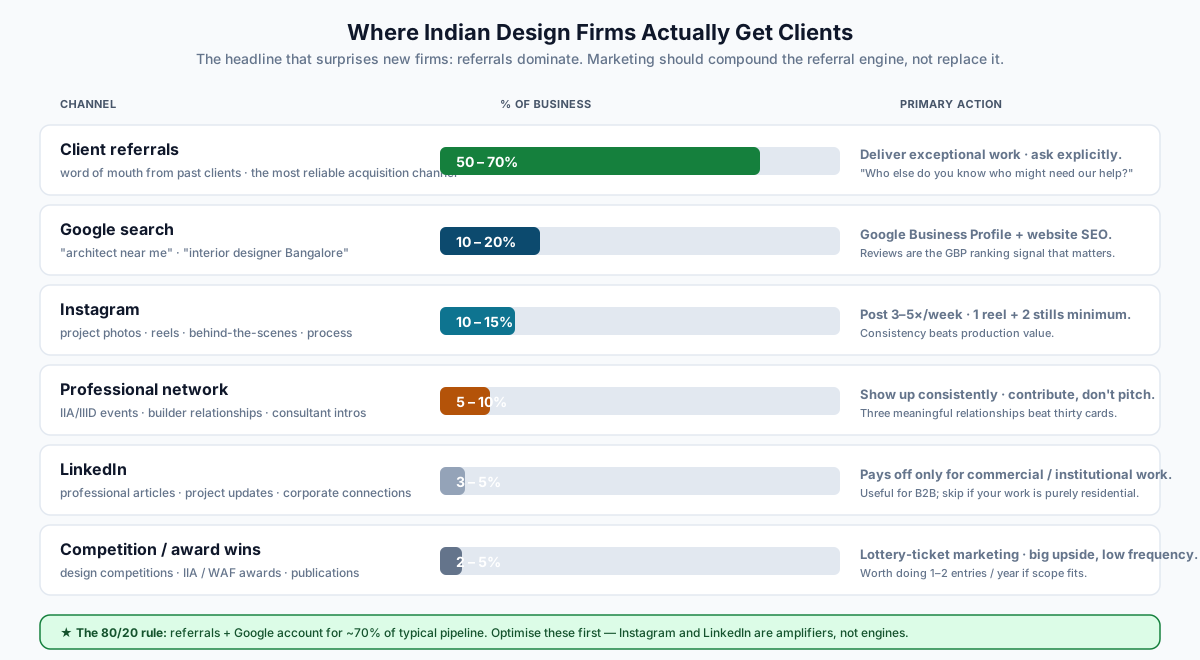
| Source | % of Business | Strategy |
|---|---|---|
| Client referrals | 50-70% | Deliver exceptional work. Ask every happy client: "Who else do you know who might need our help?" |
| Google search | 10-20% | Google Business Profile (critical for "architect near me" searches), SEO |
| 10-15% | Post consistently — project photos, reels, behind-the-scenes, process | |
| Professional network | 5-10% | IIA events, builder relationships, consultant introductions |
| 3-5% | Professional articles, project updates, connect with corporates | |
| Competition wins | 2-5% | Enter design competitions, apply for awards |
First-Year Marketing Budget
| Item | Monthly Cost | Notes |
|---|---|---|
| Website (domain + hosting) | ₹500-1,500 | WordPress or Squarespace |
| Google Business Profile | Free | Most important free tool |
| Instagram (organic) | Free | Consistent posting is key |
| Business cards | ₹1,000-3,000 (one-time) | Professional, well-designed |
| IIA/IIID membership | ₹3,000-5,000/year | Networking and credibility |
| Paid advertising (optional) | ₹5,000-15,000/month | Instagram/Google ads when ready |
Step 10: Financial Planning
First-Year Financial Projection (Solo Practice — Tier 1 City)
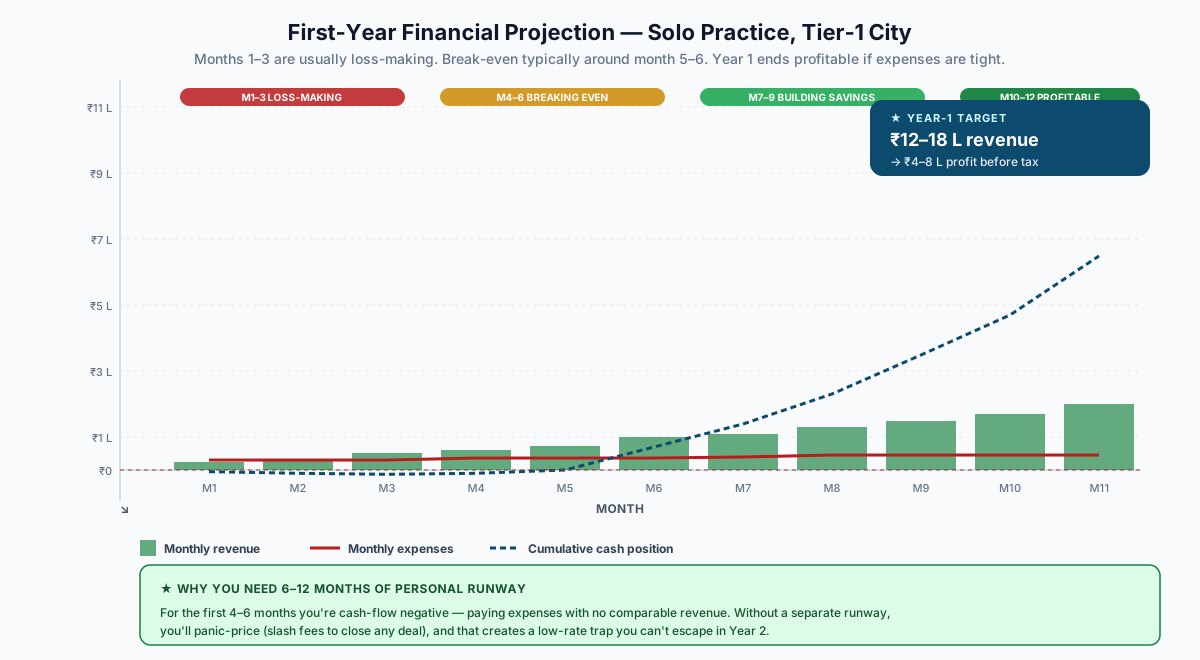
| Month | Revenue | Expenses | Cumulative |
|---|---|---|---|
| 1-3 | ₹0-50,000 | ₹30,000/month | -₹40,000 to -₹90,000 |
| 4-6 | ₹50,000-1,00,000 | ₹35,000/month | -₹15,000 to +₹1,05,000 |
| 7-9 | ₹1,00,000-1,50,000 | ₹40,000/month | +₹65,000 to +₹4,35,000 |
| 10-12 | ₹1,50,000-2,50,000 | ₹45,000/month | +₹3,80,000 to +₹10,50,000 |
Year 1 target: ₹12-18 lakh revenue, ₹4-8 lakh profit (after expenses, before tax)
Monthly Operating Expenses (Solo, Home Office)
| Expense | Amount |
|---|---|
| Office rent (if applicable) | ₹0-15,000 |
| Software licenses | ₹5,000-12,000 |
| Internet + phone | ₹2,000-3,000 |
| Travel / fuel (site visits) | ₹3,000-8,000 |
| Printing / plotting | ₹1,000-3,000 |
| Marketing | ₹1,000-5,000 |
| Accounting / legal | ₹2,000-5,000 |
| Miscellaneous | ₹2,000-5,000 |
| Total | ₹16,000-56,000 |
When to Invest in Growth
| Milestone | Investment |
|---|---|
| Revenue crosses ₹20 lakh/year | Hire first junior team member |
| Revenue crosses ₹40 lakh/year | Move to a proper office, hire second team member |
| Revenue crosses ₹75 lakh/year | Invest in branding, hire visualiser, consider LLP conversion |
| Revenue crosses ₹1 crore/year | Hire project architect, office coordinator, invest in marketing |
Common Mistakes New Firms Make
1. Starting without savings — you need 6-12 months of personal expenses as runway
2. Undercharging — pricing too low to "build portfolio" creates a trap you can't escape
3. No written contracts — every single project, no matter how small, needs a written agreement
4. Mixing personal and business money — open a separate business account from Day 1
5. Not registering for GST — you lose input credit on all your expenses
6. Ignoring marketing — "good work speaks for itself" is a myth. You need to actively market
7. Hiring too early — don't hire until you have consistent work to justify the salary
8. Not saying no — taking every project regardless of fit leads to poor work and burnout
9. No insurance — one RERA claim or client lawsuit can destroy an uninsured small firm
10. Ignoring cash flow — revenue is vanity, profit is sanity, cash flow is reality
11. Not tracking time — if you don't know how many hours each project takes, you can't price correctly
12. Copying other firms' identity — develop your own design philosophy and niche
Key Takeaways
- COA registration is mandatory for architects — practice without it is illegal and puts clients at risk
- Start as a sole proprietorship, upgrade to LLP when you grow — keep it simple initially
- Minimum ₹2-4 lakh investment gets you started from a home office with essential equipment and software
- Register for GST proactively — the input credit on software and equipment alone justifies it
- Charge at least 70% of market rate from Day 1 — undercharging is the most common mistake
- Written contracts for every project — scope, fee, timeline, revisions, IP, termination
- Collect 30-50% upfront before starting design work — protects your cash flow
- Professional Indemnity insurance is essential under RERA — one claim can end your practice
- Marketing is not optional — Google Business Profile, Instagram, and referral systems are your growth engines
- Track everything — hours, expenses, invoices, receivables. What you don't measure, you can't manage.
References:
- Architects Act, 1972 — Statutory framework for architecture practice in India
- Council of Architecture (COA) — coa.gov.in — Registration requirements and conditions of engagement
- COA Conditions of Engagement and Scale of Charges, 2023
- Institute of Indian Interior Designers (IIID) — iiid.in
- Indian Institute of Architects (IIA) — iia-india.org
- GST Act, 2017 — Service tax provisions for professional services
- Companies Act, 2013 — LLP and Pvt Ltd registration
- MSME Development Act, 2006 — Udyam registration
- Income Tax Act, 1961 — Sections 44AD, 44ADA, 80C
- RERA 2016 — Architect liability provisions (Section 14)
- Shop and Establishment Act (state-specific)
- Professional Tax Act (state-specific)
Export this guide
Related Guides — Deep-dive reading
Design/Build vs. Hiring Separately: What Indian Homeowners Should Know
The procurement-model decision behind every home project — one turnkey firm that designs and builds, or an independent designer and a separately appointed contractor — and how to choose the one that fits your time, budget, and appetite for control.
Planning Your ProjectUnderstanding Construction Contracts & Retainage in India
A homeowner-protective guide to the contract and payment structure behind every interiors or build project — the contract types and when each fits, how to stage payments so your money trails the work, and the retention clause that quietly protects you more than any other.
Cost & MoneyScope Boundaries — Architect, Interior Designer & Contractor
The Architects Act 1972, the IIID Code, BOCW 1996 & RERA 2016 — Stage-by-Stage Role Map, Hot Boundary Zones, Liability Matrix, and the Tri-Party Contracting Discipline for Indian Residential Practice
ConstructionRelated Tools — Try Free
Interior Contract Clause Checklist
16 sections and 98 checkboxes covering scope, BOQ, milestones, penalties, warranty, and disputes.
Contract ChecklistInterior Contract Template — India
Legally-refined contract template with payment milestones, timeline, warranty, and jurisdiction fields.
Contract GeneratorContract Studio
AI generates professional architecture service agreements with milestones and scope.
ArchitectAI