
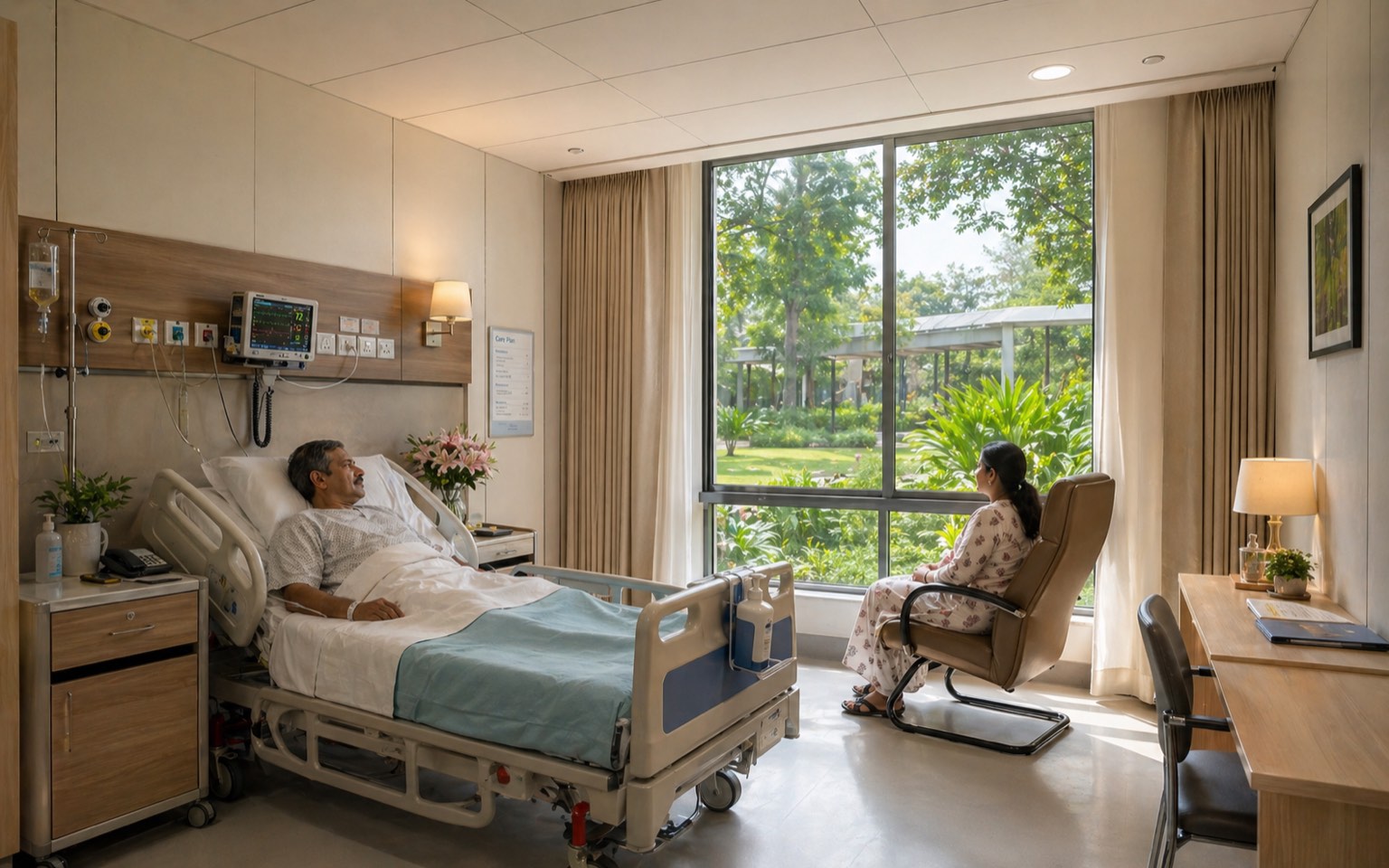
Evidence-Based Design for Indian Healthcare
An Architect's Working Reference — Ulrich's Foundational Studies, the 2008 HERD Review, Single-Bed Evidence, Daylight and Recovery, Noise and Sleep, Materials and Infection Control, Positive Distractions, and the Indian-Context Translation Framework
Evidence-based design (EBD) is the discipline of designing healthcare buildings on the basis of empirical research that links architectural choices to patient and staff outcomes. The discipline emerged in 1984 when Roger Ulrich, then at the University of Delaware, published a study in Science showing that surgical patients in rooms with a window view of trees recovered faster, used less pain medication, and had fewer nursing complications than patients in rooms with a window view of a brick wall. The study was the first peer-reviewed demonstration that a single architectural variable — the view from the patient's window — measurably affected clinical outcomes. In the four decades since, the evidence has grown to cover daylight, noise, single-bed rooms, surface materials, family presence, wayfinding, and many other architectural variables — accumulated in the Center for Health Design's Pebble Project, in the HERD journal's archive, and in the consolidated 2008 review by Ulrich and colleagues.
This guide is the fifth in the design-focused series. It assumes the reader has read the pillar regulatory reference, the regulatory deep-dives, and the preceding design-series articles on clinical adjacencies, OT suite design, ICU/NICU/PICU design, and ED & wayfinding.
The guide covers the core body of EBD evidence relevant to Indian practice — which architectural decisions have been studied, what the evidence says, and how the evidence translates into Indian-context choices that must reconcile international research with Indian climate, joint-family caregiving, and capex-sensitive operational economics. The companion article that follows (biophilic & healing environments) goes deeper into the nature-and-architecture dimension; this one establishes the research foundation.
"The view from the window is not aesthetic. It is therapeutic. The architect who designs the window is, whether they know it or not, prescribing for the patient who lies in that bed." — Roger Ulrich (1946–2024), environmental psychologist, paraphrased from a 2008 EDRA keynote
"A hospital's architecture either supports recovery or impedes it. There is no neutral architecture in healthcare. Every wall, every floor, every window is making a difference — for better or worse." — Eve Edelstein, neuroarchitect, paraphrased from her 2007 ANFA lecture
1. The 1984 Ulrich Study — Where EBD Begins
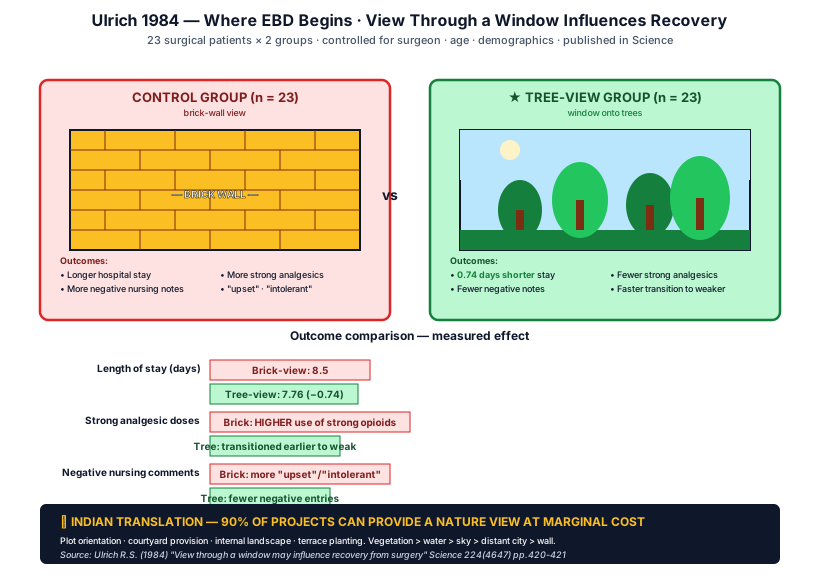
Roger Ulrich's View Through a Window May Influence Recovery from Surgery (1984) compared 23 surgical patients with a tree-view window against 23 with a brick-wall view, controlling for surgeon, surgery type, age, and demographics. The tree-view group:
- Spent 0.74 days less in hospital (mean stay)
- Required fewer doses of strong analgesics (transition to weaker analgesics earlier)
- Received fewer negative nursing comments ("upset", "patient unable to tolerate")
The study was small, but its design quality and statistical clarity made it foundational. It established that an architectural variable — view content — measurably affected clinical outcomes. In subsequent decades, the finding was replicated across cardiac surgery, oncology, paediatric, mental health, and intensive-care contexts.
The Indian translation: the architect who provides every patient with a view of vegetation, water, sky, or human activity (rather than a brick wall, a service yard, or another building's blank wall) is making a clinical contribution. This is achievable in 90% of Indian projects through plot orientation, courtyard provision, internal landscape, or terrace planting — at marginal cost.
2. The 2008 HERD Review — The Consolidated Evidence Base
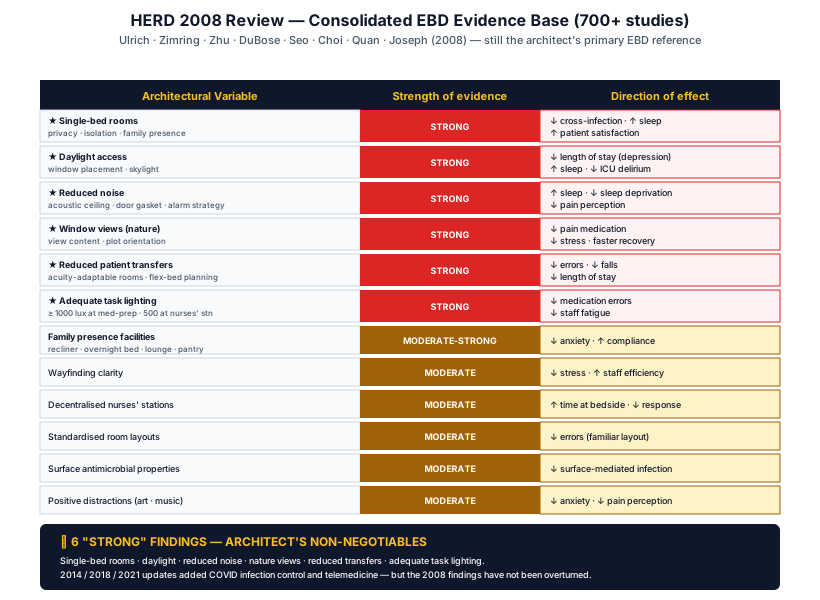
Ulrich, Zimring, and colleagues published A Review of the Research Literature on Evidence-Based Healthcare Design in HERD in 2008, synthesising 700+ peer-reviewed studies. Its findings — still the consolidated reference for EBD — are summarised here.
| Architectural Variable | Strength of Evidence | Direction of Effect |
|---|---|---|
| Single-bed rooms | Strong | Reduce cross-infection, improve sleep, increase patient satisfaction |
| Daylight access | Strong | Reduce length of stay (depression), improve sleep, reduce delirium |
| Reduced noise | Strong | Improve sleep, reduce sleep deprivation, reduce pain perception |
| Window views (nature) | Strong | Reduce pain medication, reduce stress, faster recovery |
| Family presence facilities | Moderate–Strong | Reduce anxiety, improve compliance, increase satisfaction |
| Wayfinding clarity | Moderate | Reduce stress, improve staff efficiency, reduce frustration |
| Reduced patient transfers | Strong | Reduce errors, reduce falls, reduce length of stay |
| Decentralised nurses' stations | Moderate | Increase time at bedside, reduce response time |
| Standardised room layouts | Moderate | Reduce errors |
| Surface antimicrobial properties | Moderate | Reduce surface-mediated infection |
| Positive distractions (art, music) | Moderate | Reduce anxiety, reduce pain perception |
| Adequate lighting at task | Strong | Reduce medication errors, reduce staff fatigue |
Strength of evidence: "Strong" = multiple controlled studies with consistent effect; "Moderate" = some controlled studies, mostly observational; "Weak" = anecdotal or single small study.
The HERD 2008 review remains the architect's primary EBD reference. Subsequent updates (2014, 2018, 2021) have added evidence on COVID-era infection control, telemedicine integration, and remote-monitoring infrastructure but have not overturned the 2008 findings.
3. The Single-Bed Room Evidence — A Pivotal Finding
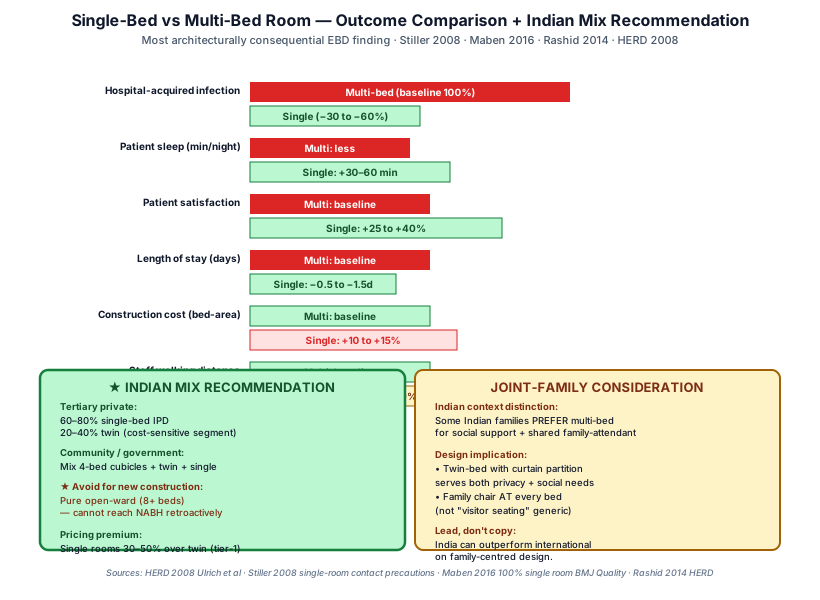
The single-bed room is the most architecturally consequential EBD finding. The 2008 review and subsequent studies (Stiller 2008, Maben 2016, Rashid 2014) consolidate the evidence:
| Outcome | Single-Bed vs Multi-Bed |
|---|---|
| Hospital-acquired infection | Single bed reduces by 30–60% (varies by infection type) |
| Patient sleep | Single bed improves total sleep time by 30–60 min/night |
| Patient satisfaction | Single bed scores 25–40% higher |
| Length of stay | Single bed reduces by 0.5–1.5 days (varies by case mix) |
| Medication errors | Single bed reduces (clearer chart, fewer interruptions) |
| Patient falls | Mixed evidence (single allows family presence which prevents falls; isolation can increase) |
| Family satisfaction | Single bed strongly preferred |
| Staff walking distance | Single bed increases by 20–30% (offset by decentralised stations) |
| Construction cost | Single bed adds 10–15% to bed-area cost |
| Operational cost | Slightly higher (cleaning, HVAC) |
| Privacy / dignity | Strongly improved with single bed |
Indian context translation:
- Tertiary private hospitals: single-bed rooms are increasingly the IPD norm; tier-1 hospitals price single rooms at 30–50% premium over twin
- Tier-2/3 hospitals: twin-bed (semi-private) and 4-bed wards remain common; cost-driven
- Government hospitals: multi-bed (8–20 bed) wards common; IPHS minimum is 8-bed open ward
- Joint-family preference: some Indian families prefer multi-bed wards for social support and shared family-attendant load
The architect's recommendation: for tertiary private projects, design at least 60–80% single-bed IPD with 20–40% twin (for cost-sensitive segment); for community / government projects, mix 4-bed cubicles with twin and single options. Pure open-ward wards (8+ beds) should be avoided for new construction — they cannot be brought up to NABH standards retroactively.
4. Daylight and Recovery — The Photobiology of Healing
Daylight evidence is among the most replicated in EBD.
| Daylight Finding | Source / Study |
|---|---|
| Patients on sunny side of cardiac unit had shorter stay (3.67 vs 3.15 days) | Beauchemin & Hays (1998), Heart and Lung |
| Bipolar patients in east-facing rooms discharged 3.7 days earlier than west-facing | Benedetti (2001), Journal of Affective Disorders |
| Higher daylight reduced perception of pain in spinal surgery | Walch (2005), Psychosomatic Medicine |
| Daylight access reduced ICU delirium by 30% | Boyko (2017), Critical Care |
| Daylight in NICU improved infant weight gain | Lasky (2009), Pediatrics |
| Higher melanopic-EDI improved sleep onset for inpatients | Boubekri (2014), Sleep Health |
Architectural translation for Indian healthcare:
| Element | Specification |
|---|---|
| Patient-room window — minimum window-to-floor area ratio (WWR) | ≥ 12% for IPD; ≥ 10% for ICU |
| Daylight factor — IPD bedside | ≥ 2% (daylight factor at bed plane) |
| Daylight factor — corridor | ≥ 1% |
| View content | Vegetation, sky, courtyard, water — not blank wall, service yard, parking |
| Glazing — orientation in Indian climate | South + east preferred for warmth; west + north shaded |
| Solar control | External shading device (overhang, fin, screen) — to manage glare and heat in summer |
| Glazing performance | Visible light transmittance 35–55%; SHGC < 0.4 in warm-humid; > 0.5 in cold-temperate |
| Circadian lighting | Tunable LED for evening — warmer K, lower lux; cooler / brighter morning |
| ICU daylight | At minimum every other ICU bed has window view; isolation rooms may be windowless but should have alternative (skylight, light-art) |
| NICU daylight | Dimmable to ≤ 5 lux for sleep; full daylight for procedures |
The Indian climate adds a complication absent from temperate-zone EBD studies: daylight is often paired with heat gain. The architect resolves this through shaded daylight — overhangs, screens, courtyards, and verandahs that admit indirect light without direct solar load. This is precisely the strategy of vernacular Indian architecture, and it integrates well with EBD daylight requirements.
5. Noise and Sleep — The Silent Outcome Driver
Hospital noise is universally too high. WHO recommends ≤ 35 dBA for hospital wards; observed mean is 50–65 dBA, peaks 80+ dBA. Sleep disruption from noise is associated with:
- Delayed wound healing
- Increased delirium
- Higher pain medication use
- Decreased patient satisfaction
- Staff fatigue and error
| Noise Source | Architectural Mitigation |
|---|---|
| Equipment alarms (ICU primarily) | Smart-alarm protocols (clinical); architectural — sound-absorbing ceiling/wall |
| HVAC | Lined ducts; vibration isolation; AHU acoustic enclosure |
| Patient-room conversations | Sound-absorbing wall finishes; door gasket |
| Overhead paging | Replace with directed messaging; vibration pagers |
| Floor impact | Acoustic vinyl with rubber backing; quiet door closers |
| Equipment trolleys | Rubber-tyred wheels; isolation pads |
| Staff conversations | Decentralised nurses' stations near patient (reduces calling across distance) |
| Family / visitor noise | Family room outside ward; quiet hours signage |
Acoustic specifications for Indian hospitals:
| Space | NC (Noise Criterion) | dBA |
|---|---|---|
| Patient room (IPD) | NC 30–35 | 35–40 |
| ICU bay | NC 35–40 | 40–45 |
| OPD waiting | NC 40–45 | 45–50 |
| Corridor | NC 35–40 | 40–45 |
| OT (clinical) | NC 30–35 | 35–40 |
| NICU | NC 30 | 35 |
| Critical care nurses' station | NC 40 | 45 |
The architect's deliverable is an acoustic specification schedule alongside the room finishes schedule. Common Indian projects underspecify acoustic treatment because it is invisible — the lesson of NABH 5th edition is that this invisibility is a deficit, not a non-issue.
6. Surface Materials and Infection Control
Surface finishes carry pathogens. Hard non-porous antimicrobial surfaces reduce surface-mediated transmission.
| Surface | Pathogen Risk | Architectural Best Practice |
|---|---|---|
| Floor — patient room | Moderate (footwear) | Welded vinyl with antimicrobial treatment; coved skirting |
| Floor — OT / ICU | High | Conductive vinyl; welded; coved 100 mm radius |
| Wall — high-touch (next to bed, near door) | High | PVC panel, antimicrobial epoxy; impact-resistant |
| Wall — non-touch | Moderate | Antimicrobial paint |
| Ceiling | Low (out of reach) | Sealed; cleanable; metal in OT |
| Door handles | High | Antimicrobial alloy; copper / silver-impregnated |
| Bed rails | Highest | Antimicrobial coating; cleaned every shift |
| Sink / faucet | High (water aerosol) | Sensor-tap; sealed surround; clinical trap |
| Toilet | High | Sealed surfaces; sensor-flush; deep-clean schedule |
| Curtains | Moderate (single-room less) | Washable; antimicrobial fabric; replaced regularly |
| Furniture (chairs) | Moderate | Wipe-clean, sealed, no fabric in critical care |
Antimicrobial surface evidence:
- Copper alloy surfaces reduce bacterial load by 90%+ (Salgado 2013)
- Silver-impregnated paints reduce surface contamination (Deshmukh 2018, Indian study)
- Antimicrobial PVC panels and vinyl tested under NABH protocols
Cost reality: antimicrobial surfaces add 15–30% to surface cost. Architects often skip on cost grounds. The EBD justification is the reduction in HAI (hospital-acquired infection) downstream cost — typically a positive net economic case but capex-front-loaded.
7. Positive Distractions — Art, Nature, Music
Positive distractions (art, music, nature views) demonstrably reduce patient stress.
| Distraction | Evidence Strength | Architectural Provision |
|---|---|---|
| Nature views | Strong (Ulrich) | Window orientation, courtyards |
| Nature art (photography, painting) | Moderate–Strong | Wall art in waiting, IPD, corridors |
| Abstract art | Mixed (some patients react negatively to ambiguous art) | Avoid in clinical areas |
| Music (live or recorded) | Moderate | Shared listening areas; in-room option |
| Aquariums (waiting area) | Moderate | Lobby focal point |
| Children's play areas | Strong (paediatric) | PICU/NICU/paediatric ward |
| Religious / spiritual space | Strong (Indian context) | Multi-faith room |
| Garden access | Strong | Therapeutic gardens (see biophilic guide) |
Architectural specification for art programme:
- Curated art programme — not random posters
- Nature, landscape, abstract-natural preferred
- Indian-context — local landscape, calming abstract patterns, traditional motifs (carefully)
- High-quality reproduction (not cheap print)
- Lighting on art (illuminated)
- Replaced periodically (5–7 year cycle)
- Patient feedback reviewed
The architect provides the wall placement, lighting, and rhythm of art display in the design package. Specification of actual artworks is typically by hospital art committee; architect provides infrastructure.
8. Family-Centred Care — The Indian Strength
Family-centred care is a major EBD theme that aligns naturally with Indian healthcare reality.
| Family Provision | EBD Outcome |
|---|---|
| Family chair / recliner per bed | Reduces patient anxiety; improves sleep |
| Family overnight | Reduces patient delirium (especially elderly, children) |
| Family kitchen / pantry | Improves nutrition compliance |
| Family lounge | Reduces stress; provides decompression |
| Family education room | Improves discharge readiness |
| Family-staff communication tools | Improves trust, satisfaction |
International EBD discovers family-centred care; Indian healthcare assumes it. The architect's task is to design for the visitor density that Indian projects experience — not as accommodation but as design premise. This is one area where Indian practice can lead international.
9. EBD in Indian Practice — A Reality Check
Indian healthcare projects vary widely in EBD adoption.
| Project Tier | Typical EBD Adoption |
|---|---|
| Tertiary private (e.g., Apollo, Manipal, Fortis tier-1) | Moderate–Strong; daylight, single rooms, art programme increasingly standard |
| Mid-tier private (most metro) | Moderate; some daylight, mostly twin / 4-bed; art programme limited |
| Tier-2 private | Light–Moderate; basic daylight, multi-bed wards, no art |
| Government district hospital | Light; per IPHS minimums; daylight by orientation only |
| Charitable / trust hospital | Variable; often strong on family provision, light on technical EBD |
Why under-adoption: the architect's brief often does not name EBD; clients optimise for capex; daylight design in Indian climate requires shading discipline that adds cost; antimicrobial surfaces add cost; single-bed rooms add cost. The architect's job is to make the EBD case at the brief stage — before the budget is locked. Once the building is detailed at minimum-cost spec, EBD is an expensive retrofit.
Where Indian healthcare leads: family presence and joint-family cultural integration are stronger than international practice. Multi-faith spaces, family kitchens, and 24-hour visiting are normal in India and exceptional internationally.
10. The EBD Audit Framework — 25 Questions for Any Hospital Project
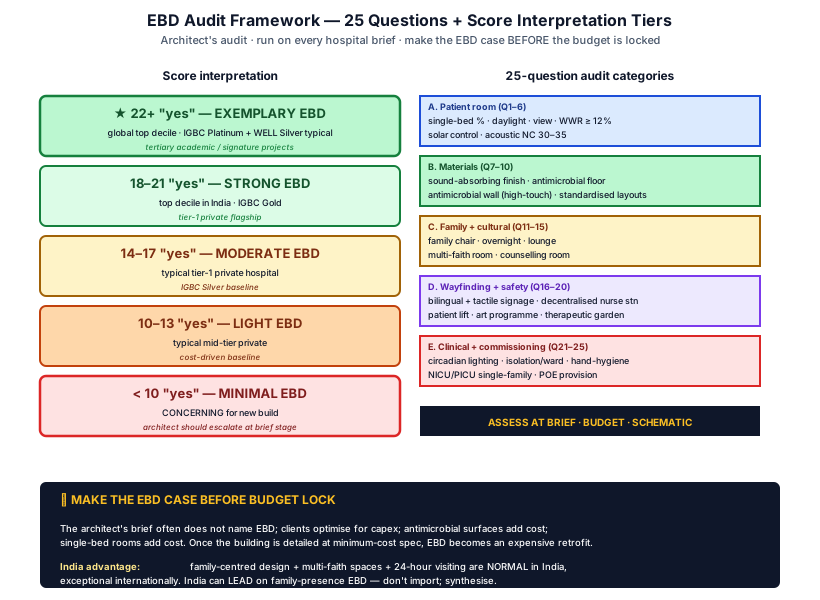
| # | EBD Question | Stage to Assess |
|---|---|---|
| 1 | What % of patient rooms are single-bed? | Brief / Concept |
| 2 | Daylight at every patient bed plane (≥ 2% DF)? | Concept / Schematic |
| 3 | View content from every patient room (nature / sky / courtyard)? | Concept |
| 4 | Window-to-wall ratio ≥ 12% in IPD? | Schematic |
| 5 | Solar control sized for Indian summer? | Schematic |
| 6 | Acoustic NC 30–35 in patient rooms? | Schematic |
| 7 | Sound-absorbing finish on ceiling and wall in IPD/ICU? | Detailed |
| 8 | Antimicrobial floor (welded vinyl) throughout? | Detailed |
| 9 | Antimicrobial wall finish in high-touch zones? | Detailed |
| 10 | Decentralised nurses' stations (or sightline rule met)? | Schematic |
| 11 | Family chair / recliner provided per bed? | Schematic |
| 12 | Family overnight space (single room or adjacent)? | Schematic |
| 13 | Family lounge per ward unit? | Schematic |
| 14 | Multi-faith / prayer room? | Schematic |
| 15 | Counselling / bad-news room? | Schematic |
| 16 | Wayfinding system bilingual + tactile + Braille? | Schematic |
| 17 | Standardised patient-room layouts? | Schematic |
| 18 | Patient lift / ceiling track provision? | Detailed |
| 19 | Art programme — wall placements + lighting? | Detailed |
| 20 | Therapeutic garden / nature access (see biophilic)? | Schematic |
| 21 | Lighting circadian / dimmable / patient-controlled? | Detailed |
| 22 | Single-bed isolation room — minimum 1 per ward unit? | Schematic |
| 23 | Hand-hygiene infrastructure — frequency per NABH? | Schematic |
| 24 | NICU / PICU — single-family room provision considered? | Schematic |
| 25 | Post-occupancy evaluation provision (POE)? | Commissioning |
Score interpretation:
- 22+ "yes" — exemplary EBD
- 18–21 "yes" — strong EBD (top decile in India)
- 14–17 "yes" — moderate EBD (typical tier-1 private)
- 10–13 "yes" — light EBD (typical mid-tier)
- < 10 "yes" — minimal EBD (concerning for new build)
References
- Beauchemin, K.M. and Hays, P. (1998) 'Dying in the dark: sunshine, gender and outcomes in myocardial infarction', Journal of the Royal Society of Medicine, 91(7), pp. 352–354.
- Benedetti, F., Colombo, C., Barbini, B., Campori, E. and Smeraldi, E. (2001) 'Morning sunlight reduces length of hospitalization in bipolar depression', Journal of Affective Disorders, 62(3), pp. 221–223.
- Boubekri, M., Cheung, I.N., Reid, K.J., Wang, C.H. and Zee, P.C. (2014) 'Impact of windows and daylight exposure on overall health and sleep quality of office workers', Journal of Clinical Sleep Medicine, 10(6), pp. 603–611.
- Boyko, Y., Jennum, P., Nikolic, M., Holst, R., Oerding, H. and Toft, P. (2017) 'Sleep in intensive care unit', Critical Care, 21(1), p. 230.
- Edelstein, E.A. and Macagno, E. (2012) 'Form follows function: bridging neuroscience and architecture', in Rassia, S.T. and Pardalos, P.M. (eds.) Sustainable Environmental Design in Architecture. Boston: Springer.
- Hamilton, D.K. (2003) 'The four levels of evidence-based practice', Healthcare Design, 3, pp. 18–26.
- Joseph, A. (2006) The Impact of the Environment on Infections in Healthcare Facilities. Concord: Center for Health Design.
- Joseph, A. and Ulrich, R. (2007) Sound Control for Improved Outcomes in Healthcare Settings. Concord: Center for Health Design.
- Lasky, R.E. and Williams, A.L. (2009) 'Noise and light exposures for extremely low birth weight newborns', Pediatrics, 123(2), pp. 540–546.
- Maben, J., Griffiths, P., Penfold, C., Simon, M., Pizzo, E., Anderson, J., Robert, G., Hughes, J., Murrells, T., Brearley, S. and Barlow, J. (2016) 'One size fits all? Mixed methods evaluation of the impact of 100% single-room accommodation on staff and patient experience', BMJ Quality & Safety, 25(4), pp. 241–256.
- Pati, D., Harvey, T.E. and Cason, C. (2008) 'Inpatient unit flexibility: design characteristics of a successful flexible unit', Environment and Behavior, 40(2), pp. 205–232.
- Rashid, M. (2014) 'Two decades (1993–2012) of adult intensive care unit design', Critical Care Nursing Quarterly, 37(1), pp. 3–32.
- Salgado, C.D., Sepkowitz, K.A., John, J.F., Cantey, J.R., Attaway, H.H., Freeman, K.D., Sharpe, P.A., Michels, H.T. and Schmidt, M.G. (2013) 'Copper surfaces reduce the rate of healthcare-acquired infections in the ICU', Infection Control & Hospital Epidemiology, 34(5), pp. 479–486.
- Stichler, J.F. (2010) 'Healing by Design: Integrating evidence-based design principles into healthcare', HERD, 3(2), pp. 3–6.
- Stiller, A., Sroka, R., Gastmeier, P., Marik, P.E., et al. (2008) 'Single-room contact precautions for the prevention of transmission of multi-resistant organisms', Infection Control and Hospital Epidemiology, 29(5), pp. 408–412.
- Ulrich, R.S. (1984) 'View through a window may influence recovery from surgery', Science, 224(4647), pp. 420–421.
- Ulrich, R.S., Zimring, C., Zhu, X., DuBose, J., Seo, H.B., Choi, Y.S., Quan, X. and Joseph, A. (2008) 'A review of the research literature on evidence-based healthcare design', HERD, 1(3), pp. 61–125.
- Walch, J.M., Rabin, B.S., Day, R., Williams, J.N., Choi, K. and Kang, J.D. (2005) 'The effect of sunlight on postoperative analgesic medication use', Psychosomatic Medicine, 67(1), pp. 156–163.
- World Health Organization (1999) Guidelines for Community Noise. Geneva: WHO.
- Zborowsky, T., Bunker-Hellmich, L., Morelli, A. and O'Neill, M. (2010) 'Centralized vs. decentralized nursing stations: effects on nurses' functional use of space', HERD, 3(4), pp. 19–42.
Author's Note: EBD has matured into a discipline with a defensible evidence base for most architectural decisions in healthcare. The Indian context translates the evidence into specific decisions that respect Indian climate, Indian family-centred caregiving, and Indian capex sensitivity. The architect's role is to make the EBD case at the brief stage and translate the evidence into design — not as imported doctrine but as local synthesis. Subsequent guides will go deeper on biophilic design (the natural extension of EBD's daylight and view findings) and HVAC services (where EBD's noise findings translate to mechanical specification).
Disclaimer: This article is for informational and educational purposes only. EBD findings vary by patient population, climate, and operational context; always engage qualified healthcare planners and apply evidence with project-specific judgement. Studio Matrx, its authors, and contributors accept no liability for decisions made on the basis of the information in this guide.
Interactive · EBD adoption cycle for Indian hospitals
3. Design + build pilot intervention · 12-26 weeks
Step 3 · 3. Design + build pilot intervention
Implement EBD intervention in a small, controlled subset of the facility.
Activities
- ▸Convert a wing / floor / ward to the new design
- ▸Document intentional design moves (room layout, materials, lighting, etc.)
- ▸Train staff in new workflows + protocols
- ▸Equip rooms with measurement instruments (sensors, observers, surveys)
- ▸Run a 4-12 week pilot phase
Deliverable
Pilot ward / floor / wing operational with measurement instruments running.
India example
Manipal converted 12 of 60 ICU beds to single-room layout for the 6-month pilot; rest remained 4-bed cohort.
Indian EBD reality
Most published EBD evidence comes from US/EU hospitals. India-specific cohorts are emerging from Apollo, Manipal, Tata, Fortis, and AIIMS — supporting EBD with locally-relevant effect sizes for joint-family presence, cohort-care preferences, and tropical climate.
References: Center for Health Design EBD process (Hamilton 2003), Ulrich 2008 meta-review, Pati 2015 India hospital studies. The EBD cycle is iterative — every project should leave evidence for the next.
Export this guide
Related Guides — Deep-dive reading
The Architecture of Recovery: Evidence-Based Design in Contemporary Indian Healthcare
An Architect's Front-Door Reference — EBD Foundations · Biophilic + Circadian + Acoustic + Social Pillars · Indian Cultural Context · Studio Matrx Tool Stack
Healthcare ArchitectureHospital Façade & Daylight Design in India
An Architect's Working Reference — Climate-Responsive Envelope · India's Five Climate Zones · WWR by Programme · Daylight Strategy & Glare Control · Shading Device Library (Overhang · Fin · Jaali · Brise-Soleil · Verandah · BIPV) · Courtyard Organisation · ECBC 2017 Compliance · BIPV Integration · Cyclone-Zone Specs · Acoustic Envelope
Healthcare ArchitectureBiophilic & Healing Environments for Healthcare in India
An Architect's Working Reference — Roger Ulrich's Restorative Theory, Stephen Kellert's 14 Patterns of Biophilic Design, Therapeutic Gardens, Hospital Courtyards, Patient-Room Nature Views, End-of-Life Space, Indian Planting Palette, and the Biophilic Healthcare Toolkit
Healthcare ArchitectureRelated Tools — Try Free
Healing View Impact Calculator
Evidence-Based Design dashboard quantifying the recovery impact of nature view + daylight factor on analgesic use, length of stay, and HCAHPS patient-experience uplift. Calibrated against Ulrich 1984 (Science), Park & Mattson 2008, and the CHD EBD evidence base.
EBD CalculatorAcoustic Privacy (STC) Visualizer
Indian healthcare acoustic visualizer — compare wall assemblies and noise sources, see received SPL after STC attenuation, and check FGI 2018 / IS 1950 / NABH speech-privacy compliance with live dual-canvas waveform.
Acoustic ToolCircadian Light Meter
Patient-centric circadian lighting visualizer for Indian healthcare design — time-of-day × intensity → CCT, melanopic lux (EML / mEDI), melatonin suppression, and an alertness curve. Calibrated against WELL v2 L03 Circadian Lighting Design, CIE S 026:2018, Brainard 2001, and Lucas et al. 2014.
Circadian Tool